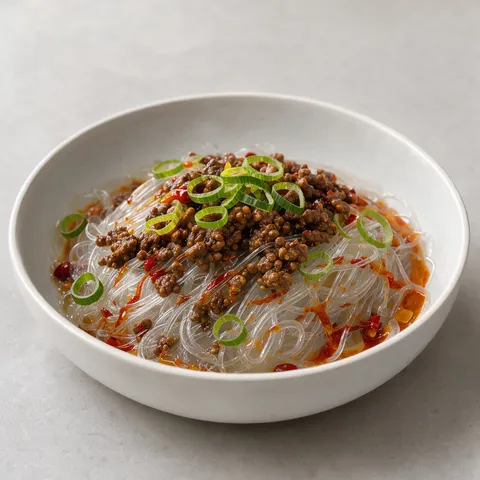
Ma Yi Shang Shu Ants Climbing a Tree
A Chinese main course. Takes 26 min, Serves 4. Difficulty: easy.
At a glance
- Total time
- 26 min
- Serves
- Serves 4
- Difficulty
- Easy
- Cuisine
- Chinese cuisine
- Dish type
- Main course
- Allergens
- Gluten, Sesame, Soya, Celery
Ingredients
Noodles
- 200 g glass noodles (bean starch)
Meat
- 250 g beef mince
- 1 tbsp Shaoxing wine
- 1 tbsp soy sauce
Sauce
- 2 tbsp doubanjiang (fermented chilli bean paste)
- 3 garlic cloves (finely chopped)
- 2 cm fresh ginger (finely chopped)
- 350 ml Chicken Stock (Basics)
- 1 tbsp soy sauce
- 1 tsp sugar
- 1 tsp sesame oil
- 2 tbsp neutral oil
To serve
- 3 spring onions (thin rings)
Equipment
- Wok
- Mixing bowls
- Colander
- Silicone spatula
- Chef's knife
- Kitchen scissors (optional)
Method
- Soak the noodles: Put the glass noodles in a bowl and cover with lukewarm water. Leave for 8 min to soften. Lukewarm water is used instead of hot because the noodles will cook again in the sauce and fall apart if too soft. Drain in a colander and cut with scissors or a knife into 15 cm lengths (~8 min)
- Marinate the meat: Mix the beef mince with the wine and soy sauce in a small bowl for 1 min. This short marinade removes the meat's smell and lets it cook in very fine grains (~1 min)
- Fry the mince: Heat the neutral oil in a wok over high heat. Add the mince and fry for 4 min, constantly breaking it up with a spatula, until it releases its liquid and browns. The mince should crumble to the size of rice grains. These grains represent the ants (~4 min)
- Fry the doubanjiang in the oil: Push the mince to the edge of the wok. In the space in the middle add the doubanjiang, garlic and ginger and stir for 1 min until the oil turns red. Frying the paste in oil opens its aroma, and if raw it is bitter and salty (~1 min)
- Add the liquid: Pour in the stock, soy sauce and sugar and bring to the boil. Stir everything together, and the sauce should be slightly red. The taste should be balanced between salty-hot and mildly sweet (~2 min)
- Cook the noodles: Fold the noodles into the sauce and cook over medium heat for 7 min. Lift and stir often with a spatula so they do not stick. The noodles should absorb the sauce, turn translucent and wrap the grains of mince (~7 min)
- Reduce the sauce: Turn up the heat and boil for 2 min until only a few spoonfuls of sauce are left in the bottom. The noodles should be glossy and sticky. Add the sesame oil and take off the heat (~2 min)
- Serve: Pile onto a warmed serving plate. Scatter over the spring onion rings. The noodles stick as they cool, so serve immediately (~1 min)
Chef's note
In this Sichuan home dish, ma yi shang shu compares the mince clinging to the glass noodles to ants climbing a tree. The original recipe uses pork mince; here it is made with beef mince. Doubanjiang is a traditional ready-made fermented paste and is not made at home. For less heat, halve the paste and add a little tomato paste.
Frequently asked questions
- Where does the name Ants Climbing a Tree come from?
- The mince is broken up to the size of grains of rice, and these bits stand for the ants. The noodles soak up the sauce and coat the mince.
- Why are the glass noodles soaked in warm water?
- The noodles cook again in the sauce, so use warm water rather than hot. If they get too soft they fall apart.
- Why is the doubanjiang fried in oil?
- Frying the paste in oil releases its aroma. If it stays raw it tastes bitter and salty.
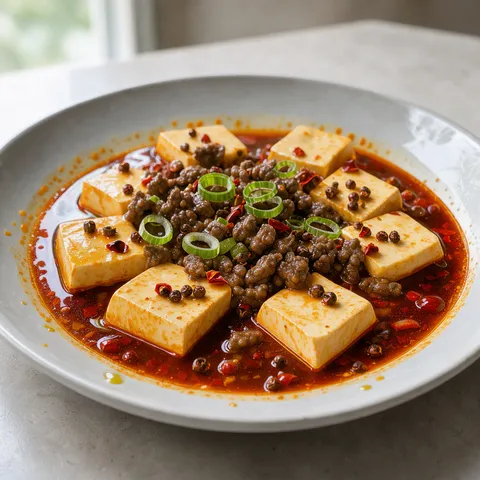 Mapo Tofu35 min · Main course
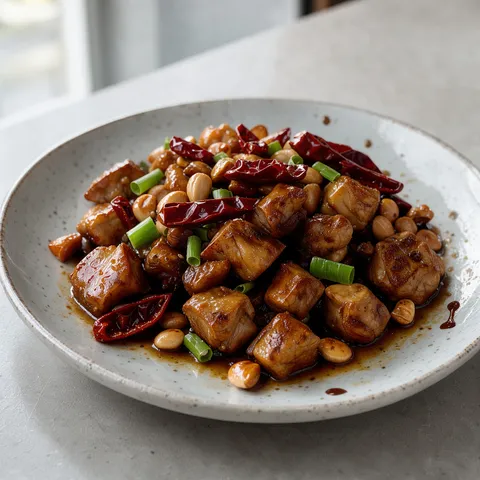 Kung Pao Chicken30 min · Main course
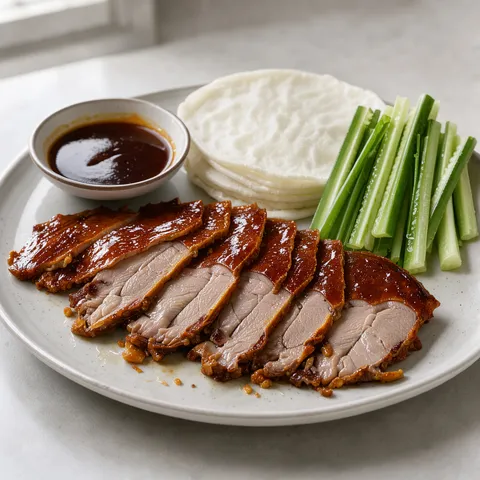 Peking Duck2 hr · Main course
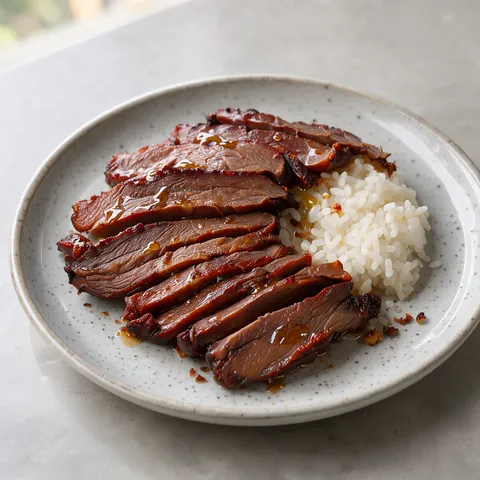 Char Siu1 hr · Main course
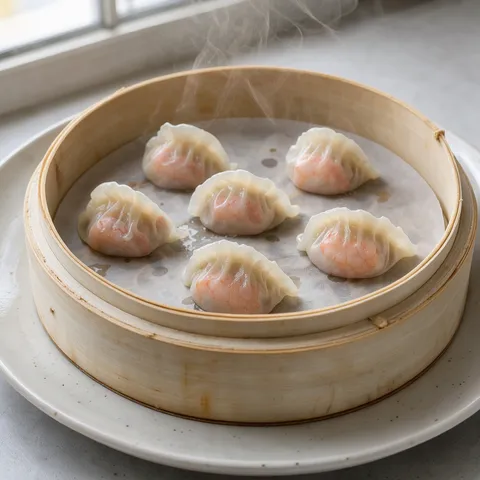 Crystal Prawn Dumplings1 hr 30 min · Starter
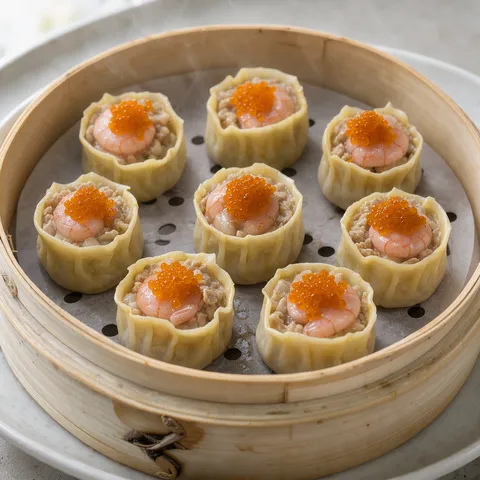 Open-Topped Dumplings50 min · Starter