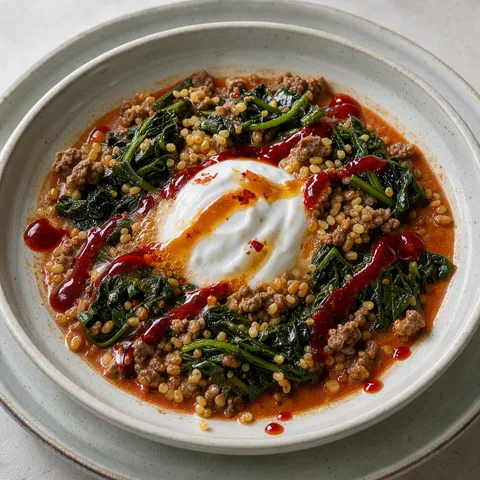
Wild Knotweed Stew Madimak Yemegi
A Turkish main course. Takes 1 hr 10 min, Serves 4. Difficulty: medium.
At a glance
- Total time
- 1 hr 10 min
- Serves
- Serves 4
- Difficulty
- Medium
- Cuisine
- Turkish cuisine
- Dish type
- Main course
- Allergens
- Gluten, Milk
Ingredients
Greens
- 500 g fresh madimak (wild knotweed, leaves picked, from a bunch of about 1 kg) or 60-70 g dried madimak
Stew
- 250 g beef or lamb mince (medium fat)
- 2 medium onions
- 2 garlic cloves
- 1 tbsp tomato paste
- 1 tbsp sweet pepper paste
- 80 g coarse bulgur
- 2 tbsp butter
- 1 tbsp olive oil
- 500 ml hot water
- 1 tsp salt
- 1/2 tsp black pepper
- 1 tsp Aleppo pepper
Blanching
- 2 litres water
- 1 tbsp salt
To serve
- 300 g strained (Greek-style) yoghurt
- 1 garlic clove
- 2 tbsp butter
- 1 tsp Aleppo pepper
Equipment
- Mixing bowls
- Saucepan
- Colander
- Chopping board
- Chef's knife
- Heavy-based saucepan
- Frying pan
- Balloon whisk (optional)
Method
- Pick over the madimak: Remove the tough stalks and yellowed leaves from the fresh madimak, leaving only the leaves and tender tips. To get rid of the soil, wash it 3 times in plenty of water in a large bowl, until the water runs clear. If you're using dried madimak, soak it in lukewarm water for 30 min and drain
- Blanch and squeeze: Bring the 2 litres salted water to the boil, add the madimak and blanch for 4-5 min. The leaves turn dark green and shrink to a third of their volume. Transfer to a colander, refresh with cold water and squeeze out the water thoroughly with your hands. Blanching takes away the herb's slight bitterness, and greens that aren't squeezed make the dish watery
- Chop: Roughly chop the squeezed madimak on a chopping board with a chef's knife: finely chopped greens turn into a purée
- Brown the mince: Heat the butter and olive oil in a heavy-based pan over medium-high heat, add the mince and fry for 6-8 min, until it releases its liquid and the liquid evaporates again. The mince should be crumbly and brown at the edges: this browning gives the dish its meaty flavour
- Onion and paste: Add the finely chopped onions and stir for 5 min until soft. Stir in the garlic for 30 sec, then add both pastes and fry for 2 min: once the fat turns red, the paste is done
- Bulgur and greens: Rinse the bulgur once in cold water, drain and add to the pan, stirring for 1 min to coat it in the fat. Add the madimak and stir for 2 min. Add the hot water, salt, pepper and Aleppo pepper
- Cook: When it boils, lower the heat, cover and cook for 20 min. The bulgur should be plump with separate grains and most of the liquid absorbed, but the dish should still be loose and juicy. Take off the heat, put a cloth under the lid and leave to steam for 10 min
- Garlic yoghurt and butter: Whisk the yoghurt with the crushed garlic and a pinch of salt. Heat the butter in a small frying pan until foaming, take off the heat and add the Aleppo pepper
- Plate: Divide the stew between shallow bowls, put a spoonful of garlic yoghurt in the centre and drizzle with the sizzling pepper butter. Serve hot
Chef's note
Madimak is a sour, slightly bitter wild herb gathered in spring on the high pastures of Sivas and Tokat; its botanical name is Polygonum cognatum. In season it is sold in bunches at local markets, and for the rest of the year it is blanched and frozen or dried. Some households use yarma (cracked wheat) instead of bulgur, and it is also commonly made without meat.
Frequently asked questions
- Why is the knotweed blanched and squeezed?
- Blanching removes the plant's slight bitterness. Unsqueezed greens make the stew watery.
- Can I use dried knotweed?
- Yes, 60-70 g of dried knotweed works. Soak it in warm water first and drain it.
- Why is it not recommended to chop the knotweed finely?
- Finely chopped greens turn to a puree, so chop them roughly with a chef's knife.
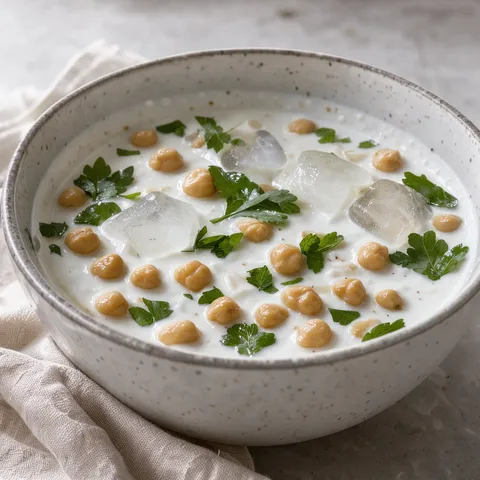 Chilled Wheat Yoghurt Soup1 hr · Soup
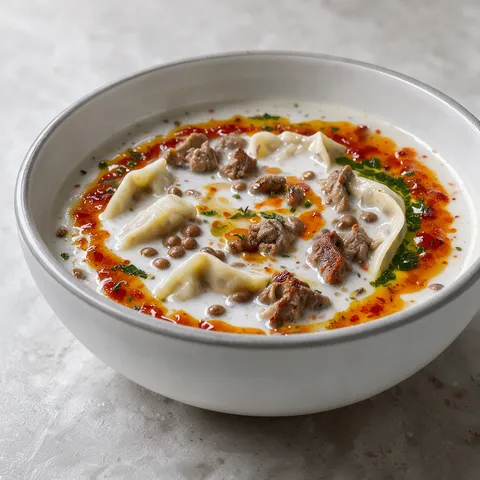 Noodle and Yoghurt Soup1 hr 10 min · Soup
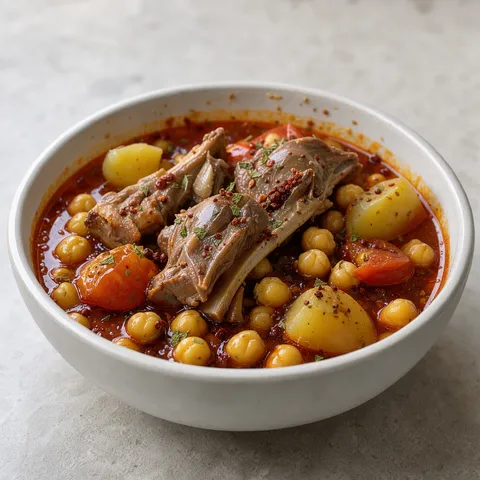 Lamb, Chickpea and Potato Stew1 hr 15 min · Soup
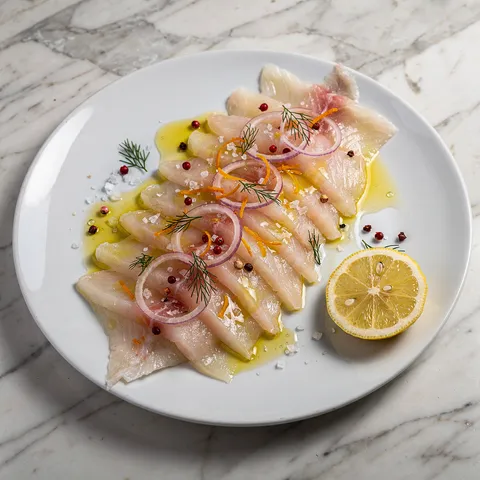 Marinated Sea Bass30 min · Meze
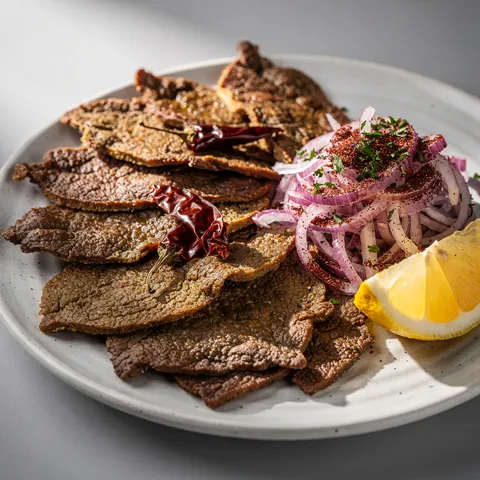 Crispy Fried Liver Slices25 min · Meze
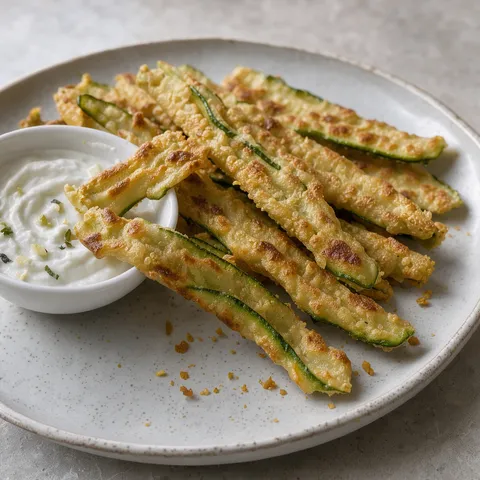 Courgette Crisps30 min · Meze