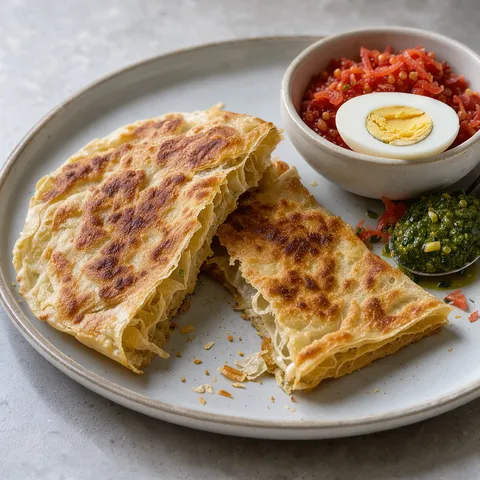
Yemenite Jewish Layered Pan Bread Malawach
An Israeli bread & pastry. Takes 51 min · +30 min resting, 4 pieces (4 servings). Difficulty: medium.
At a glance
- Total time
- 51 min · +30 min resting
- Serves
- 4 pieces (4 servings)
- Difficulty
- Medium
- Cuisine
- Israeli cuisine
- Dish type
- Bread & pastry
- Allergens
- Gluten, Milk, Eggs
Ingredients
Dough
- 500 g plain flour
- 1 tsp salt
- 1 tbsp caster sugar
- 250 ml lukewarm water
- 60 g softened butter
Layering fat
- 100 g melted butter or clarified butter (ghee)
- 2 tbsp neutral oil (in the pan)
To serve
- 4 boiled eggs
- 4 ripe tomatoes (grated, salted)
- zhug (hot green sauce): 4 green chillies
- 50 g coriander
- 3 garlic cloves
- 1/2 tsp cumin
- 1/2 tsp salt
- 3 tbsp olive oil. Makes about 4 (serves 4)
Equipment
- Mixing bowls
- Dough scraper
- Rolling pin / oklava
- Pastry brush
- Cast-iron frying pan
- Saucepan
- Box grater
- Pestle and mortar
Method
- Knead the dough: Mix the flour, salt and sugar in a large bowl. Make a well in the middle, add the lukewarm water and softened butter and knead by hand for 6 min, until smooth and soft. The dough should be soft and pliable, like an earlobe, and if it is sticky, add 1 tbsp flour. Kneading develops the gluten and makes thin rolling easier
- Rest the dough: Divide the dough into 4 equal pieces (about 190 g each) with a dough scraper, shape into rounds, cover with a damp tea towel and rest at room temperature for 30 min. In rested dough the gluten relaxes, so it does not spring back under the rolling pin and can be rolled paper-thin without tearing
- Eggs and tomatoes: While the dough rests, boil the eggs in a pan for 9 min, plunge into cold water and peel. Grate the tomatoes on a grater, discard the skins and mix with salt. Because the grated tomato is not cooked, it stays fresh
- Make the zhug: Crush the garlic and cumin with the salt in a mortar, add the coriander and chopped chillies and mix with the olive oil by crushing or pounding. Zhug is the hot sauce served with bread in Yemen and Israel. Those who prefer less heat should remove the seeds
- Roll out the dough: Roll one ball (about 190 g) with a rolling pin into a paper-thin rectangle of 30×40 cm. Brush the surface with 1 tbsp melted butter and roll up tightly from the long edge. The fat separates the layers, and the thin rolling makes the bread flaky when cooked
- Coil: Coil the roll like a spiral and tuck the end underneath. Flatten it again with the rolling pin on a greased surface into a 22 cm round, 5 mm thick. The spiral layers spread without breaking and become flaky when cooked. Repeat with the remaining dough
- Fry in the pan: Heat a cast-iron pan over medium-high heat and grease with 1 tbsp oil. Add a malawach and cook for 3-4 min on each side, until the bubbles turn golden. The surface should be blistered with golden-brown patches and the edges crisp. While one malawach cooks, roll out and coil the next, since each is cooked separately
- Scrunch and serve: Lift out the hot malawach and press it lightly between your two palms to fluff up the layers. Serve with the grated tomato, boiled egg and zhug. Eat hot, as it hardens once cold
Chef's note
Malawach is a layered pan bread brought by Yemenite Jews and found on every street in Israel. Traditionally it is eaten with fat, grated tomato, boiled egg and zhug. The dough can also be made with margarine instead of butter, and with ghee it is more aromatic. If it is made without fat instead of butter, the layers will not separate.
Frequently asked questions
- Why does the malawach dough need to rest?
- Resting relaxes the gluten, so the dough does not spring back under the rolling pin and can be rolled paper thin without tearing. Leave the balls covered with a damp cloth for 30 minutes.
- How do the layers form?
- Brush the thinly rolled dough with butter and roll it up, then coil it into a spiral and roll it out again. The fat separates the layers, which turn flaky as it cooks.
- What is malawach served with?
- Serve with salted grated tomato, boiled eggs and spicy green zhug. Eat it hot, as it hardens as it cools.
 Israeli Aubergine and Mayonnaise Salad55 min · Salad
 Shakshuka55 min · Main course
 Pitta with Fried Aubergine, Egg and Amba1 hr 15 min · Main course
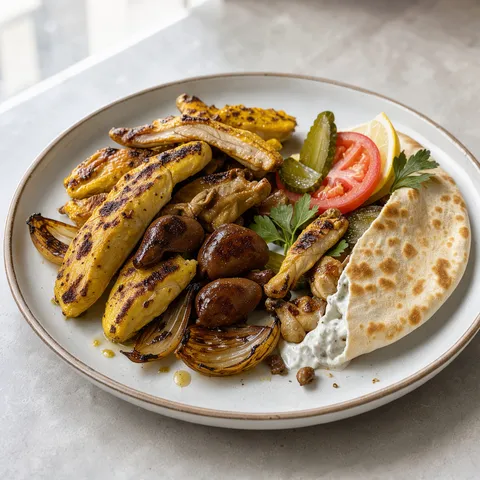 Jerusalem Mixed Grill of Chicken50 min · Main course
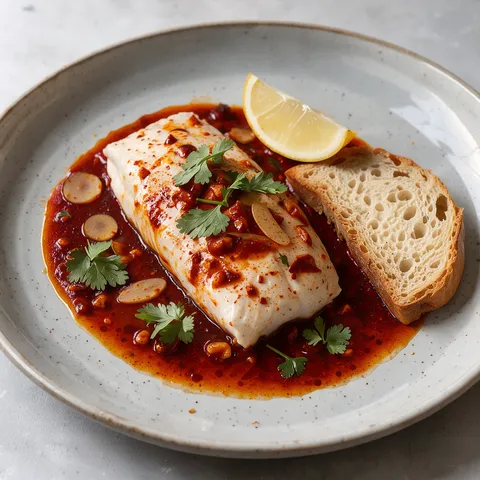 Libyan Jewish Fish in Spicy Red Sauce50 min · Main course
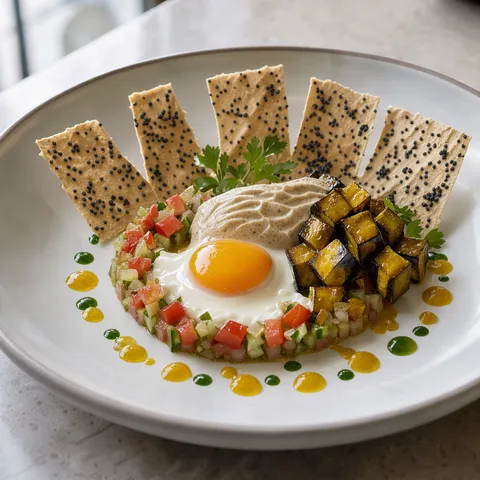 Sabich 2.01 hr 20 min · Starter