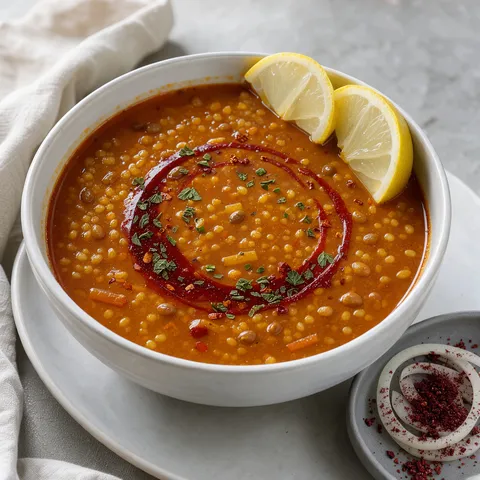
Red Lentil Bulgur Soup Malhita Corbasi
A Turkish soup. Takes 55 min, Serves 4. Difficulty: medium.
At a glance
- Total time
- 55 min
- Serves
- Serves 4
- Difficulty
- Medium
- Cuisine
- Turkish cuisine
- Dish type
- Soup
- Diet
- Vegetarian
- Allergens
- Gluten, Milk
Ingredients
Soup
- 200 g red lentils
- 60 g coarse bulgur
- 1 large onion (finely chopped)
- 1 tbsp Turkish red pepper paste
- 1 tsp tomato paste
- 3 tbsp butter
- 1.6 litres hot water
- 1.5 tsp salt
- 1/2 tsp black pepper
- 1/2 tsp cumin
Mint butter
- 2 tbsp butter
- 1 tsp dried mint
- 1 tsp Aleppo pepper
To serve
- 1 lemon (sliced)
- 1 small onion (thinly sliced into half-moons)
- 1/2 tsp sumac
- a pinch of salt
Equipment
- Heavy-based saucepan
- Fine sieve / chinois
- Ladle
- Wooden spoon / spatula
- Frying pan
- Chef's knife
- Chopping board
- Mixing bowls
Method
- Rinse: Rinse the lentils in a fine sieve under cold running water for about 1 min, until the water runs clear. This removes the surface dust and starch and reduces the foam that gathers on the soup. Rinse the bulgur once in a separate bowl and drain
- Fry the onion: Melt the 3 tbsp butter in a heavy-based saucepan over medium heat. Add the onion and fry for 6-7 min, until soft and lightly golden at the edges. Undercooked onion leaves a raw, sharp taste in the soup, while over-browned onion muddies its colour
- Fry the paste: Add the pepper and tomato pastes and fry for 2 min, stirring constantly. It's ready when the paste thickens, turns the butter red and smells sweet: unfried paste gives the soup a sour, raw taste
- Cook the lentils: Add the lentils and stir them in the paste butter for 1 min. Add the hot water, turn up the heat and bring to the boil (about 4 min). Skim off the foam with a ladle, turn the heat to low and simmer with the lid ajar for 20 min. The lentils should start to break down into the liquid
- Add the bulgur: Add the bulgur, salt, black pepper and cumin. Cook over low heat for another 15 min, scraping the bottom now and then with a wooden spoon. Malhita is not a puréed soup: the lentils break down by themselves while the bulgur keeps its grains and gives the soup bite, so don't use a blender
- Adjust the consistency: The soup should pour from the ladle in a heavy, thick stream. If it has become too thick, add 100-200 ml hot water, boil for 2 min and check the salt. The bulgur absorbs liquid as it stands, so if the soup won't reach the table straight away, leave it a little loose
- Onion to serve: Rub the sliced onion with a pinch of salt and the sumac with your fingertips for 1 min. The salt draws out the onion's sharp juices and the sumac adds sourness and colour
- Mint butter: Melt the 2 tbsp butter in a small pan over medium heat and take off the heat once foaming. Add the dried mint and Aleppo pepper and stir for 30 sec. If the butter gets too hot, the mint darkens and turns bitter, which is why it infuses off the heat
- Plate: Ladle the soup into hot, deep bowls. Drizzle a spoonful of the red mint butter into the centre of each, leaving it in spots on the surface. Serve the lemon slices and sumac onion alongside on a small plate. Eat with a squeeze of lemon over each spoonful and a forkful of onion
Chef's note
The name malhita is said to come from a root meaning "mixed", describing lentils and grain cooked together. In the Kilis and Antep area it is made with bulgur. If the ratio of lentils to bulgur stays at around 3 to 1, the soup is both thick and grainy. The soup thickens by the next day, so loosen it with hot water as you reheat it.
Frequently asked questions
- Is malhita soup blended?
- No. Malhita is not a pureed soup. The lentils break down on their own while the bulgur stays in separate grains and gives the soup some bite.
- What if the soup thickens as it stands?
- Bulgur keeps absorbing liquid as it waits. If it gets too thick, add 100-200 ml hot water and bring it to the boil. If it will be served late, leave it a little runny.
- Why are the lentils rinsed?
- Rinsing removes dust and surface starch and reduces the foam that gathers on top of the soup.
 Chilled Wheat Yoghurt Soup1 hr · Soup
 Noodle and Yoghurt Soup1 hr 10 min · Soup
 Lamb, Chickpea and Potato Stew1 hr 15 min · Soup
 Marinated Sea Bass30 min · Meze
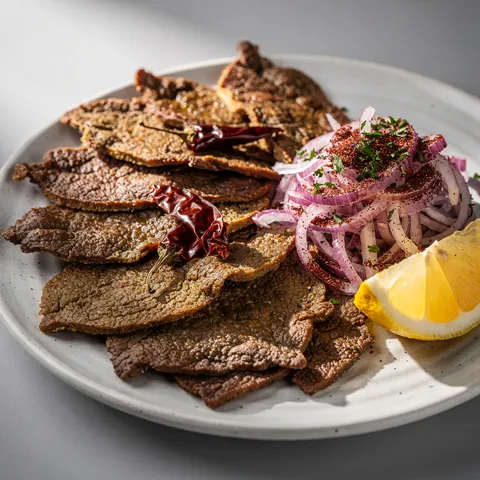 Crispy Fried Liver Slices25 min · Meze
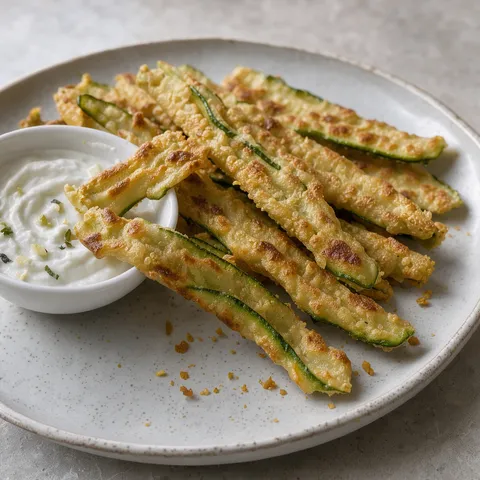 Courgette Crisps30 min · Meze