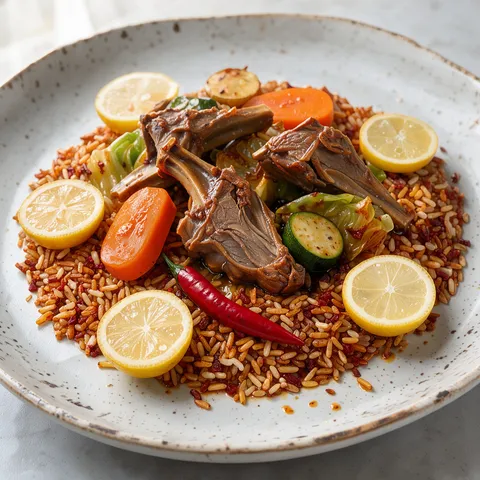
Mauritanian Lamb and Broken Rice Maru we Lham
A Mauritanian main course. Takes 1 hr 45 min, Serves 4. Difficulty: medium.
At a glance
- Total time
- 1 hr 45 min
- Serves
- Serves 4
- Difficulty
- Medium
- Cuisine
- Mauritanian cuisine
- Dish type
- Main course
- Diet
- Gluten-free
- Allergens
- Celery, Mustard, Sulphites
Ingredients
Meat
- 900 g bone-in lamb (shoulder or neck, 8 pieces)
- 3 tbsp sunflower oil
- 1 tsp salt
- 1/2 tsp black pepper
- 1 tsp coriander seeds (crushed in a mortar)
Sauce
- 2 onions (finely chopped)
- 3 garlic cloves (crushed)
- 1 tbsp tomato paste
- 2 tbsp mustard
- 2 tomatoes (grated)
- 1 bay leaf
- 1 red chilli (whole)
- 1 litre water
Vegetables
- 2 carrots (quartered lengthways)
- 1/4 small white cabbage (2 wedges)
- 1 courgette (4 pieces)
Rice
- 350 g broken rice (substitute: short-grain rice, washed and drained)
- 650 ml stock (from above)
- 1/2 tsp salt
To serve
- 1 lemon (cut into quarters)
Equipment
- Pressure cooker
- Pestle and mortar
- Box grater
- Colander
- Heavy-based saucepan
- Saucepan
- Ladle
- Chef's knife
- Chopping board
- Wooden spoon / spatula
Method
- Sear the meat: In a 6 litre pressure cooker, heat the oil over medium-high heat. Pat the lamb dry, rub with the salt, black pepper and coriander and sear in 2 batches, 2 min per side, until deep golden (8 min in total). Transfer to a plate
- Build the base: Reduce the heat to medium, add the onion and cook for 6 min, scraping up the residue from the bottom, until golden. Fry the garlic for 1 min and the tomato paste for 1 min, then add the tomato and cook for 4 min, until the oil separates. Add the mustard and stir for 30 sec. In Mauritania maru we lham is made in some homes with mustard and in some with tomato, and both are used here
- Pressure-cook the meat: Return the meat, add the 1 litre water, bay leaf and whole chilli, bring to the boil and skim off the foam (5 min). Lock the lid, cook over low heat for 20 min once the cooker reaches pressure and let the pressure release naturally (about 10 min). In an ordinary pan this step takes 1 hr 15 min
- Cook the vegetables: Open the lid, add the carrot, cabbage and courgette and cook uncovered over medium-low heat for 12 min, until the vegetables are tender but not falling apart. The vegetables flavour the stock, and the rice will be cooked in this sweet stock
- Separate the meat and vegetables: Lift the meat, vegetables and chilli onto a plate with a slotted spoon and keep warm covered with a lidded dish. Strain the stock and measure 650 ml, topping it up with hot water if short, and keep the rest for serving
- Cook the rice: Wash the broken rice 2-3 times and drain. Bring the measured 650 ml stock to the boil with the salt in a wide, heavy-based pan, add the rice, and when it returns to the boil cook covered over the lowest heat for 15 min. The grains should absorb the liquid and take on a light orange colour. Turn off the heat and leave to steam for 5 min
- Reheat: While the rice steams, heat the remaining stock and the meat in a small pan over low heat for 3 min. Make sure the lamb comes away from the bone easily
- Serve: Mound the rice on a large serving dish, arrange the lamb pieces in the centre and the vegetables and chilli around it. Pour a ladle of hot stock over the top and serve with the lemon wedges. In Mauritania this dish is shared from a communal plate on mats laid on the ground, followed by three rounds of atay (mint green tea)
Chef's note
Maru we lham (rice and meat), named in Hassaniya Arabic, is a well-known meat and rice dish in Mauritania. The original recipe uses camel meat or lamb, and lamb is used here. Broken rice is sold in African grocers under the name "riz brisé". Aubergine and pumpkin are also added in place of cabbage, and the choice of vegetables varies with the season.
Frequently asked questions
- What can I use instead of broken rice in maru we lham?
- Use short-grain rice. Wash and drain the rice and cook it in the meat stock.
- Why is the rice cooked in the stock for maru we lham?
- The vegetables flavour the stock and the rice is cooked in it. The grains absorb the liquid and take on a light orange colour.
- Are mustard and tomato used together in maru we lham?
- The recipe uses both together. In Mauritania some households make it with mustard and others with tomato.
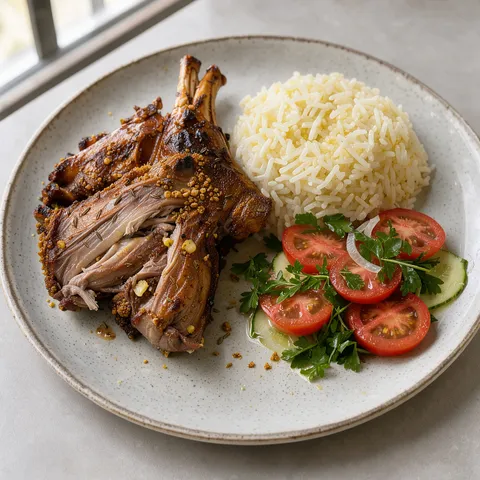 Mauritanian Cumin Garlic Lamb Shoulder2 hr 51 min · Main course
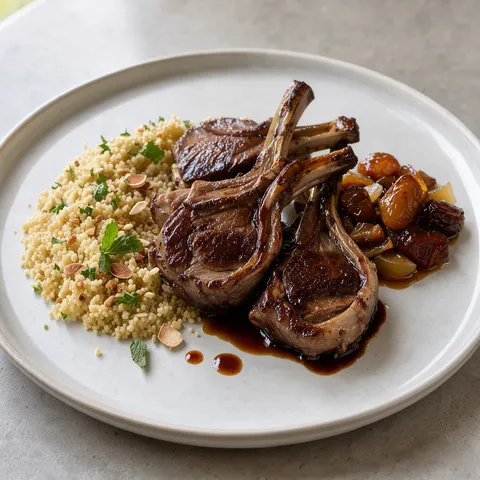 Méchoui 2.01 hr 15 min · Main course