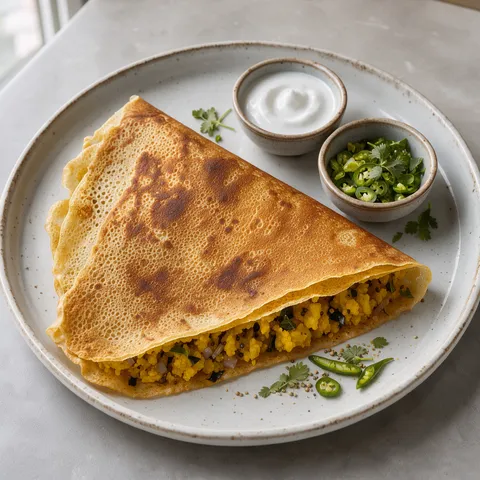
Fermented Rice Crêpes with Spiced Potato Masala Dosa
An Indian bread & pastry. Takes 50 min · +16 hr soaking and fermenting, 8 pieces (4 servings). Difficulty: medium.
At a glance
- Total time
- 50 min · +16 hr soaking and fermenting
- Serves
- 8 pieces (4 servings)
- Difficulty
- Medium
- Cuisine
- Indian cuisine
- Dish type
- Bread & pastry
- Allergens
- Gluten, Milk, Tree nuts, Mustard, Sulphites
Ingredients
Batter
- 250 g short-grain rice (or idli rice)
- 80 g urad dal (split black lentils, skinned)
- 1 tsp fenugreek seeds
- 2 tsp salt (added after fermenting)
- water
Potato filling
- 600 g potatoes
- 2 tbsp sunflower oil
- 1 tsp mustard seeds
- 1 tsp urad dal
- 10 curry leaves (or 1 bay leaf)
- 1 onion (thinly sliced)
- 1 green chilli
- 2 cm ginger
- 1/2 tsp ground turmeric
- 1 tsp salt
- coriander
For cooking
- 3 tbsp ghee or oil
To serve
- coconut sauce (80 g freshly grated coconut, 1 green chilli, 100 g yoghurt, salt)
Equipment
- Blender
- Mixing bowls
- Cast-iron frying pan
- Frying pan
- Silicone spatula
- Ladle
Method
- Soak: Soak the rice, and the urad dal with the fenugreek seeds, in separate bowls for 6 hr. The fenugreek seeds help the fermentation and the aroma
- Grind: Blend the urad dal with cold water to a frothy, airy cream. Blend the rice separately to a slightly grainy texture, like fine semolina. Mix the two together: add the salt after fermenting. Mixing by hand passes the natural yeasts from your palms into the batter
- Ferment: Leave the batter in a covered container in a warm place at 25-30°C for 8-10 hr, until doubled in size with a sweet-sour smell. If it is too cold, fermentation stops
- Cook the potatoes: Boil the potatoes for 20 min, then peel and roughly mash. Heat the oil in a frying pan and fry the mustard seeds until they crackle, then stir in the urad dal and curry leaves for 30 sec. Add the onion, chilli and ginger for 5 min, then stir in the turmeric, potatoes and salt for 3 min. Scatter with coriander
- Adjust the batter: If needed, add 2-3 tbsp water so the batter flows slowly from the ladle, and stir in the 2 tsp salt now. A batter that is too thick gives thick, soft dosas
- Cook the dosa: Heat a cast-iron pan over medium-high heat: a drop of water should sizzle and skitter away. Grease with oil. Pour a ladleful of batter into the centre and, with the base of the ladle, spread it in a spiral from the outside in to a 20-22 cm round. Drizzle 1/2 tsp ghee around the edges and cook for 2 min, until the underside is deep golden and the edges lift. Do not flip it: only one side is cooked
- Fill and fold: Spoon 3 tbsp potato filling in a line down the centre of the dosa and fold in half or roll up. Lift straight onto the plate with a spatula to serve
- Make the sauce: Blend the grated coconut, green chilli, yoghurt and salt for 30 sec, until coarsely smooth. Over-blended, it turns watery and heavy: it should be fluid but hold on a spoon
- Plate: Lay the dosa on a large plate with the coconut-yoghurt sauce alongside. A dosa softens as it stands, so eat it at once
Chef's note
Dosa comes from South India: the sourness of fermentation and the crisp edges are its identity. The first dosa usually goes on getting the pan temperature right, and from the second one on they come out well. If coconut is unavailable, make the sauce with yoghurt only.
Frequently asked questions
- How do I know the dosa batter has fermented?
- The batter doubles in volume and smells pleasantly sweet and sour. If the room is too cold, fermentation stalls.
- Why isn't the dosa flipped?
- A dosa cooks on one side only and isn't flipped. Cook until the underside is deep golden and the edges lift.
- What should I do if the dosas come out thick and soft?
- A batter that is too thick gives thick, soft dosas. Add water until the batter runs slowly off the ladle.
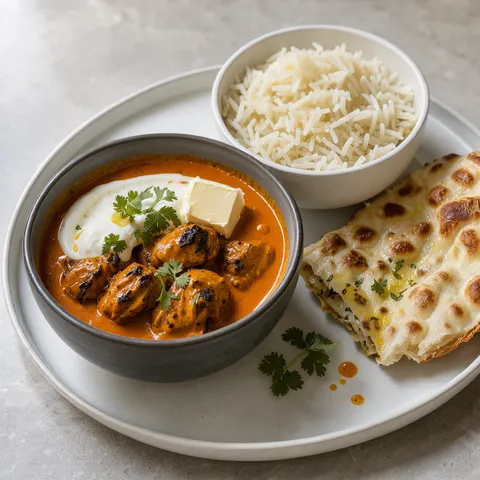 Indian Butter Chicken50 min · Main course
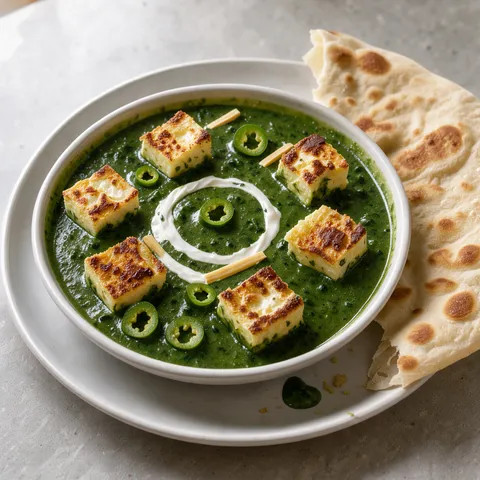 Spinach with Homemade Paneer45 min · Main course
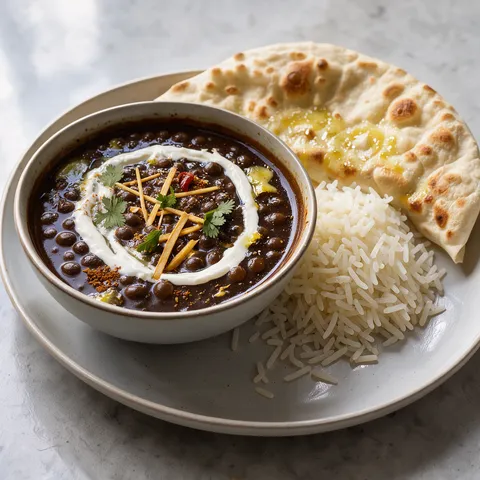 Black Lentil and Kidney Bean Stew1 hr 30 min · Main course
 Chicken Dum Biryani1 hr 30 min · Main course
 Indian Potato Pastries1 hr 30 min · Bread & pastry
 South Indian Black Pepper Soup35 min · Soup