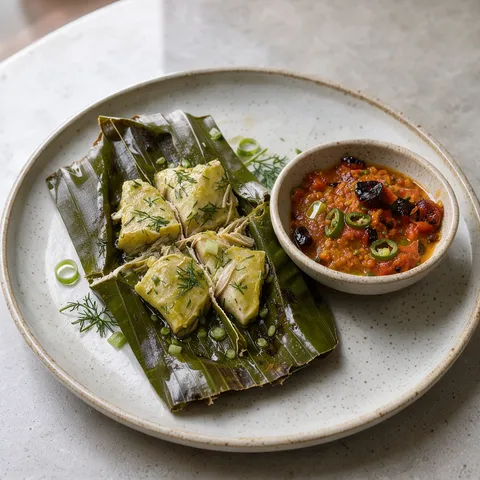
Lao Steamed Fish with Dill in Banana Leaves Mok Pa
A Lao main course. Takes 1 hr, Serves 4. Difficulty: medium.
At a glance
- Total time
- 1 hr
- Serves
- Serves 4
- Difficulty
- Medium
- Cuisine
- Lao cuisine
- Dish type
- Main course
- Diet
- Gluten-free
- Allergens
- Eggs, Fish
Ingredients
Fish
- 600 g white fish fillets (catfish, sea bass or tilapia, skinless, 4 cm pieces)
Paste
- 3 lemongrass stalks (lower white part, chopped)
- 4 shallots
- 4 garlic cloves
- 3 bird's eye chillies
- 1/2 tsp salt
- 6 makrut lime leaves (finely chopped)
Binding
- 1 egg
- 2 tbsp glutinous rice flour
- 2 tbsp padaek (fermented fish sauce)
- 1 tbsp fish sauce
Herbs
- 1 bunch dill (about 40 g, roughly chopped)
- 4 spring onions (2 cm pieces)
- 1 handful Thai basil (optional)
Parcels
- 4 banana leaves of 30×30 cm and 4 of 20×20 cm (thawed)
- 8 bamboo cocktail sticks
Jeow mak len
- 4 medium tomatoes (about 500 g)
- 3 long green peppers (long green)
- 4 garlic cloves (unpeeled)
- 2 shallots (unpeeled)
- a pinch of salt
- 1 tbsp fish sauce
- 1/2 bunch coriander (chopped)
Equipment
- Pestle and mortar
- Mixing bowls
- Kitchen scissors
- Steamer basket
- Probe thermometer
- Frying pan
- Chef's knife
- Chopping board
Method
- Pound the paste: Pound the lemongrass, shallots, garlic, chillies and salt in a pestle and mortar for 5 min, until fibrous and moist. Add the lime leaves and pound a few more times. A mortar draws the oils out of the lemongrass far better than a knife
- Mix the fish: Put the fish pieces in a large bowl. Add the paste, egg, glutinous rice flour, padaek and fish sauce and mix gently by hand without breaking up the pieces. Fold in the dill, spring onions and basil. Leave for 10 min: the rice flour and egg bind the liquid and form a soft coating around the fish as it cooks
- Soften the banana leaves: Meanwhile, pass the leaves over a gas flame or an electric hob ring for 2-3 sec, or dip them in hot water and pat dry. The leaf is ready when it turns glossy and supple. A stiff leaf tears along its veins when folded. Wipe with a damp cloth and trim the edges with scissors
- Wrap: Lay a large leaf glossy side up and put a small leaf in the centre: the double layer makes the parcel leakproof. Place a quarter of the mixture in the centre as a pillow of about 10×12 cm. Fold the two long sides over each other first, then fold the ends underneath and secure with two cocktail sticks. Make all four parcels the same way
- Steam: Bring the water in the steamer to the boil, arrange the parcels in the basket in a single layer and cover. Steam over medium-high heat for 20-25 min. Insert a thermometer through the leaf into the thickest part: it should read 63°C, the mixture should be firm and any liquid that seeps out should be clear
- Char for the jeow: While the parcels cook, char the tomatoes, peppers, unpeeled garlic and shallots in a dry frying pan over medium-high heat, turning occasionally, for 10-12 min, until the skins are blackened in places and the insides are soft. Let cool slightly
- Pound the jeow: Peel the garlic and shallots. Wash the mortar, then pound the peppers, garlic, shallots and salt to a paste. Add the tomatoes with their charred skins, as the burnt skin is the source of the smoky flavour, and pound roughly until a chunky, juicy texture remains. Stir in the fish sauce and coriander
- Plate: Put each parcel on a flat plate, remove the cocktail sticks, cut a cross in the top with scissors and fold back the edges of the leaf. The golden fish, flecked green with dill, should be visible inside. Serve hot, with a small bowl of jeow mak len alongside
Chef's note
In Laos mok pa is usually eaten with sticky rice (khao niao): a small ball pinched from the rice is dipped into the jeow. In the countryside the parcels cook at the edge of the embers. In a home kitchen a steamer gives the same moist heat. Padaek is a thick, salty Lao fermented fish sauce and is bought ready-made. If unavailable, replace it with 1 tbsp fish sauce and 1 tsp shrimp paste. Fish sauce and frozen banana leaves are also bought ready-made. If banana leaves are unavailable, wrap the parcels in baking paper and cover with foil.
Frequently asked questions
- Why is the banana leaf heated?
- Stiff leaf tears along its veins when folded. Soften the leaves by passing them over a flame for 2-3 seconds or dipping them in hot water.
- What do the egg and glutinous rice flour added to the fish do?
- They bind the mixture and form a soft casing around the fish as it cooks. Rest the mixture for 10 minutes.
- Where does the smoky taste of the jeow come from?
- The tomatoes, chillies, garlic and shallots are charred in a dry pan. The burnt skin is the source of the smoky taste, and the tomatoes are pounded with their blackened skins.
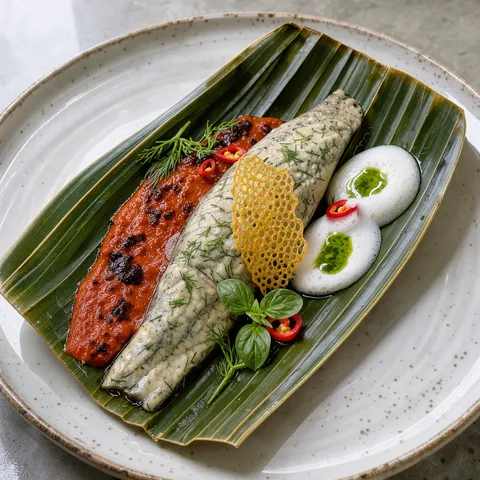 Mok Pa 2.01 hr 15 min · Main course
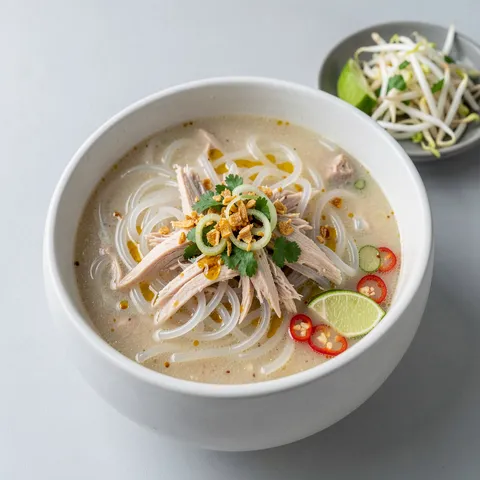 Lao Chicken Soup with Hand-Cut Rice Noodles1 hr 20 min · Soup
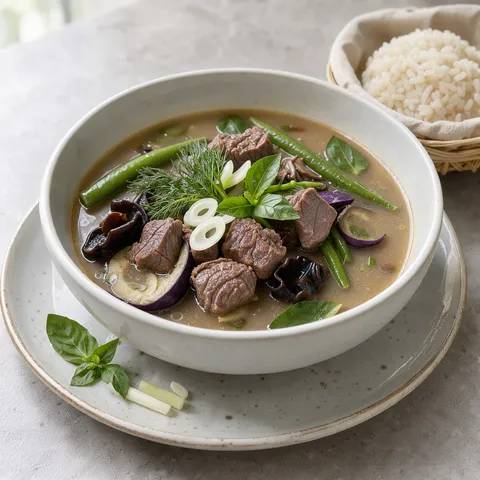 Luang Prabang Beef Stew with Dill1 hr 50 min · Main course
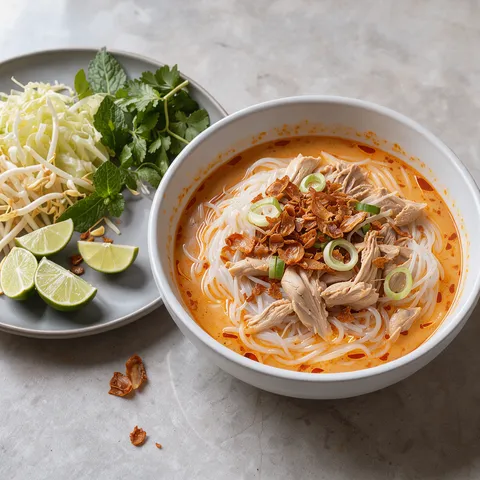 Lao Red Curry Chicken and Noodle Soup1 hr 25 min · Soup
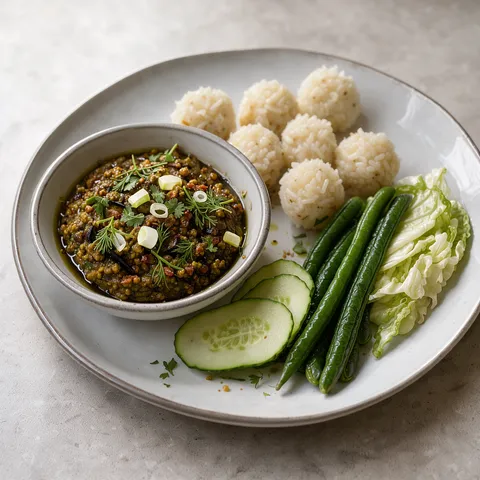 Lao Charred Aubergine and Chilli Dip40 min · Meze
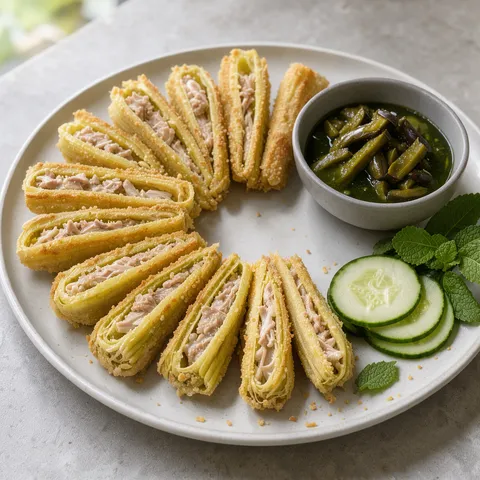 Lao Fried Lemongrass Stuffed with Chicken1 hr 10 min · Starter
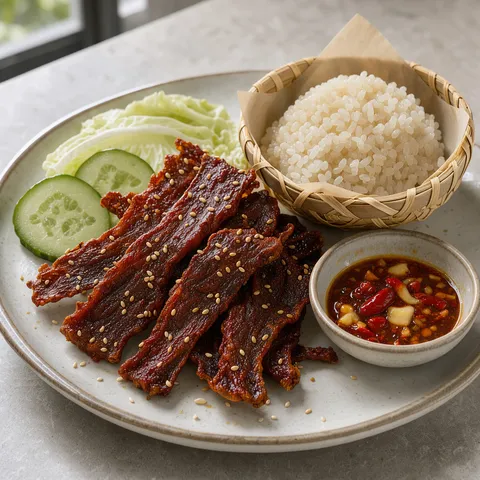 Lao Sweet and Salty Dried Beef with Sesame1 hr 10 min · Meze