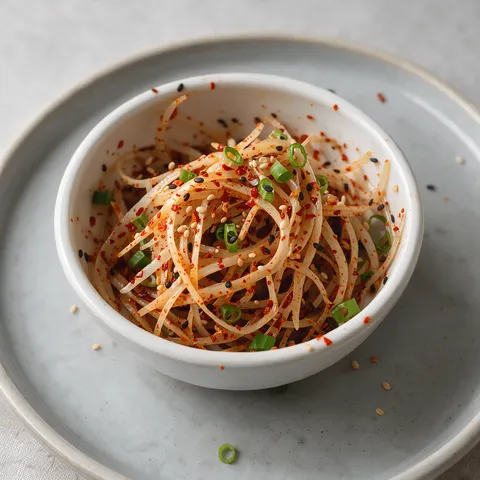
Mu-saengchae Korean Spicy Radish Salad
A Korean side dish. Takes 29 min · +15 min resting, Serves 4. Difficulty: easy.
At a glance
- Total time
- 29 min · +15 min resting
- Serves
- Serves 4
- Difficulty
- Easy
- Cuisine
- Korean cuisine
- Dish type
- Side dish
- Diet
- Vegetarian, Vegan
- Allergens
- Gluten, Sesame, Soya
Ingredients
Salad
- 600 g daikon (long white radish)
- 1 tbsp coarse salt
Sauce
- 2 tbsp gochugaru (Korean chilli flakes)
- 1 tbsp caster sugar
- 2 garlic cloves (crushed)
- 1 tsp fresh ginger (grated)
- 1 tbsp soy sauce
- 1 tbsp cider vinegar
- 2 spring onions
To serve
- 1 tsp toasted sesame seeds
- 1 tsp sesame oil
Equipment
- Mixing bowls
- Colander
- Chef's knife
- Mandoline (optional)
Method
- Peel the radish: Peel the radish and cut into 6 cm lengths. Cut each piece with a knife or mandoline into 3 mm slices and then into 3 mm sticks (julienne). The same thickness ensures even salting and crispness (~8 min)
- Salt: Mix the radish sticks with the salt in a bowl and leave for 10 min. In this time the radish softens, releases its water and loses some of its own bitterness (~10 min)
- Squeeze out the water: Squeeze the radish in your palm and discard the liquid. Rinse briefly in a colander and squeeze again. Excess water stops the sauce from coating and clinging. The radish should be pliable but crisp (~3 min)
- Colour the radish: Put the radish sticks in a clean bowl, add the gochugaru and rub with your fingers for 1 min so the sticks turn an even orange-red. Adding the chilli first spreads the colour evenly (~2 min)
- Add the sauce: Add the crushed garlic, ginger, sugar, soy sauce and vinegar. Cut the spring onions on a board into 3 cm sticks and add. Toss lightly without breaking (~3 min)
- Taste and adjust: Taste. If the salt is short, add a pinch, and if it is too sweet, add 1 tsp vinegar. The sauce should make a thin coating and not collect at the bottom of the bowl (~1 min)
- Rest: Cover the bowl and chill in the fridge for 15 min. Salad resting cold brings the flavours together (~1 min)
- Serve: Pile the salad into small bowls. Drizzle over the sesame and a few drops of sesame oil. Eat as a side dish with fried meat, rice or noodles (~1 min)
Chef's note
Mu-saengchae is a refreshing banchan alongside fatty dishes at the Korean table, and the raw radish keeps its crisp texture. Because soy sauce is used instead of fish sauce, it is completely vegan. Gochugaru (Korean chilli flakes) is a traditional ready-made spice and soy sauce a traditional ready-made product. It keeps in a covered container in the fridge for 3 days, and gives more flavour on the second day.
Frequently asked questions
- Why is the radish salted in mu-saengchae?
- The radish softens, releases its water and loses some of its bitterness. Then squeeze it out by hand and rinse it briefly.
- Why is the chilli flake added before the other sauce ingredients?
- Rubbing the chilli flakes in first spreads the colour evenly over the radish sticks. The garlic, ginger, sugar, soy sauce and vinegar go in afterwards.
- What is mu-saengchae eaten with?
- It is eaten as a side with fried meat, rice or noodles. Add the sesame seeds and sesame oil just before serving.
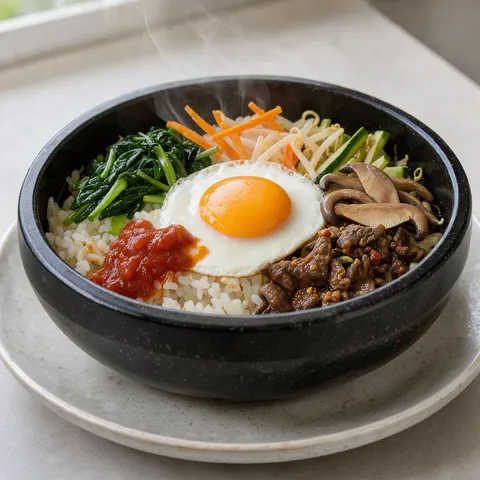 Bibimbap1 hr 15 min · Main course
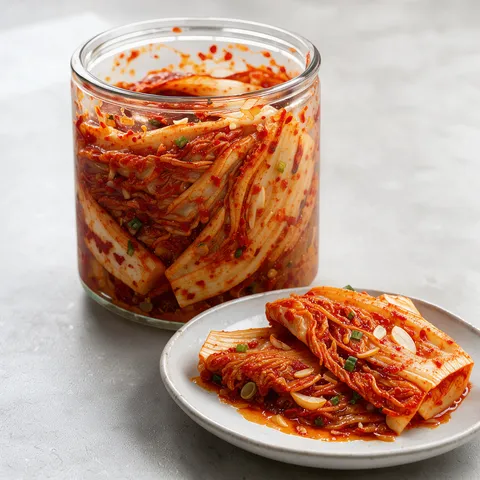 Kimchi3 hr · Side dish
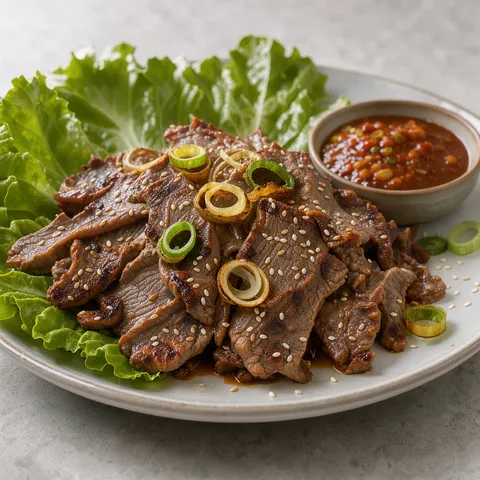 Bulgogi30 min · Main course
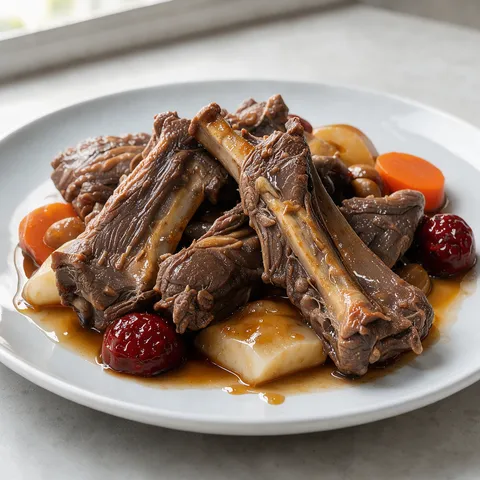 Korean Braised Short Ribs1 hr 30 min · Main course
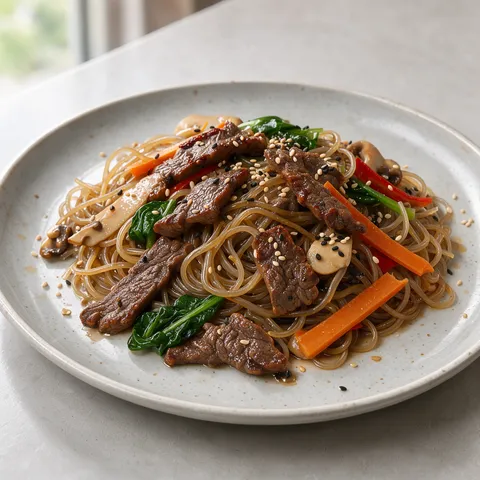 Korean Glass Noodles with Vegetables45 min · Main course
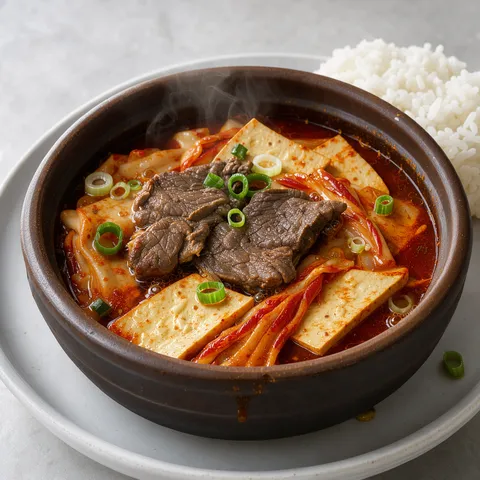 Kimchi Stew40 min · Soup