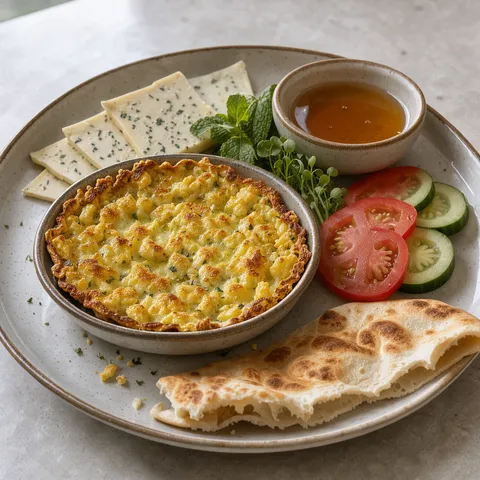
Toasted Flour and Egg Scramble Murtuga
A Turkish starter. Takes 25 min, Serves 4. Difficulty: medium.
At a glance
- Total time
- 25 min
- Serves
- Serves 4
- Difficulty
- Medium
- Cuisine
- Turkish cuisine
- Dish type
- Starter
- Allergens
- Gluten, Milk, Eggs
Ingredients
Murtuga
- 100 g butter (ideally farmhouse butter)
- 80 g plain flour
- 5 eggs (at room temperature)
- 1/2 tsp salt
- a pinch of black pepper
To serve
- 150 g Van herb cheese
- 1 bunch fresh mint and cress
- 4 small tomatoes
- 1 cucumber
- 2 tbsp honey or grape molasses (optional)
- tandoor bread or lavash
- strong tea
Equipment
- Mixing bowls
- Balloon whisk
- Frying pan
- Wooden spoon / spatula
- Cast-iron frying pan (optional)
Method
- Get everything ready: Crack the eggs into a bowl and whisk with the salt and pepper for 30 sec, until the yolks and whites are completely combined. Murtuga moves very fast, so measure the flour, weigh the butter and keep them close to hand, so you're not hunting for anything at the hob. Room-temperature eggs spread through the hot flour without forming lumps
- Melt the butter: Melt the butter in a wide, heavy-based frying pan over medium-low heat. It's ready when it foams and the foam starts to subside: don't let it turn brown, as burnt butter makes murtuga bitter
- Toast the flour: Sprinkle the flour into the butter and toast over low to medium heat for 6-8 min, stirring constantly with a wooden spoon. The flour first clumps, then combines with the butter into a loose paste, then turns grainy like sand. It should reach a light biscuit colour and smell nutty. If you toast it too fast, the outside burns and the inside stays raw
- Add the eggs: Turn the heat to its lowest. Pour in the whisked eggs in a thin stream with one hand while stirring quickly and constantly with the other. The egg should coat the grains of flour, not set into a single omelette
- Break into crumbs: Once all the egg is in, keep cooking for 3-4 min, cutting and turning with the edge of the wooden spoon. The mixture should break into moist but not wet, soft crumbs the size of chickpeas and lentils. It's done when the butter starts to separate in a glossy sheen at the edges. The egg must be fully cooked for food safety too: no wet-looking bits should remain
- Taste: Check the salt, sprinkle in a pinch if needed and stir for another 30 sec. Overcooked murtuga dries out into dry crumbs, so take it off the heat straight away
- Set up the breakfast plate: Slice the herb cheese, slice the tomatoes and cucumber and gather them on a plate with the mint and cress. Put the honey or molasses in a small bowl
- Plate: Bring the murtuga to the table in its hot pan or in a shallow serving pan, with the crumbs piled up fluffily on top, and spoon over the butter left in the bottom of the pan. Serve immediately with the herb cheese, greens and bread. Anyone who likes can dip a mouthful in the honey
Chef's note
Murtuga is the heavyweight of a Van breakfast, made on cold winter mornings to keep you full and eaten with tea. Similar dishes go by other names in the region, and some households add a pinch of sugar to the flour. The quality of the butter is everything: if you can find a fragrant farmhouse butter, use it.
Frequently asked questions
- What is murtuga served with?
- Serve it with Van herb cheese, mint and cress, tomatoes, cucumber, tandoor bread or lavash and strong tea. You can dip the bites in honey or grape molasses.
- Why is the flour toasted slowly for the murtuga?
- Toasted quickly, the flour burns outside and stays raw inside. Stir with a wooden spoon until it turns the colour of a pale biscuit and smells nutty.
- How do I stop the eggs setting like an omelette?
- Turn the heat to its lowest. Pour in the eggs in a thin stream while stirring quickly and constantly with your other hand.
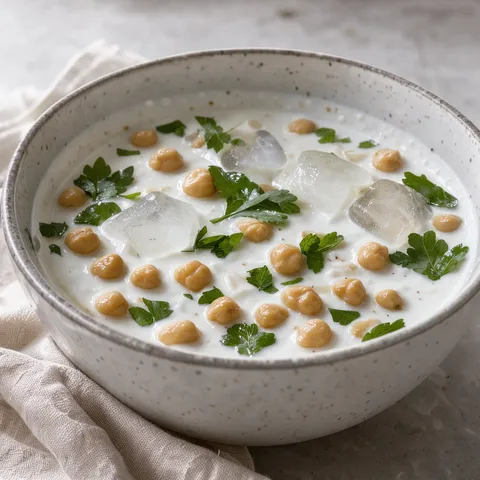 Chilled Wheat Yoghurt Soup1 hr · Soup
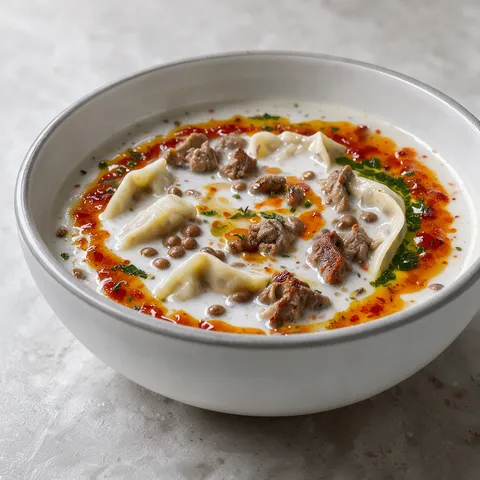 Noodle and Yoghurt Soup1 hr 10 min · Soup
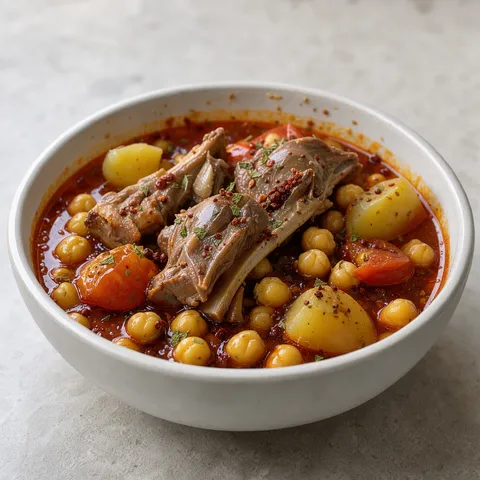 Lamb, Chickpea and Potato Stew1 hr 15 min · Soup
 Marinated Sea Bass30 min · Meze
 Crispy Fried Liver Slices25 min · Meze
 Courgette Crisps30 min · Meze