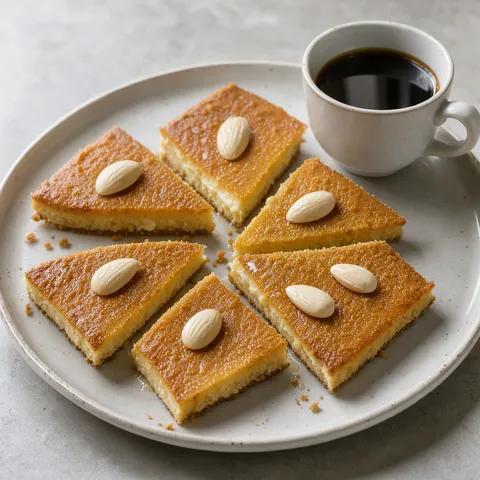
Lebanese Semolina Syrup Cake Namoura
A Lebanese dessert. Takes 55 min · +30 min resting, 22x22 cm tin, 16 slices. Difficulty: medium.
At a glance
- Total time
- 55 min · +30 min resting
- Serves
- 22x22 cm tin, 16 slices
- Difficulty
- Medium
- Cuisine
- Lebanese cuisine
- Dish type
- Dessert
- Allergens
- Gluten, Tree nuts, Sesame
Ingredients
Batter
- 300 g medium semolina
- 100 g caster sugar
- 80 g fine desiccated coconut
- 1 tsp baking powder
- 1/2 tsp salt
- 120 ml sunflower oil
- 230 ml water
- 2 tbsp tahini
- 1 tbsp rosewater
Tin and decoration
- 22×22 cm square tin
- 1 tbsp tahini (for greasing)
- 16 blanched almonds
Syrup
- 250 g caster sugar
- 250 ml water
- 1 slice of lemon
- 1 tbsp rosewater
Equipment
- Oven
- Baking tray
- Mixing bowls
- Balloon whisk
- Silicone spatula
- Pastry brush
- Saucepan
- Chef's knife
Method
- Prepare the tin: Set the oven to 180°C (conventional). Brush the base and sides of the square tin with 1 tbsp tahini. Tahini is used to grease tins in Lebanon and gives the cake a note of lightly toasted sesame. (~3 min)
- Mix the dry ingredients: Mix the semolina, sugar, coconut, baking powder and salt in a large bowl with a wooden spoon. If the baking powder is not evenly distributed in the semolina, parts of the cake stay hard. (~2 min)
- Mix the batter: Whisk the oil, water, tahini and rosewater in a separate bowl. Pour over the dry ingredients and fold with a spatula until free of lumps. The batter should be thick and drop from a spoon. Leave for 10 min for the semolina to absorb the liquid. The oven heats in the meantime. (~4 min)
- Spread in the tin: Pour the batter into the tin and level with a wet spatula. Cut the surface with a knife into 16 diamonds or squares, cutting through the depth of the batter. Press an almond into the middle of each piece. Cutting before baking stops the hot cake from falling apart as it is filled with syrup. (~5 min)
- Boil the syrup: While the cake bakes, boil the sugar, water and lemon slice in a small pan, then lower the heat and simmer for 8 min. The syrup is ready when it leaves a thin layer on the back of a spoon. Add the rosewater off the heat, because its volatile aroma is lost in the heat. The syrup should cool to room temperature.
- Bake: Put the tin on the middle shelf of the oven and bake for 35 min. It is ready when the surface turns deep golden, the edges start to pull away from the tin and a skewer comes out clean from the centre. If the top browns too fast, cover with foil. (~35 min)
- Pour over the syrup: Slowly ladle the room-temperature syrup over the hot cake, along the cut lines. The rule of hot cake and cold syrup soaks the cake like a sponge and keeps the surface crisp. Leave for 30 min so the cake absorbs all the syrup. (~3 min)
- Plate: Separate the pieces with a knife and lift onto plates with a spatula. Serve with freshly brewed tea or Turkish coffee. Namoura tastes best at room temperature. (~3 min)
Chef's note
Namoura is the Lebanese name, and similar semolina cakes are made as basbousa in Egypt and harisseh in Syria. The traditional recipe uses yoghurt and butter. Here a vegan version with vegetable oil and water is given. It differs from the yoghurt-and-egg Revani (Semolina Sponge in Syrup) in being egg-free, with coconut and tahini, and the texture is a little more crumbly. Use medium semolina: fine semolina makes the batter heavy and coarse semolina makes it gritty. It keeps in an airtight container for 3 days.
Frequently asked questions
- Why grease the namoura tin with tahini?
- Tahini is the traditional way to grease the tin in Lebanon. It gives the base of the cake a note of lightly toasted sesame.
- Why cut the namoura before baking?
- Cut the surface down to the depth of the batter. The cake then holds together even when it is full of syrup.
- Should the syrup be poured on hot or cold?
- Pour room-temperature syrup over the hot cake. This soaks the cake like a sponge and keeps the surface crisp.
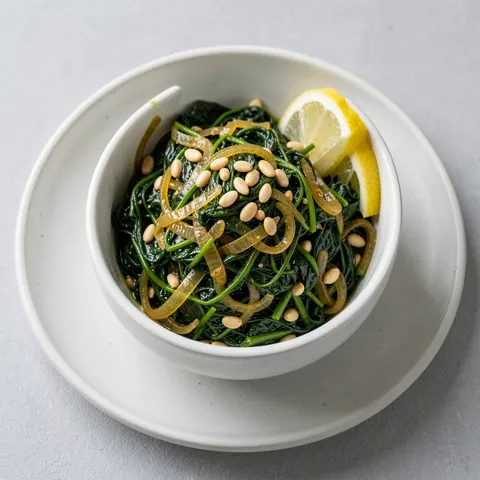 Lebanese Olive Oil Spinach25 min · Main course
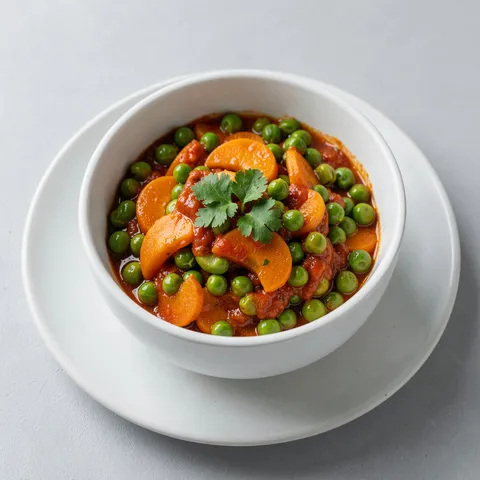 Lebanese Pea and Carrot Stew30 min · Main course
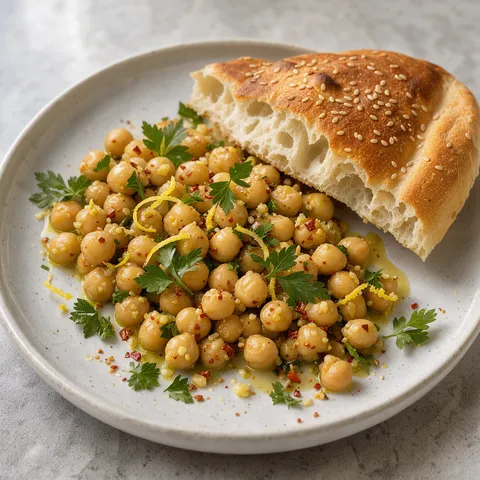 Warm Lebanese Chickpea Salad21 min · Meze
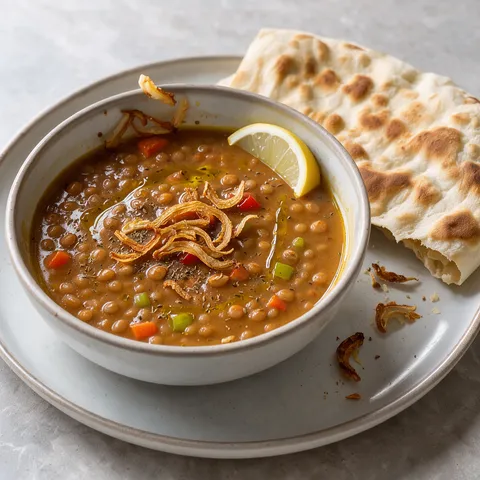 Lebanese Red Lentil Soup30 min · Soup
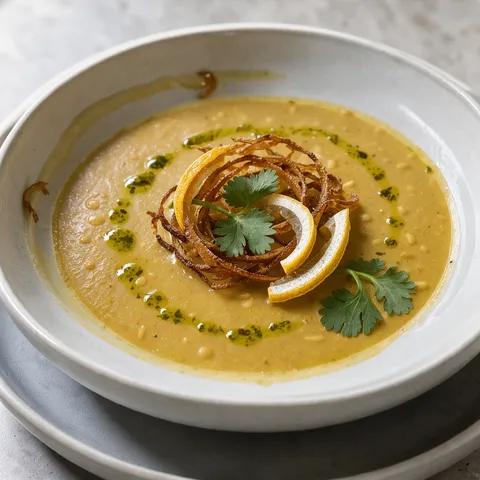 Shorbat Adas 2.041 min · Soup
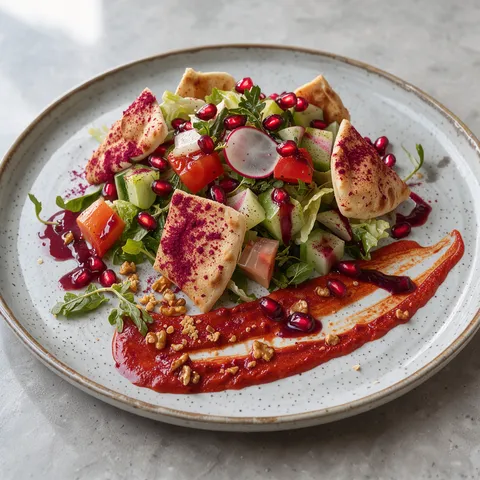 Fattoush 2.050 min · Salad