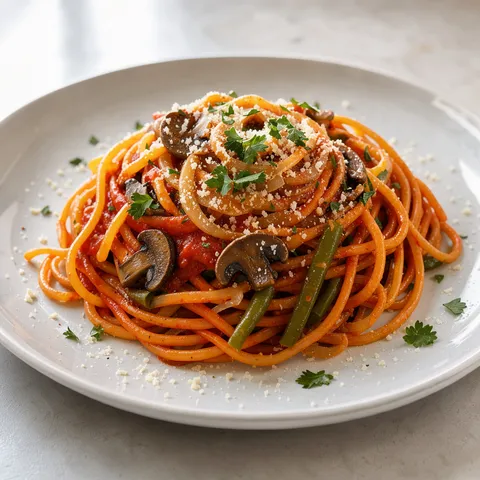
Naporitan Tomato Mushroom Spaghetti
A Japanese main course. Takes 30 min, Serves 4. Difficulty: easy.
At a glance
- Total time
- 30 min
- Serves
- Serves 4
- Difficulty
- Easy
- Cuisine
- Japanese cuisine
- Dish type
- Main course
- Diet
- Vegetarian
- Allergens
- Gluten, Milk, Soya
Ingredients
Pasta
- 320 g spaghetti
- 1 tbsp salt (for the cooking water)
Sauce
- 3 tbsp tomato paste
- 4 tbsp tomato passata
- 1 tbsp caster sugar
- 1 tbsp vinegar
- 1 tsp soy sauce
- 1/2 tsp salt
- 1/4 tsp black pepper
Vegetables
- 1 large onion
- 2 green peppers
- 250 g button mushrooms
- 3 garlic cloves
Fat
- 30 g butter
- 2 tbsp olive oil
To serve
- 2 tbsp grated Parmesan or hard cheese
- 1 tbsp chopped flat-leaf parsley
Equipment
- Saucepan
- Frying pan
- Chopping board
- Chef's knife
- Mixing bowls
- Colander
Method
- Boil the water: In a large pan, bring 3 litres water to the boil with the salt. Salt gives the pasta flavour. The water does not have to be as salty as the sea but it should taste clearly of salt. Move on to the next steps while the water heats (~5 min)
- Cut the vegetables: Slice the onion into 5 mm half-rings, cut the pepper into 5 mm strips, slice the mushrooms thinly and chop the garlic very finely. If everything is the same thickness, it softens at the same time in the pan (~8 min)
- Mix the sauce: Mix the tomato paste, passata, sugar, vinegar, soy sauce, salt and pepper in a bowl. The sugar and vinegar balance the acidity of the tomato, while the soy sauce gives the sauce depth. This mixture works as a homemade ketchup (~3 min)
- Cook the pasta: Add the spaghetti to the water and cook for 1 min longer than the packet time, about 10-11 min. In Naporitan the pasta is slightly soft, which is the mark of the Japanese cafe style. Set aside 100 ml of the cooking water and drain (~11 min)
- Fry the vegetables: While the pasta cooks, heat the olive oil and half of the butter in a large frying pan over medium-high heat. Fry the onion for 3 min, until the edges are translucent, then add the mushrooms and stir for 4 min, until they release their liquid and it cooks off. Add the pepper and garlic and cook for 2 min more (~9 min)
- Cook the sauce: Add the sauce mixture to the pan and boil over medium heat for 3 min. The paste should thicken and darken in the pan, which removes the raw tomato paste taste and turns the sauce bright red. If the bottom of the pan sticks, add 2 tbsp of the pasta water (~3 min)
- Combine the pasta with the sauce: Add the drained pasta to the pan, add the remaining butter and toss in the pan over high heat for 2 min, until the sauce coats the strands. The pasta should be bright red and slightly sticky, and if it is dry, add the cooking water a little at a time (~3 min)
- Plate: Arrange the pasta in a nest on warmed plates. Sprinkle the grated cheese and parsley over the top. In traditional Yokohama cafes it is served on a hot iron plate, but a normal plate works too. Serve straight away (~2 min)
Chef's note
Naporitan is said to have been created by the chef of the Hotel New Grand in Yokohama, inspired by the tomato spaghetti of American soldiers. The original recipe uses sausage or ham (pork); here it is made with mushrooms and peppers instead. This makes it vegetarian. Our own mixture was used in place of ketchup.
Frequently asked questions
- What is naporitan?
- Naporitan is a Japanese-style spaghetti with a ketchup-style tomato sauce and vegetables, born in Yokohama. The name comes from Naples in Italy, but it is not an Italian dish.
- Why is ketchup used in naporitan?
- Ketchup gives the sweet, bright red sauce of the Japanese cafe style. Here a homemade mixture of tomato paste, sugar and vinegar is used instead.
- Why is the pasta cooked a little soft?
- Naporitan is traditionally served with slightly soft spaghetti. It is a feature of the Japanese cafe style.
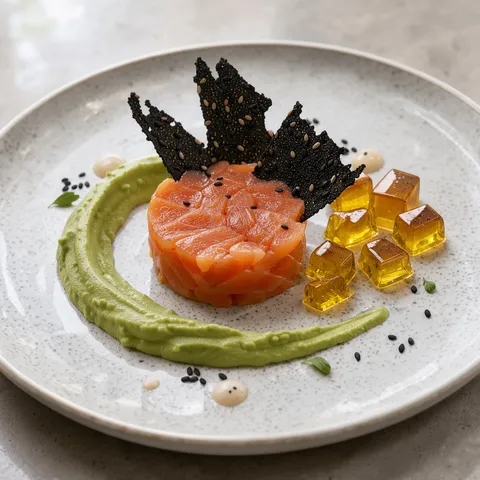 Salmon Tartare, Black Sesame Crisp, Wasabi Avocado45 min · Starter
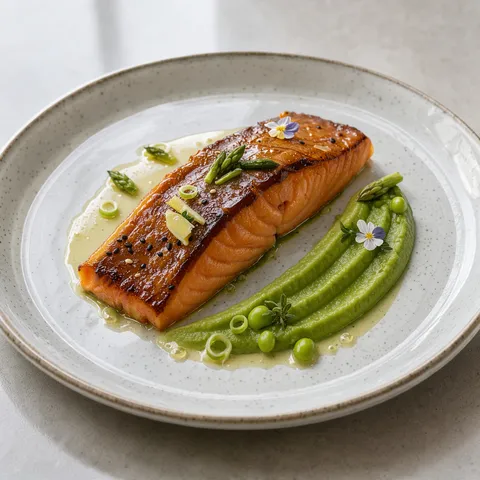 Salmon, Miso Glaze, Dashi Beurre Blanc, Edamame Purée50 min · Main course
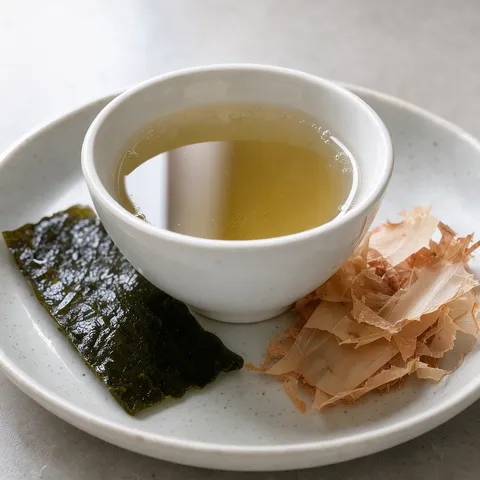 Ichiban Dashi1 hr 45 min · Basic recipe
 Miso Soup15 min · Soup
 Sushi Rice1 hr 15 min · Basic recipe
 Nigiri45 min · Main course