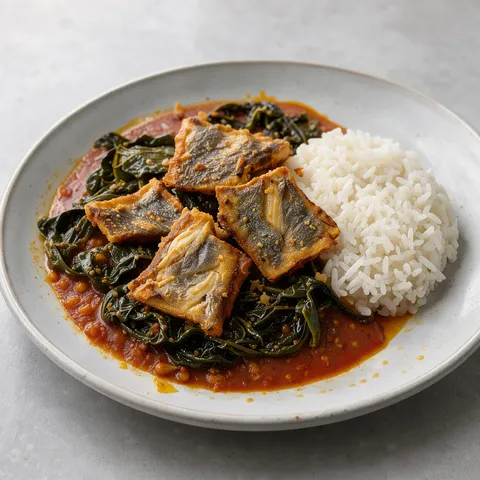
Horse Mackerel in Sour Leaves Ngai-Ngai na Tomson
A Congolese (Republic of the Congo) main course. Takes 1 hr 15 min, Serves 4. Difficulty: medium.
At a glance
- Total time
- 1 hr 15 min
- Serves
- Serves 4
- Difficulty
- Medium
- Cuisine
- Congolese (Republic of the Congo) cuisine
- Dish type
- Main course
- Diet
- Gluten-free
- Allergens
- Fish
Ingredients
Fish
- 4 medium horse mackerel (about 800 g in total, cleaned, heads removed, cut in half)
- 1/2 tsp salt
- 1/4 tsp black pepper
- 250 ml sunflower oil (for frying)
Leaves
- 400 g sorrel (in place of roselle leaves)
- 200 g spinach
- 2 litres water (for boiling)
Sauce
- 2 tbsp sunflower oil
- 1 onion (finely chopped)
- 3 sprigs chives (finely chopped)
- 4 garlic cloves
- 2 cm piece of fresh ginger
- 1 ripe tomato
- 1/2 red pepper
- 1 green chilli (chopped)
- 1/2 tsp freshly grated nutmeg
- 1/2 tsp salt
- 200 ml water
Rice
- 300 g long-grain rice (washed)
- 600 ml water
- 1/2 tsp salt
Equipment
- Chopping board
- Chef's knife
- Saucepan
- Colander
- Pestle and mortar
- Blender
- Fine grater
- Sauté pan
- Wooden spoon / spatula
Method
- Prepare the fish: Rinse the horse mackerel in cold water and pat dry with kitchen paper. On a chopping board, make 2-3 diagonal slashes on both sides of each piece with a chef's knife, rub with the salt and black pepper and leave for 10 min. The slashes let the heat reach the thick part and the salt get into the flesh
- Boil the leaves: While the fish rests, pick out the thick stalks of the sorrel, wash the leaves and spinach twice and roughly chop. Bring the 2 litres water to the boil in a large pan, add the leaves and boil for 1 min, until they change colour, drain in a colander and press lightly to squeeze out the water. When fresh leaves are used, this short boil is also done in Congo, and it softens the leaves and releases their excess sourness into the water
- Prepare the seasonings: Finely chop the onion and chop the chives. Pound the garlic and ginger to a paste in a mortar. Roughly chop the tomato and pepper and purée in a blender for 30 sec. Finely grate the nutmeg with a microplane
- Fry the fish: Heat the 250 ml oil in a 24 cm sauté pan (about 5 mm deep, shallow-frying) over medium-high heat. The oil is ready when little bubbles immediately form around the tip of a piece of fish dipped in. Fry the fish in two batches for 3-4 min on each side, until the skin is crisp and golden, and transfer to a plate lined with kitchen paper. The fish goes into the stew fried, which flavours the sauce and keeps it from falling apart later
- Build the base: While the second batch of fish fries, heat 2 tbsp oil in a 4 litre pan on a second ring over medium heat and soften the onion and chives for 3 min. Add the garlic and ginger paste and stir with a wooden spoon for 1 min. Pour in the tomato and pepper purée and the chilli, cover and cook over medium heat for 15 min, stirring now and then, until the oil comes to the surface
- Start the rice: While the base cooks, bring the rice to the boil in a separate pan with the 600 ml water and the salt, cook covered on the lowest heat for 15 min, then take off the heat and leave to steam for 10 min
- Add the leaves: Stir the nutmeg and 1/2 tsp salt into the base, add the boiled leaves and 200 ml water and mix well. The sauce should be dark green, fluid but not watery
- Cook with the fish: Bury the fried fish in the leaves, cover and cook over medium-low heat for 20 min. Hold the pan and shake it now and then, because stirring with a spoon would break up the fish. The fish should come away easily from the bone and the sauce should shine with the frying oil of the fish
- Serve: Adjust the salt to taste. Put rice on plates and add two pieces of fish and plenty of the sour leaf sauce alongside
Chef's note
Ngai-ngai is said to take its name from the word meaning "sour" in Lingala, and it is the name of the dish cooked with roselle (Hibiscus sabdariffa, oseille de Guinée) leaves in both Congos. Tomson appears in Congolese recipes as the name for horse mackerel (chinchard). This variant is based on a recipe from Kinshasa, and ngai-ngai is cooked in both Congos with different fish and sauces, including versions with aubergine and with salted or smoked fish. Roselle leaves are sold frozen in African grocers, and if you have them, use 600 g and leave out the spinach. Traditionally it is eaten with chikwangue or fufu. Unlike Chad's Sauce Karkandji (Beef in Sorrel Peanut Sauce), there is no meat or peanut butter, the sauce is built on a tomato and pepper purée and nutmeg, and the fried fish cooks inside the leaves.
Frequently asked questions
- Why is the fish fried before it goes into the sauce?
- Fried fish flavours the sauce and doesn't fall apart later. Fry the fish in two batches, 3-4 minutes on each side.
- Why are the leaves boiled first?
- Fresh leaves soften with a short boil and release their excess sourness into the water. Boil the sorrel and spinach for 1 minute and drain.
- Should I stir the fish after it goes into the sauce?
- No, stirring with a spoon breaks the fish up. Hold the pot and shake it now and then. The fish should come away from the bone easily.
 Spiced Fish Baked in Parcels1 hr 25 min · Main course
 Salt Cod with Aubergine Sauce1 hr 10 min · Main course
 Makayabu 2.01 hr 15 min · Main course