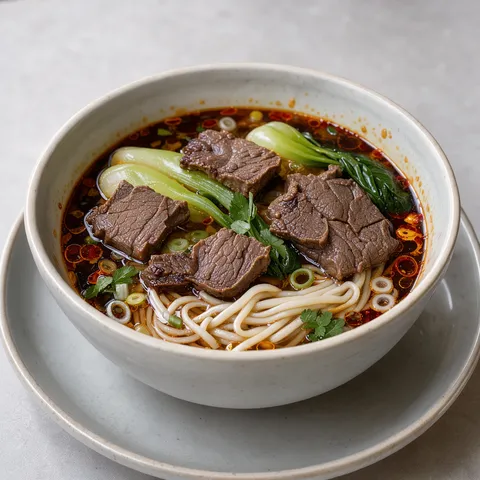
Taiwanese Beef Noodle Soup Niu Rou Mian
A Taiwanese main course. Takes 3 hr (pressure cooker: 1 hr 45 min), Serves 4. Difficulty: challenging.
At a glance
- Total time
- 3 hr (pressure cooker: 1 hr 45 min)
- Serves
- Serves 4
- Difficulty
- Challenging
- Cuisine
- Taiwanese cuisine
- Dish type
- Main course
- Allergens
- Gluten, Soya, Celery
Ingredients
Meat
- 1 kg boneless beef shin or brisket (5 cm pieces)
- 3 litres water (for blanching)
Aromatics
- 2 tbsp sunflower oil
- 1 onion (roughly chopped)
- 5 cm ginger (sliced)
- 6 garlic cloves (crushed)
- 4 spring onions (whites in 5 cm pieces, greens finely chopped for serving)
- 2 tbsp doubanjiang (fermented broad bean and chilli paste)
- 1 tbsp tomato paste
- 2 tomatoes (cut into 8)
Spices
- 2 star anise
- 1 cinnamon stick
- 1 tsp Sichuan peppercorns
- 2 bay leaves
- 1 piece dried tangerine peel (if unavailable, 3 strips of orange peel)
Liquids
- 60 ml Shaoxing rice wine (alcohol-free: 60 ml water and 1 tsp rice vinegar)
- 80 ml light soy sauce
- 2 tbsp dark soy sauce
- 20 g rock sugar or light brown sugar
- 2 litres water
- 1/2 tsp salt
Noodles
- 400 g dried thick wheat noodles
- 4 litres water
Greens
- 300 g baby pak choi (halved lengthways)
To serve
- 4 coriander sprigs
Equipment
- Saucepan
- Colander
- Heavy-based saucepan
- Ladle
- Pressure cooker (optional)
Method
- Blanch the meat: Bring the meat to the boil in a large pan with the 3 litres cold water and boil for 5 min. Grey scum and sediment rise to the surface. Transfer the meat to a colander and rinse each piece under warm water. This keeps the soup dark but cleanly sweet
- Fry the aromatics: Heat the oil in a heavy-based 26 cm pan over medium heat. Fry the onion for 5 min, until golden at the edges. Add the ginger, garlic and spring onion whites and stir for another 2 min
- Fry the chilli paste: Add the doubanjiang and tomato paste and fry for 2 min, stirring constantly. The oil turns red and the paste loses its fermented sharpness. Add the tomatoes and cook for 3 min, until they start to break down. Doubanjiang is the signature of the best-known red version of this soup in Taiwan
- Add the meat and spices: Add the blanched meat, star anise, cinnamon, Sichuan peppercorns, bay leaves and tangerine peel and coat the meat in the sauce for 2 min. Pour in the rice wine and boil on high heat for 1 min to cook off the alcohol. Add the soy sauces, rock sugar and the 2 litres water
- Slow-cook: Bring to the boil, lower the heat to the lowest setting and cook partly covered for 2 hr. The meat should break easily with a fork but not fall apart. In a pressure cooker this stage takes 45 min, and the pressure should release naturally. If the liquid reduces too much, add hot water to keep it at about 2 litres
- Tidy the stock: Lift out the spices, ginger slices and tangerine peel with a slotted spoon. Skim the excess oil from the surface with a ladle, but leave some red oil, as the aroma of the soup is in this oil. Taste, add the 1/2 tsp salt and adjust with soy if needed. Keep the soup hot on a low heat
- Cook the noodles and greens: In a separate pan, boil the 4 litres water and cook the noodles for the time on the packet. Add the pak choi for the last 1 min. Never boil the noodles in the soup itself, as their starch clouds and thickens it. Drain with a colander
- Serve: Divide the noodles between 4 deep bowls with the pak choi alongside. Add 4-5 pieces of meat to each bowl and ladle over plenty of hot soup. Scatter with the spring onion greens and coriander and serve immediately
Chef's note
Niu rou mian is regarded as an icon of Taiwanese cooking. It is said to have taken its present form on the island from the mid-20th century, and the red version made with spicy bean paste is the best loved. Taipei holds an annual festival dedicated to this soup. If you cannot find doubanjiang, use 1 tbsp hot pepper paste and 1 tsp soy sauce. Traditionally pickled mustard greens are on the table to serve alongside. If the meat and soup are cooked a day ahead and chilled, the fat lifts off easily and the flavour deepens.
Frequently asked questions
- Why is the beef blanched first for niu rou mian?
- Boil the meat for 5 minutes and rinse it in warm water. This keeps the soup deep in colour but clean in flavour.
- Why aren't the noodles boiled in the broth?
- Never boil the noodles in the broth, as their starch clouds and thickens the soup. Boil them in a separate pan and add them to the bowls as you assemble.
- Where do the red colour and aroma of the soup come from?
- From frying the doubanjiang and tomato purée for 2 minutes, which turns the oil red. Don't remove all the oil from the surface, as the aroma of the soup is in this red oil.
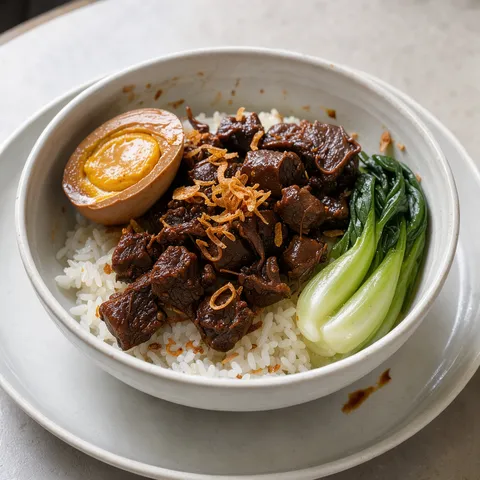 Soy-Braised Beef over Rice1 hr 45 min · Main course
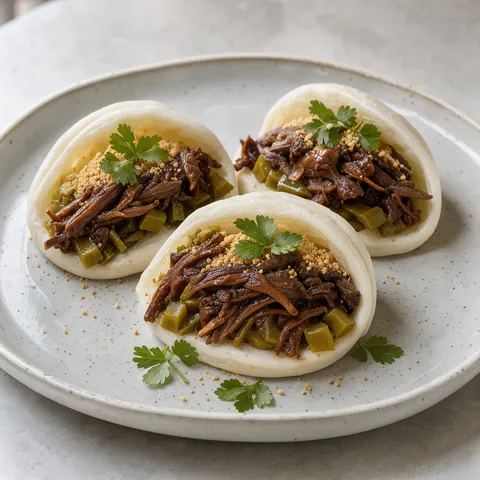 Steamed Buns with Braised Beef2 hr 15 min · Bread & pastry
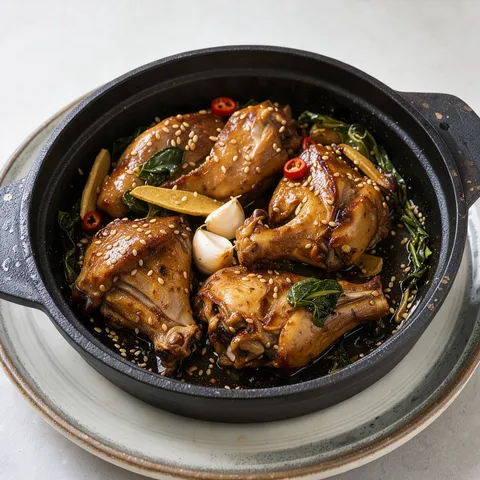 Three-Cup Chicken45 min · Main course
 Taiwanese Oyster Omelette45 min · Starter
 Buttery Pineapple-Filled Square Cakes2 hr 30 min · Patisserie
 Taiwanese Egg Crêpe Rolls40 min · Starter