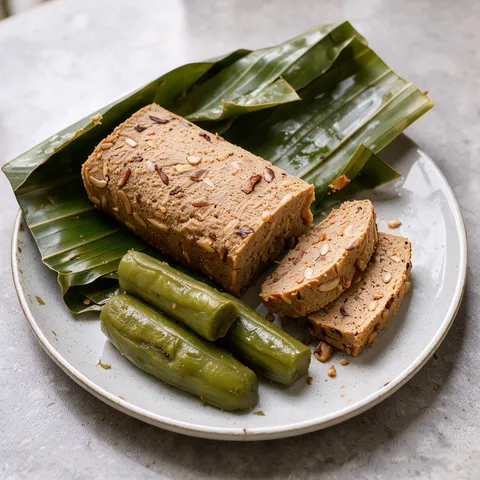
Peanut and Smoked Fish Parcels Nkot Owono
An Equatorial Guinean main course. Takes 1 hr 40 min, Serves 4. Difficulty: medium.
At a glance
- Total time
- 1 hr 40 min
- Serves
- Serves 4
- Difficulty
- Medium
- Cuisine
- Equatorial Guinean cuisine
- Dish type
- Main course
- Diet
- Gluten-free
- Allergens
- Fish, Peanuts, Tree nuts
Ingredients
Peanuts
- 350 g raw peanuts (shelled)
Mixture
- 150 g smoked mackerel (skinned and boned)
- 1 small onion
- 2 garlic cloves
- 1 red chilli
- 3/4 tsp salt
- 150 ml lukewarm water
Wrapping
- 4 pieces of banana leaf (30×30 cm) or 4 sheets of baking paper and 4 sheets of foil (30×30 cm)
Boiling
- about 3 litres water
To serve
- 2 green plantains (or 3 firm, greenish bananas)
- 1 litre water
- 1/2 tsp salt
Equipment
- Frying pan
- Wooden spoon / spatula
- Baking tray
- Food processor
- Silicone spatula
- Box grater
- Pestle and mortar
- Mixing bowls
- Saucepan
- Colander
- Chopping board
- Chef's knife
- Baking paper (optional)
Method
- Lightly toast the peanuts: Toast the peanuts in a heavy-based frying pan over medium heat for 6 min, turning often with a wooden spoon, until the skins begin to brown and the peanuts smell fragrant. Do not over-toast them, as the parcels will cook for a long time and the oil of the peanuts may turn bitter. Spread on a tray and cool for 5 min
- Remove the skins: Rub the cooled peanuts between your palms and blow the skins away. The skins add bitterness and a gritty texture to the mixture
- Grind the peanuts: Process the peanuts in a food processor for 3-4 min, scraping down the sides with a spatula now and then. The aim is not a runny peanut butter but a moist, thick paste that holds together when squeezed. Stop as soon as it begins to release oil
- Prepare the aromatic paste: Grate the onion on the fine side of the grater. Pound the garlic, chilli and salt to a paste in a mortar. Flake the smoked mackerel into large pieces with your fingers and check once more for bones
- Mix: In a large bowl, mix the peanut paste, grated onion, garlic and chilli paste and 150 ml lukewarm water with a wooden spoon, then add the mackerel and fold in so the pieces stay whole. It should be a soft dough that holds its shape on a spoon. When cooked, the protein and oil of the peanuts firm up the parcel, so no egg or starch is needed. Meanwhile, put 3 litres water on to boil in a large pan
- Wrap: Soften the banana leaves by passing them over a low flame for 10 sec, or put a sheet of baking paper on a sheet of foil for each parcel. Divide the mixture into four equal portions and spread each in the middle of a leaf into a rectangle of 12×8 cm. Fold the long edges over each other, tuck the short ends underneath and seal tightly, twisting the ends if you are using foil to make it waterproof
- Boil: Place the parcels in the boiling water and put a heatproof plate on top so they stay submerged. Cover and cook over medium-low heat for 1 hr, adding boiling water if the water reduces
- Boil the plantain: In the last 25 min of the parcels, cut the ends off the plantains, score the skin lengthways and peel it off, and cut each into 3 pieces. Bring 1 litre water to the boil with 1/2 tsp salt in a separate pan and boil the plantain for 20 min, until a knife slides in without resistance, then drain in a colander
- Check: Lift one parcel out with a slotted spoon and open it. The parcel should be firm, sliceable and glossy with peanut oil on the surface, and should not fall apart when cut. If it is soft, cook for 10 min more
- Serve: Rest the parcels for 5 min, open them and cut into 2 cm thick slices with a chef's knife on a chopping board. Put two slices and boiled plantain on each plate. Serve hot
Chef's note
Sources describe it as an "envuelto" (wrapped parcel) made with ground peanuts, smoked fish and salt, wrapped in leaves and cooked, and it appears at the feasts and celebrations of the Fang people. In Equatorial Guinea it is called akuamí or nkot owono, and people also call it "anita negra". Unlike Cameroon's Koki (Cameroonian Steamed Black-Eyed Bean Pudding), the main ingredient is peanuts and not black-eyed beans, no legume starch is used as a binder, and the peanuts' own protein and oil firm up the parcel.
Frequently asked questions
- Why shouldn't the peanut mixture be a runny paste?
- It should be a thick, moist paste that holds together when squeezed. Stop the processor as soon as the peanuts begin to release oil.
- Do I need egg or starch to bind the parcels?
- No. The protein and oil in the peanuts firm the parcel up as it cooks.
- How do I know the parcel is cooked?
- The parcel should be firm, sliceable and glossy with peanut oil, and shouldn't fall apart when cut. If it is soft, cook it for 10 more minutes.
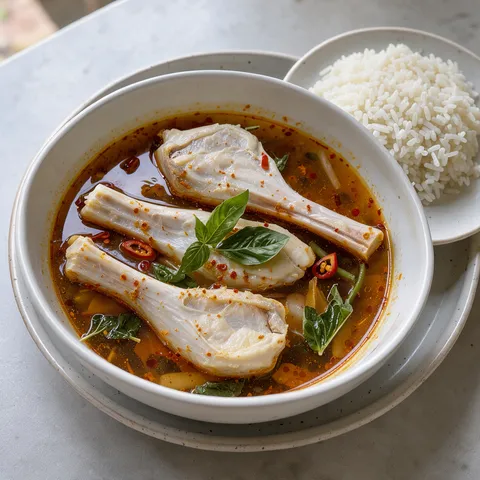 Spicy Fish Soup55 min · Soup
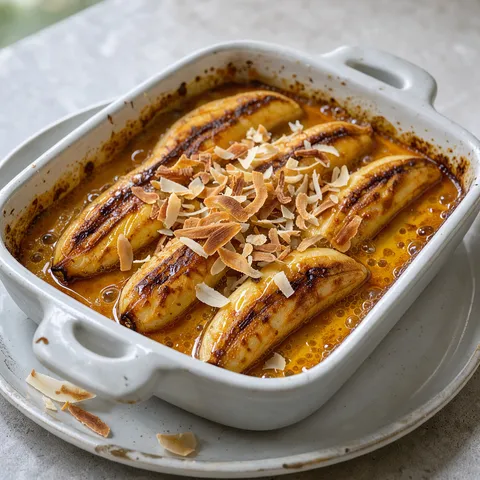 Baked Bananas in Citrus Syrup35 min · Dessert
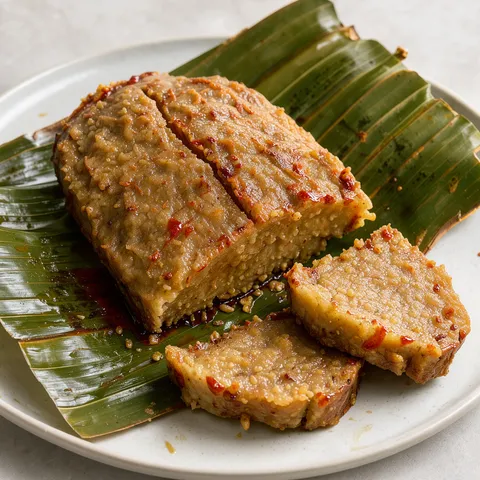 Boiled Taro Paste Parcels1 hr 20 min · Side dish
 Akwadu 2.01 hr 5 min · Dessert