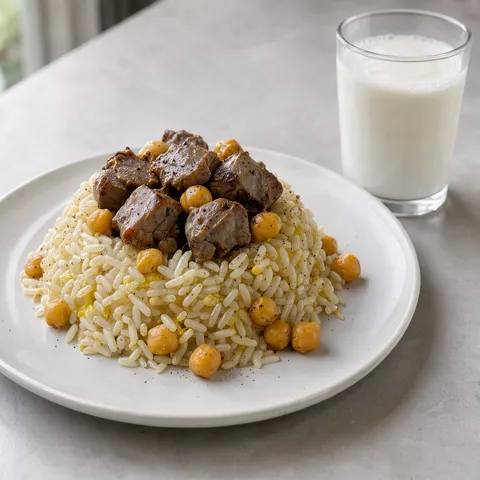
Rice with Lamb and Chickpeas Nohutlu Pilav
A Turkish main course. Takes 1 hr 30 min · +10-12 hr soaking, Serves 4. Difficulty: medium.
At a glance
- Total time
- 1 hr 30 min · +10-12 hr soaking
- Serves
- Serves 4
- Difficulty
- Medium
- Cuisine
- Turkish cuisine
- Dish type
- Main course
- Diet
- Gluten-free
- Allergens
- Milk, Celery
Ingredients
Lamb and chickpeas
- 500 g boneless lamb shoulder or leg (diced into 2 cm cubes)
- 150 g dried chickpeas
- plenty of cold water for soaking
- 1 tbsp butter
- 1 small onion (whole, peeled)
- 900 ml hot water
- 1 tsp salt
Pilaf
- 300 g baldo rice
- 1 litre lukewarm water and 1 tsp salt for soaking
- 50 g butter
- 450 ml stock (from cooking the meat above)
- 1/2 tsp salt
- 1/2 tsp black pepper
To serve
- 400 ml ayran (salted yoghurt drink) or 300 g plain yoghurt
- 1/2 tsp black pepper
Equipment
- Pressure cooker
- Mixing bowls
- Colander
- Heavy-based saucepan
- Frying pan
- Wooden spoon / spatula
Method
- Soak the chickpeas: Soak the chickpeas in three times their volume of cold water for 10-12 hr, then drain. Soaked chickpeas have nearly doubled in size and look white and moist in the centre
- Brown the meat: Melt the 1 tbsp butter in a pressure cooker over medium-high heat. Add the diced lamb and cook for 6-8 min, first until the liquid it releases has evaporated, then until lightly browned. Browned meat gives more flavour to the stock
- Pressure-cook: Add the drained chickpeas, the whole onion, the 900 ml hot water and the 1 tsp salt to the meat and close the lid. Once the cooker reaches pressure, cook over medium-low heat for 25 min, then release the steam and open the lid. The chickpeas should crush easily between your fingers and the meat should pull apart into strands. In an ordinary pan this step takes about 1 hr 20 min
- Soak the rice: While the meat cooks, soak the rice in 1 litre of lukewarm salted water for 20 min. Then rinse until the water runs clear and drain well. Soaked rice does not break during cooking and stays fluffy, with separate grains
- Measure the stock: Remove and discard the onion. Drain the meat and chickpeas in a colander, collecting the stock in a bowl, and measure out 450 ml. Top up with hot water if short. Set aside half the meat and chickpeas for the pilaf and keep the other half for the top
- Cook the pilaf: Melt the 50 g butter in a heavy-based 22 cm saucepan. Add the drained rice and toast over medium heat for 3 min, until the grains are translucent and no longer stick to the pan. Add the reserved half of the meat and chickpeas, then the hot stock, salt and black pepper. Once it boils, turn the heat to the lowest setting and cook, covered, for 12-14 min, until small holes appear on the surface and the liquid is completely absorbed
- Steam off the heat: Turn off the heat, put a clean tea towel or kitchen paper between the pan and the lid and leave to steam for 15 min. The steam finishes the rice, the towel catches the drips and the pilaf does not turn mushy. Meanwhile, warm the remaining meat and chickpeas in a small frying pan for 3 min
- Plate: Fluff up the pilaf with a wooden spoon without crushing the grains and spoon a dome onto each plate. Top each dome with a spoonful of the remaining meat and chickpeas and grind over a pinch of black pepper. Serve with ayran or yoghurt alongside
Chef's note
In Gaziantep, nohutlu pilav is a pilaf with diced meat, cooked in large cauldrons for weddings and mevlit (Islamic memorial prayer) gatherings. In the Antep style it is eaten with yoghurt or ayran, and in winter with a stew alongside. Cauldron pilaf is rich; here the butter is kept moderate. If the stock you cook the pilaf in is fatty, skim some of the fat off the surface with a spoon so the pilaf does not turn heavy.
Frequently asked questions
- Why is the rice soaked for Nohutlu Pilav?
- Soak the rice in lukewarm salted water for 20 minutes. Soaked rice does not break as it cooks and the grains stay separate.
- How do I stop the pilaf turning mushy?
- Rest the pilaf for 15 minutes with a cloth or paper towel between the pan and the lid. The towel catches the dripping steam.
- How do I prepare the cooking liquid?
- Strain the stock from the meat and chickpeas and measure out 450 ml. Top up with hot water if it falls short.
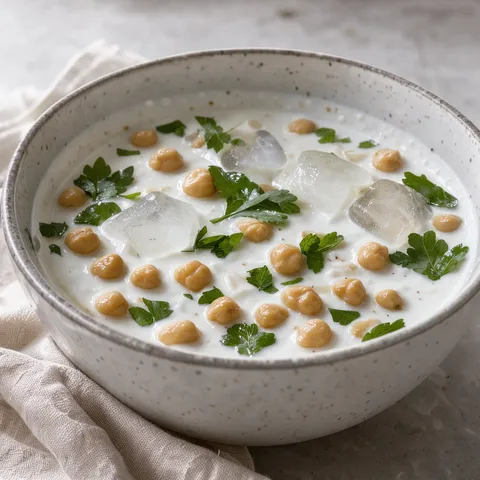 Chilled Wheat Yoghurt Soup1 hr · Soup
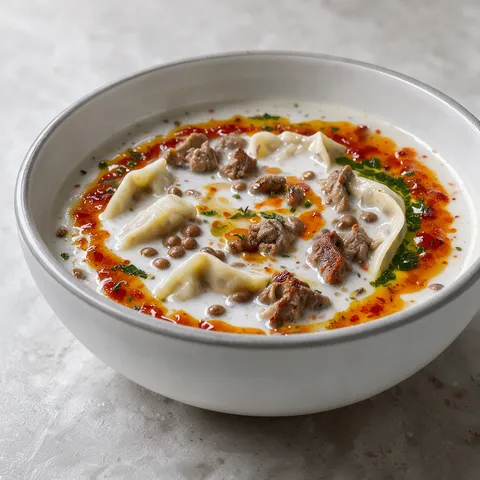 Noodle and Yoghurt Soup1 hr 10 min · Soup
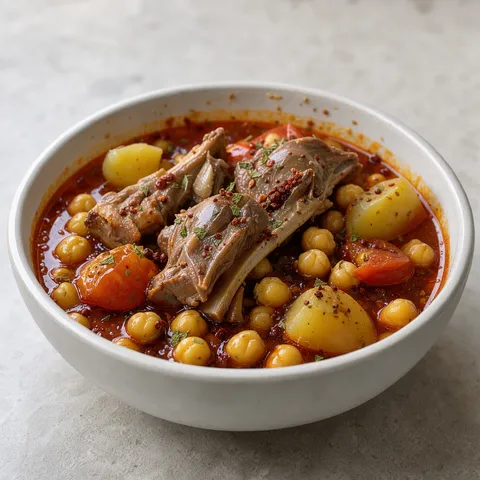 Lamb, Chickpea and Potato Stew1 hr 15 min · Soup
 Marinated Sea Bass30 min · Meze
 Crispy Fried Liver Slices25 min · Meze
 Courgette Crisps30 min · Meze