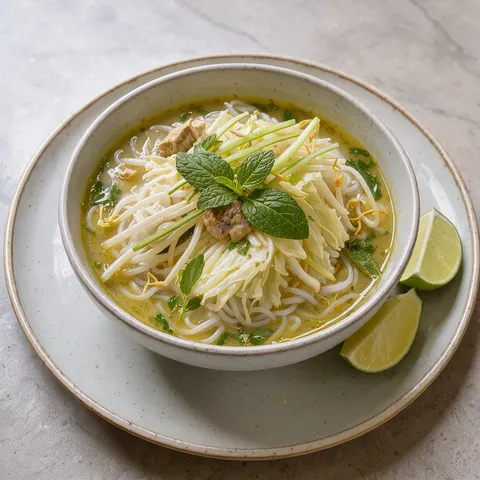
Khmer Lemongrass Fish Curry Nom Banh Chok
A Cambodian main course. Takes 1 hr, Serves 4. Difficulty: medium.
At a glance
- Total time
- 1 hr
- Serves
- Serves 4
- Difficulty
- Medium
- Cuisine
- Cambodian cuisine
- Dish type
- Main course
- Allergens
- Gluten, Milk, Fish, Tree nuts
Ingredients
Yellow kroeung (paste)
- 4 lemongrass stalks (white lower part, thin rings)
- 20 g galangal or ginger (chopped)
- 15 g fresh turmeric or 1 tsp ground turmeric
- 4 makrut lime leaves (centre rib removed)
- 4 garlic cloves
- 3 shallots
- 1/2 tsp salt
Fish
- 600 g white freshwater or sea fish fillet (catfish, sea bass or whiting)
- 600 ml water
- 2 lemongrass stalks (bruised)
Curry
- 1 tbsp sunflower oil
- 400 ml coconut milk
- 3 tbsp fish sauce
- 1/2 tsp anchovy paste (2 anchovy fillets, mashed)
- 1 tbsp palm sugar or light brown sugar
- 2 makrut lime leaves
Noodles
- 350 g dried thin rice noodles (vermicelli)
- 2.5 litres water (for boiling)
Fresh vegetable platter
- 150 g bean sprouts
- 1 cucumber (julienned)
- 100 g yardlong beans or green beans (thinly sliced, raw)
- 150 g white cabbage (finely shredded)
- 1/2 bunch mint
- 1/2 bunch Thai basil
- 1 lime (4 wedges)
Equipment
- Chef's knife
- Chopping board
- Pestle and mortar
- Saucepan
- Colander
- Wooden spoon / spatula
- Mixing bowls
- Food processor (optional)
- Probe thermometer (optional)
Method
- Pound the kroeung: Pound the lemongrass, galangal, turmeric, lime leaves and salt in a mortar for 6 min to break down the fibres, then add the garlic and shallots and pound for another 4 min, to a smooth, yellow-green paste. Kroeung is the foundation of Khmer cooking, and breaking down the fibres thoroughly makes the sauce smooth. Without a mortar, blend in a food processor with 3 tbsp water
- Poach the fish: Bring the water and bruised lemongrass to the boil in a pan, add the fish fillets, lower the heat and cook for 8-10 min, until the flesh turns white and flakes easily. The fish should reach an internal temperature of 63°C: check with a thermometer. Lift out the fish with a slotted spoon and keep the poaching liquid
- Pick and mash the fish: Once the fish is lukewarm, carefully remove the skin and bones. Mash the flesh in a mortar or with a fork for 3 min, to a finely flaked paste. The body of the nom banh chok sauce comes from this mashed fish: the fish should be dispersed through the sauce rather than left in pieces
- Fry the kroeung: Heat the oil in a large pan over medium heat, add the kroeung and fry for 4 min, stirring constantly with a wooden spoon, until the sharp garlic smell has gone and the paste darkens slightly. Add the anchovy paste at this stage too: it gives the depth of the prahok used in the original recipe
- Cook the sauce: Add the coconut milk, mashed fish and 400 ml of the poaching liquid. Drop in the lime leaves. When it comes to the boil, lower the heat and simmer gently for 15 min, stirring now and then. The sauce should have a thin, soupy consistency and a pale yellow-green colour. If it gets too thick, add more poaching liquid
- Season: Add the fish sauce and sugar, stir for 2 min and taste. It should taste salty and savoury first, then slightly sweet and fragrant with lemongrass. Remove the lime leaves
- Boil the noodles: While the sauce cooks, bring the water to the boil in a separate pan, add the noodles and cook for about 4 min, until soft but still springy. Tip into a colander, rinse thoroughly under cold water and leave to drain for 2 min. In Cambodia the noodles are sold wound into palm-sized nests, so shape them by hand into 8 small nests too
- Prepare the vegetables: While the noodles drain, group the bean sprouts, cucumber, beans and cabbage side by side on a platter. Add the mint and basil leaves, picked from their stalks, and put the lime wedges alongside
- Plate: Put two noodle nests in each bowl and top with a handful of fresh vegetables and herbs. Pour the hot curry sauce over the vegetables, enough to cover the noodles. Put the remaining vegetable platter and lime on the table, and everyone adds as much as they like
Chef's note
Nom banh chok is a breakfast dish eaten in the mornings at markets and street stalls in Cambodia, and its name is said to translate as "Khmer noodles". The original recipe uses fresh, lightly fermented rice noodles and prahok (fermented fish paste). Prahok is hard to find in Türkiye, so fish sauce and anchovy paste are used here. Dried rice noodles, fish sauce and coconut milk are traditionally bought ready-made. If galangal is unavailable, use ginger, and if fresh turmeric is unavailable, use ground turmeric. Banana blossom is also traditionally added to the vegetable platter.
Frequently asked questions
- Which fish is suitable for Nom Banh Chok?
- Use a white freshwater or sea fish fillet. The recipe suggests catfish, sea bass or whiting.
- What can I use if I can't find prahok?
- The recipe uses anchovy paste instead of prahok. It is fried with the kroeung and gives depth to the sauce.
- What should I do if the Nom Banh Chok sauce gets too thick?
- The sauce should be the consistency of a thin soup. If it gets too thick, loosen it with some of the fish poaching liquid.
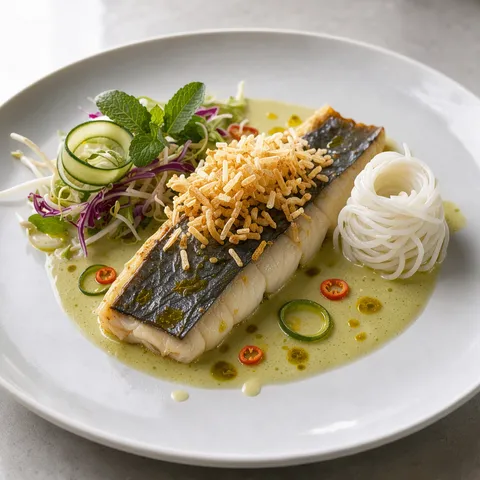 Nom Banh Chok 2.01 hr 15 min · Main course
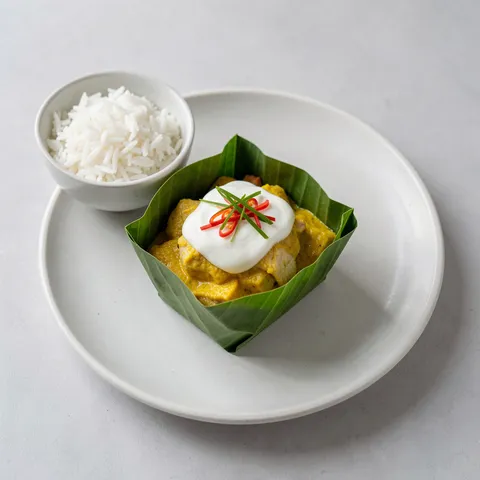 Steamed Coconut Fish in Banana Leaves1 hr · Main course
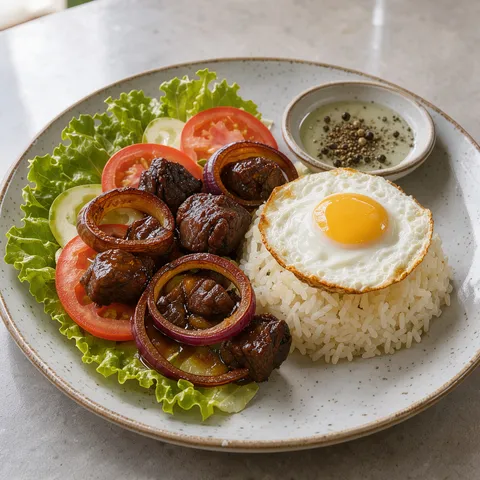 Stir-Fried Beef with Kampot Pepper and Lemon Sauce45 min · Main course
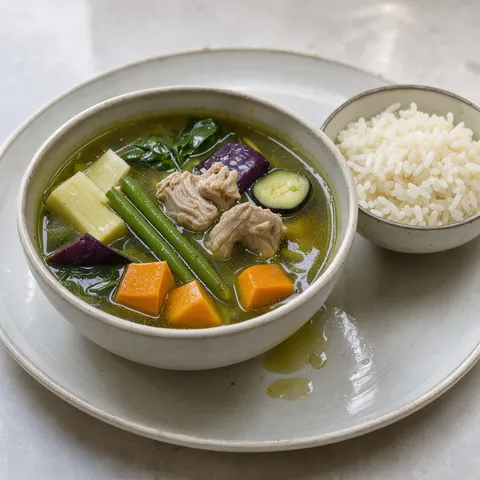 Cambodian Mixed Vegetable Soup1 hr · Soup
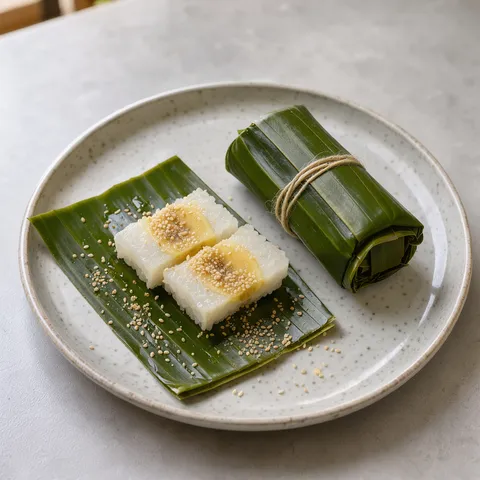 Banana Sticky Rice Cakes in Banana Leaves1 hr 45 min · Dessert
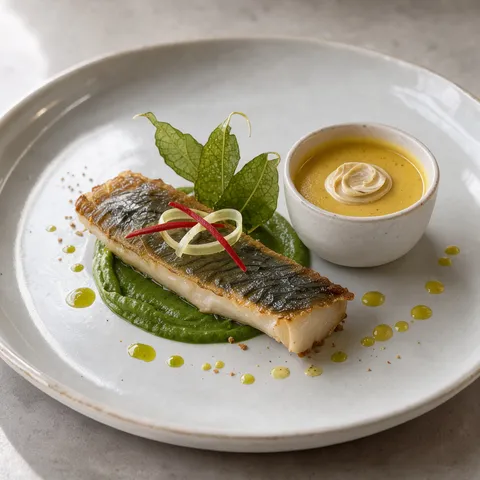 Amok Trey 2.01 hr 15 min · Main course
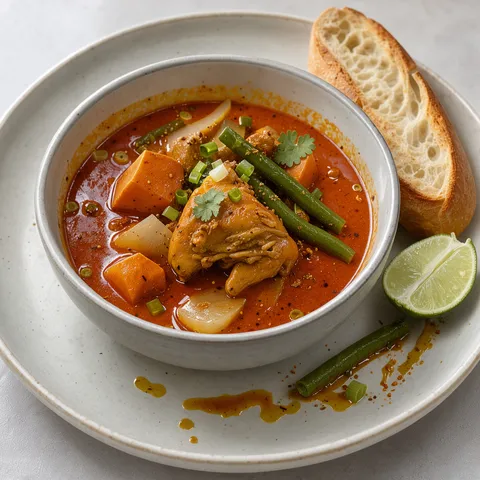 Khmer Chicken Curry with Sweet Potato1 hr 10 min · Main course