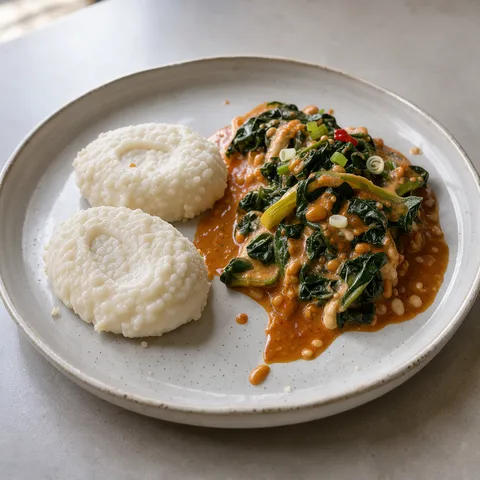
Nshima and Ifisashi Zambian Maize Porridge with Greens
A Zambian main course. Takes 40 min, Serves 4. Difficulty: easy.
At a glance
- Total time
- 40 min
- Serves
- Serves 4
- Difficulty
- Easy
- Cuisine
- Zambian cuisine
- Dish type
- Main course
- Diet
- Vegetarian, Vegan, Gluten-free
- Allergens
- Peanuts
Ingredients
Ifisashi
- 100 g roasted unsalted peanuts
- 1 onion (finely chopped)
- 2 tomatoes (diced)
- 300 ml water
- 400 g spinach (in place of pumpkin leaves, roughly chopped)
- 200 g chard (roughly chopped)
- 1/2 tsp salt
Nshima
- 300 g fine white maize meal (if unavailable, fine yellow maize meal)
- 1.2 litres water
Equipment
- Food processor
- Saucepan
- Heavy-based saucepan
- Wooden spoon / spatula
- Balloon whisk
- Ladle
- Chef's knife
- Chopping board
Method
- Grind the peanuts: Grind the peanuts in the food processor for 30-40 sec, until a fine, sandy powder. They should not turn into a paste. In Zambia the peanuts are pounded in a mortar and no oil is added to ifisashi at all, so all the oil and creaminess of the sauce come from the peanuts
- Boil the onion and tomato: Bring 300 ml water to the boil in a medium pan, add the onion and tomato and cook over medium heat for 5 min, until soft. Cooking without oil is the traditional Zambian ifisashi method
- Add the peanuts: Add the peanut powder slowly, stirring constantly, and cook over low heat for 5 min. The sauce should turn cream-coloured and thicken. Peanuts stick to the bottom very quickly, so do not stop stirring
- Add the greens: Add the spinach and chard, press them into the sauce with a wooden spoon and cook covered over low heat for 10 min, until the leaves soften and combine with the sauce. Add the salt and keep warm
- Start the nshima: While the greens cook, warm the 1.2 litres water in a heavy-based pan (about 3 min). Whisk one third of the maize meal (100 g) into the warm water and bring to the boil, stirring constantly. Once boiling, cook over low heat with the lid ajar for 5 min, to a thin paste. Bubbling porridge spits, so use a long-handled wooden spoon
- Thicken the nshima: Add the remaining meal a handful at a time, each time pressing and crushing against the side of the pan with the wooden spoon as you stir. In Zambia a flat wooden spoon called an umfwanya does this job. Continue for 8-10 min, until the porridge is a firm, smooth dough that comes away from the side of the pan and does not stick when touched with a wet hand. Cover and steam over the lowest heat for 3 min
- Shape: Dip a ladle or tablespoon in water, scoop oval portions from the nshima and put them on plates. A wet spoon leaves the surface of the nshima smooth and glossy
- Serve: Put plenty of ifisashi alongside the nshima. In Zambia, nshima is pulled off with the right hand and rolled into a ball in the palm, a dent is made with the thumb, and the ifisashi is scooped up with this dent
Chef's note
Nshima is regarded as Zambia's national dish, and for Zambians a meal without nshima does not count as a meal. Ifisashi (relish) is its best-loved green companion. The original recipe uses pumpkin, bean or cassava leaves, and spinach and chard are used here. White maize meal is available in African and Turkish grocers, and yellow maize meal gives a slightly sweeter, darker nshima.
Frequently asked questions
- What consistency should nshima have?
- Nshima should be a stiff, smooth dough that comes away from the side of the pot and doesn't stick to a wet hand. Add the flour a handful at a time while stirring.
- Why is no oil added to ifisashi?
- This is the traditional Zambian method. The fat and creaminess of the sauce come from the peanuts.
- How do you eat nshima?
- Pinch off a piece with your right hand, roll it into a ball in your palm and press a dent in it with your thumb. Use the dent to scoop up the ifisashi.
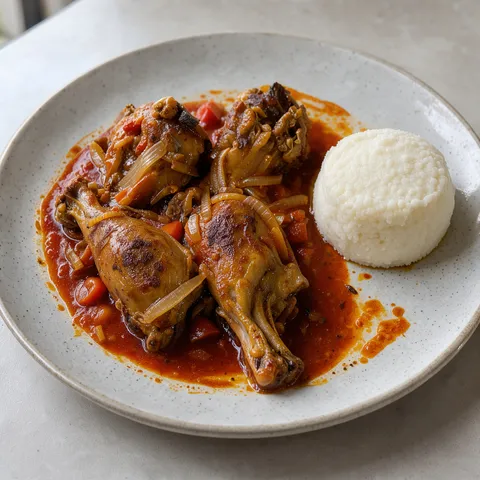 Zambian Chicken Stew with Nshima1 hr 16 min · Main course
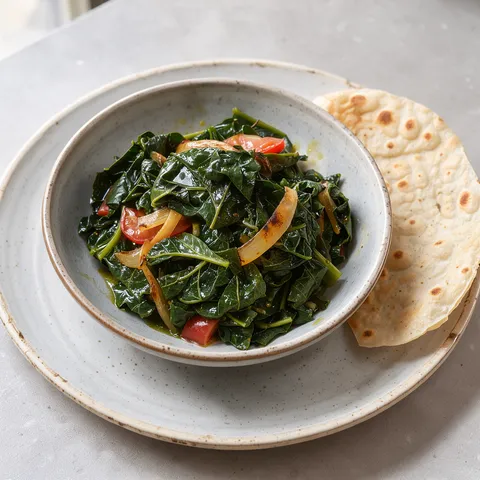 Zambian Sautéed Greens with Tomato28 min · Side dish