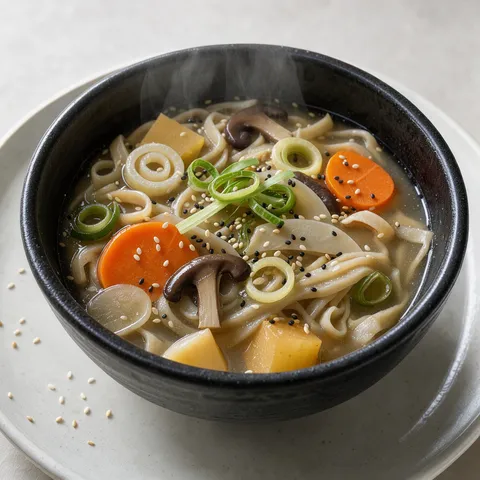
Okkirikomi Miso Soup with Wide Noodles
A Japanese main course. Takes 44 min · +30 min resting, Serves 4. Difficulty: medium.
At a glance
- Total time
- 44 min · +30 min resting
- Serves
- Serves 4
- Difficulty
- Medium
- Cuisine
- Japanese cuisine
- Dish type
- Main course
- Allergens
- Gluten, Fish, Sesame, Soya
Ingredients
Noodles
- 300 g plain flour (or strong white bread flour) and 140 ml water
- 50 g flour for the work surface
Dashi
- 1.2 litres water
- 10 g kombu
- 15 g dried shiitake
Vegetables
- 1 medium carrot
- 200 g daikon (white radish)
- 200 g potatoes
- 100 g fresh shiitake
- 1 leek
Seasoning
- 3 tbsp miso
- 1 tbsp soy sauce
To serve
- 1 tsp toasted sesame seeds
Equipment
- Saucepan
- Mixing bowls
- Muslin
- Rolling pin / oklava
- Chef's knife
- Chopping board
- Ladle
- Wooden spoon / spatula
Method
- Knead the dough: Put the flour in a large bowl and add the water a little at a time, bringing it together with your hands. Knead until firm, then shape into a ball. Traditional okkirikomi noodles contain no salt, because the miso salts the soup and the starch of the noodles thickens it. The dough should stay firm and not sticky. (~8 min)
- Rest the dough: Cover the dough with a damp muslin cloth and rest. This time lets the gluten relax, and only then can the dough be rolled out thinly. (~30 min)
- Start the dashi: During the resting time, put the kombu and dried shiitake in a saucepan with 1.2 litres water and heat over low heat. Do not let it boil, as boiling kombu turns bitter and slimy. When the mushrooms have softened, take them out and slice thinly, then remove the kombu and discard it. (~15 min)
- Chop the vegetables: Cut the carrot into half-moons, the daikon into quarter-moons and the potatoes into 2 cm cubes. Slice the fresh shiitake thinly. Cut all of them on a chopping board with a chef's knife. Slice the white part of the leek into rings and slice the green part thinly and set aside for serving. The root vegetables should stay chunky so they last as long as the noodles take to cook. (~10 min)
- Roll out and cut the dough: Lightly dust the work surface with flour and roll the dough out with a rolling pin to 3 mm thick. Fold into 3 layers and cut into strips 1.5 cm wide with a chef's knife. Unfold the strips, coat generously in flour and shake, so they do not stick together. (~10 min)
- Cook the vegetables: Bring the dashi to the boil in the saucepan and add the hard vegetables. Cook with the lid ajar until the carrot, daikon and potatoes are easily pierced with a fork. The root vegetables give the soup sweetness. (~12 min)
- Add the noodles: Drop the noodles into the soup raw, one by one, and do not shake off the excess flour, because this is what thickens the soup. Add the mushrooms, leek rings and sliced shiitake and stir from time to time with a wooden spoon. They are ready when the noodles are soft and still firm in the centre. (~10 min)
- Dissolve the miso: Turn down the heat, mash the miso in a ladle with a little of the soup and stir it into the saucepan, then add the soy sauce. Do not boil the miso, as boiled miso loses its aroma. The soup should be thick and hearty, and if needed add a little hot water. (~2 min)
- Serve: Divide the soup between warm deep bowls. The noodles and vegetables should be evenly distributed. Sprinkle the leek greens and sesame seeds over the top. Serve hot. (~2 min)
Chef's note
Okkirikomi is a winter dish of the Gunma region, made by dropping hand-cut wide noodles raw into the soup and cooking them with the vegetables. In northern and western Gunma miso dominates, and in the east soy sauce. This recipe is miso-based and made with vegan dashi. In Gunma, taro is also often used instead of potato.
Frequently asked questions
- What is the difference between Okkirikomi and udon?
- Okkirikomi noodles are unsalted and very wide and go into the soup raw. Udon is made with a salted dough and boiled separately, so okkirikomi soup is thicker.
- Which vegetable can I use instead of taro?
- Potato or sweet potato works. Keep the root vegetables in the same large size so they cook along with the noodles.
- How do I store leftover Okkirikomi?
- It keeps in the fridge for 2 days, but the noodles absorb the soup and it thickens. Add a little hot water or dashi when reheating.
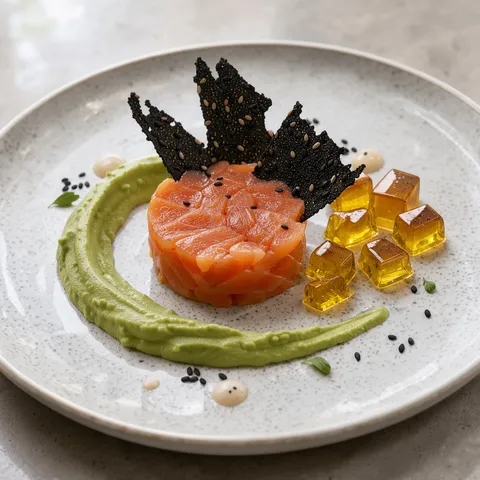 Salmon Tartare, Black Sesame Crisp, Wasabi Avocado45 min · Starter
 Salmon, Miso Glaze, Dashi Beurre Blanc, Edamame Purée50 min · Main course
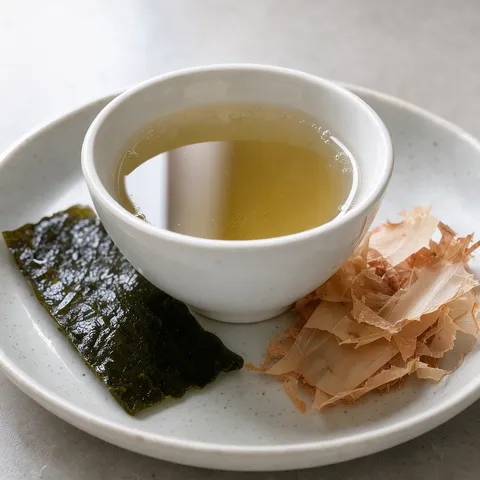 Ichiban Dashi1 hr 45 min · Basic recipe
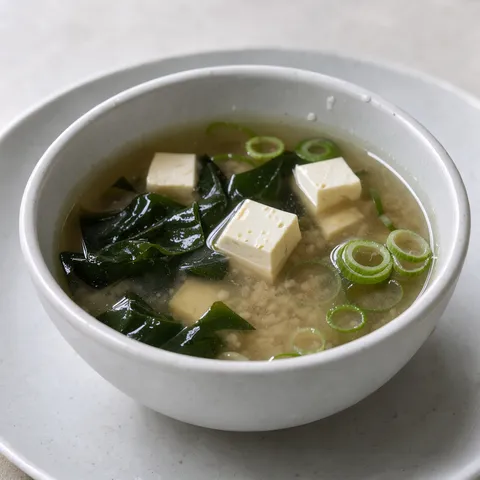 Miso Soup15 min · Soup
 Sushi Rice1 hr 15 min · Basic recipe
 Nigiri45 min · Main course