
Panzerotti 2.0
An Italian meze. Takes 1 hr 25 min, Makes 24. Difficulty: challenging.
At a glance
- Total time
- 1 hr 25 min
- Serves
- Makes 24
- Difficulty
- Challenging
- Cuisine
- Italian cuisine
- Dish type
- Meze
- Allergens
- Gluten, Milk
Ingredients
- Dough (24 pillows, 8 cm rounds, 2.5 mm thick, about 13 g each, about 410 g dough in total): 250 g plain flour
- 140 ml lukewarm water
- 1 tsp (3 g) fast-action dried yeast
- 1 tbsp olive oil
- 1/2 tsp salt
- 1/2 tsp sugar
To seal
- 1 tbsp water
Frying
- 2 litres neutral oil (about 4.4 cm deep in a 24 cm pan). Fondue (24 × 8 g, about 195 g): 150 g Gruyère or fontina (or taleggio, finely grated)
- 100 ml milk
- 2 tsp cornflour and 1 tbsp cold milk
- 1/4 tsp salt
- a pinch of nutmeg. Tomato essence (24 × 3 ml, about 75 ml): 400 g very ripe tomatoes
- 1/4 tsp salt
- 1/4 tsp sugar
To finish
- cocktail stick (for piercing a hole)
- 24 drops basil oil from Herb Oils (Basics) (about 1 tbsp)
- 1 tsp coarse sea salt
Equipment
- Mixing bowls
- Blender
- Muslin
- Saucepan
- Rolling pin / oklava
- Cake ring / food ring
- Pastry brush
- Probe thermometer
- Colander
- Bain-marie bowl
- Squeezy bottle
- Stick blender
- Precision scales (optional)
Method
- Knead the dough: Mix the flour, yeast, salt and sugar in a bowl and add the lukewarm water and olive oil. Knead for 6 min, until smooth and elastic. Kneading develops the gluten, so the dough does not tear when rolled thin and the steam that forms the pillow is held inside the dough. Lightly oil the inside of the bowl, put in the dough and cover with a damp cloth (~8 min)
- Prove: Prove the dough in a warm place (about 28°C) for 30 min, until it reaches 1.5 times its volume. The sign that it is ready is that the mark left by a finger pressed into it springs back slowly. The tomato essence and fondue are prepared during this time, so do other work while the dough proves (~30 min)
- Extract the tomato essence: Roughly chop the tomatoes and blend with the salt and sugar in a blender for 30 sec. Drain in a sieve lined with fine cloth for 20 min under their own weight, without squeezing. About 120 ml of slightly cloudy, light orange liquid carrying the essence of the tomato comes out, and 75 ml is enough. Fully clear essence needs draining overnight, and a slight cloudiness is accepted here. Squeezing and pressing brings cloudiness and bitterness. The remaining pulp can be set aside for a pasta sauce. This step finishes during the proving.
- Make the fondue: Heat the grated cheese with the 100 ml of milk in a small saucepan over low heat for 3 min, stirring, until the cheese melts. Loosen the cornflour in 1 tbsp of cold milk, add and stir for 1 min more, then add the salt and nutmeg. Melting cheeses such as fontina, Gruyère and taleggio make a smooth fondue, whereas stringy cheeses such as mozzarella clump with milk and cornflour. Blend with a stick blender for 15 sec to make the emulsion smooth. The fondue should run off the spoon but not spread, and makes about 195 g. Keep it hot in a bain-marie at 60°C, as it sets like rubber when it cools. This step finishes during the proving.
- Roll out and cut: Roll the proved dough out on a floured worktop to 2.5 mm thick. Cut 27 rounds with an 8 cm cutter (24 + 3 spare, about 10%). Re-roll the leftover dough of about 100 g once to complete the spare rounds. The spares are fried only to replace a pillow that does not puff or bursts. Keep the rounds covered with a damp cloth, because exposed edges dry out and will not seal. The dough must be thin, because thick dough does not puff and no pillow forms (~10 min)
- Seal the pillows: Brush the edge of each round thinly with water and fold the round into a half-moon. Fold the round like a pocket, cupping your hand, and seal the edge while trapping air, lightly dusting the inner face of the round with fine flour so the inner faces do not stick together. Press the edge with your fingertips to seal tightly, and press the edge with a fork to reinforce the seal. A weak seal bursts in the fryer. The hollow pillow swells in frying from the steam inside (~10 min)
- Fry: Bring the oil to 180°C in a 24 cm pan with a thermometer. Fry the pillows in batches of 6, without letting them touch, for 1.5-2 min, turning, until puffed and golden (4 batches). They are done when the pillow is puffed like a balloon, light and crisp. Below 170°C the pillow puffs slowly and stays pale. If the oil is too cool, the pillow does not puff and soaks up oil, and if it is too hot the outside burns while the inside stays dry. Lift out with a slotted spoon and drain on kitchen paper for 20 sec (~14 min)
- Inject: Pierce a hole in the corner of a pillow with the tip of a cocktail stick. Draw 8 g of hot fondue into a squeeze bottle or syringe, insert it into the hole and inject slowly until the pillow is lightly filled. Then draw up 3 ml of tomato essence and inject it through the same hole. The fondue should stay hot and the essence cold, and inside the two form a flowing mixture. If the fondue is cold, injecting becomes difficult and the pillow breaks. Weigh the first three pillows, each should be about 11 g (~8 min)
- Finish and serve: Put a drop of basil oil on top of the pillow and sprinkle with a grain of coarse salt. Arrange the pillows on a flat ceramic plate. Eat within 10 min of frying: the inside is very hot, so be careful with the first bite. When you bite in, the pillow bursts and hot cheese and cold tomato juice flow out together (~5 min)
Chef's note
Serve hot. Allow 3 per person, 80 people × 3 = 240 pieces. The recipe makes 24, so the multiplier is 240/24 = 10, or 10.5 with 5% allowed for waste (2.6 kg flour, 1.6 kg Gruyère or fontina, 21 tsp cornflour, 1.05 litres milk, 4.2 kg ripe tomatoes, 11 tbsp basil oil). This is a reinterpretation of Panzerotti: in the classic the cheese and sauce cook inside during frying, whereas here the dough is fried as an empty pillow and the fluid fondue and fresh tomato essence are injected after frying. This way the cheese does not leak, and each bite is expected to have a runny centre and a crisp outside. About 85-90% of the empty pillows puff fully, so 3 spare rounds are prepared. Mozzarella is not used in the fondue because it is stringy, as in the classic. Fried pillows are made 2 hr ahead and left uncovered, refreshed in a 180°C oven for 3 min, and the injection is done just before serving. 252 pillows are 42 batches, 2 min per batch, about 1 hr 25 min in a single pan, half that with 2 pans. Set up a team of 4: 2 people fry, 2 inject (separate squeeze bottles for the fondue and the essence). Injection takes about 25 sec per piece, so 252 pieces take about 1 hr 45 min for one person and about 55 min for two. As the fondue is kept hot, the bain-marie must stay at 60°C, and it is renewed after 2 hr. If the fondue cools, it is loosened by adding milk and heating. The cheese may contain animal rennet.
Frequently asked questions
- Why do the panzerotti not puff up?
- If the oil is below 170°C the pillow puffs slowly and stays pale. Dough rolled too thick will not puff either, so roll it to 2.5 mm and keep the oil at 180°C.
- Which cheeses suit the fondue?
- Melting cheeses such as Gruyere, fontina or taleggio make a smooth fondue. Stringy cheeses like mozzarella turn lumpy with the milk and starch.
- Why does the recipe cut 27 rounds?
- 3 spare rounds are cut for the 24 pillows. Fry the spares only to replace a pillow that does not puff or that bursts.
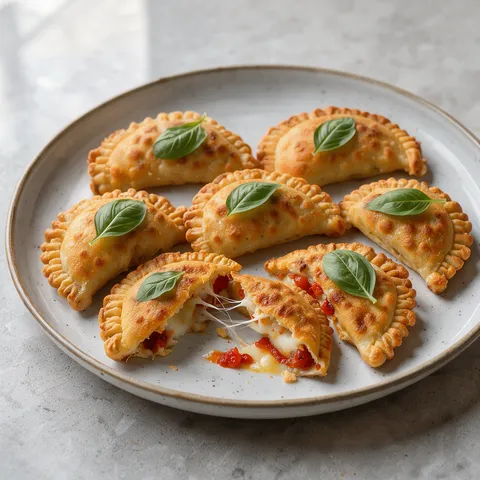 Puglian Fried Mozzarella Half-Moons1 hr 22 min · Meze
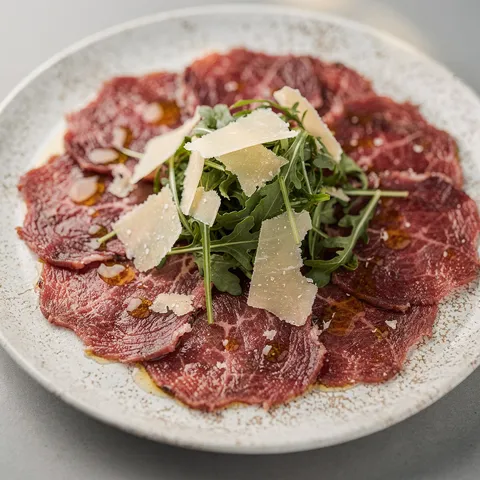 Beef Carpaccio, Mini Hunkar Begendi Croquettes, Parmesan Cream1 hr 30 min · Starter
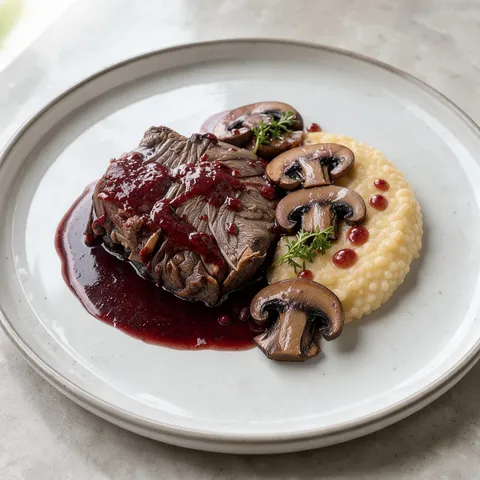 Beef Cheeks, Red Wine, Mushrooms, Polenta2 hr · Main course
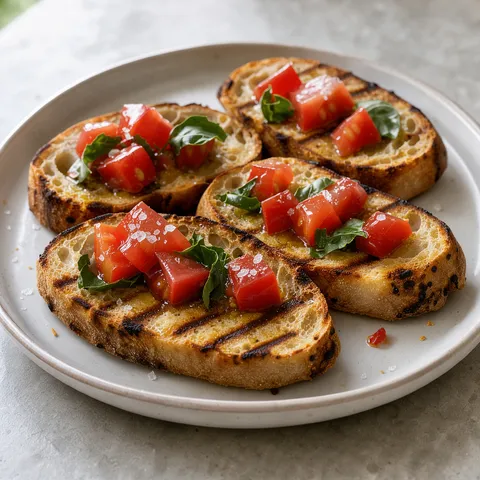 Bruschetta al Pomodoro25 min · Starter
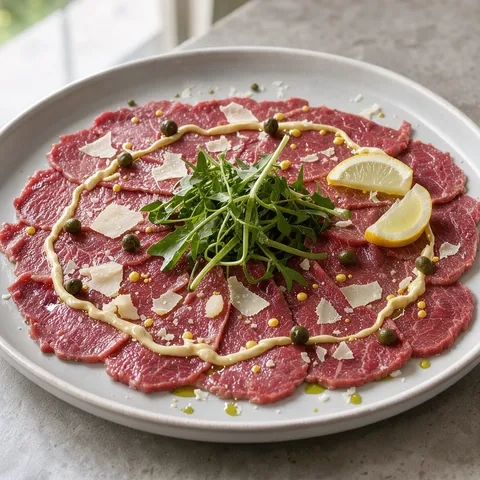 Carpaccio di Manzo30 min · Starter
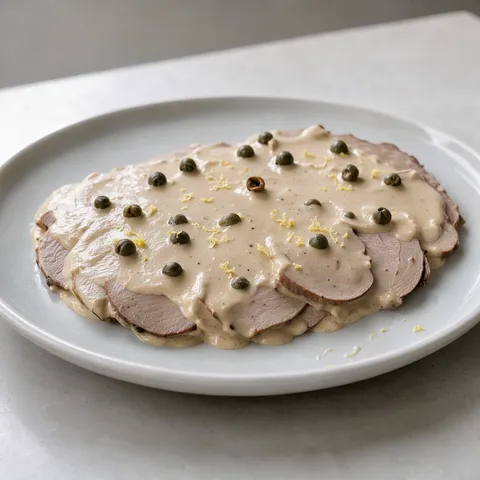 Vitello Tonnato1 hr 30 min · Starter
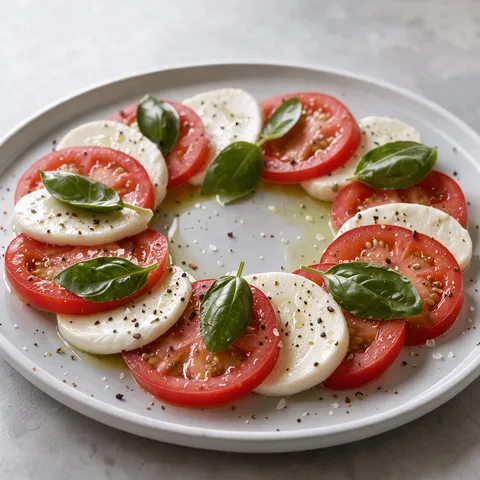 Insalata Caprese10 min · Starter