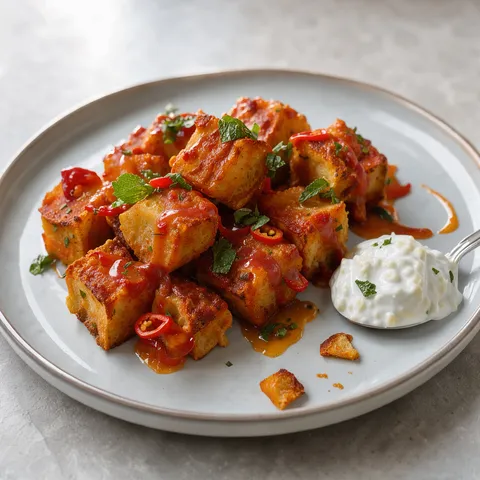
Turkish Tomato Bread Stew with Garlic Yoghurt and Mint Butter Papara
A Turkish main course. Takes 30 min, Serves 4. Difficulty: medium.
At a glance
- Total time
- 30 min
- Serves
- Serves 4
- Difficulty
- Medium
- Cuisine
- Turkish cuisine
- Dish type
- Main course
- Diet
- Vegetarian
- Allergens
- Gluten, Milk
Ingredients
Bread
- 300 g stale country bread (2 cm cubes)
- 2 tbsp olive oil
- 1/2 tsp salt
Sauce
- 3 tbsp butter
- 1 large onion (about 150 g, finely chopped)
- 2 tbsp tomato paste
- 1 tbsp sweet pepper paste
- 3 medium ripe tomatoes (about 500 g, grated)
- 500 ml hot water
- 1 tsp salt
- 1/2 tsp black pepper
- 1 tsp caster sugar
Yoghurt
- 400 g plain whole-milk yoghurt
- 3 garlic cloves
- 1/2 tsp salt
Mint butter
- 2 tbsp butter
- 1 tbsp dried mint
- 1 tsp Aleppo pepper
Equipment
- Oven
- Baking tray
- Sauté pan
- Mixing bowls
Method
- Dry the bread: Preheat the oven to 190°C. Cut the stale bread into 2 cm cubes, toss with the olive oil and salt and spread in a single layer on a baking tray. Bake for 10 min, until the edges are golden and firm. Dried bread soaks up the sauce without turning mushy and keeps its shape. Start the sauce in the meantime
- Fry the onion: Melt the butter in a wide, heavy-based frying pan over medium heat, add the onion and fry for 4 min, until translucent and lightly coloured at the edges. If the onion burns, the sauce turns bitter, so lower the heat if needed
- Fry the pastes: Add both pastes to the onion and fry for 2 min, stirring constantly. When the paste darkens in the fat and smells sweet, the raw taste has gone. This step gives the sauce depth
- Cook the sauce: Add the grated tomatoes, sugar, salt and black pepper. Boil for 8 min, until the tomato liquid has reduced and the oil rises to the surface, then add the hot water and simmer gently for another 4 min. The sauce should sit between a soup and a thin sauce, running freely off a spoon. The sugar softens the sharpness of the tomatoes
- Prepare the yoghurt: Crush the garlic with the salt to a paste using the flat of a knife. Add it to the yoghurt, stir with a fork until smooth, without whisking, and leave at room temperature. Cold yoghurt splits straight away on hot papara
- Soak the bread: Add the dried bread cubes to the boiling sauce and lower the heat. Leave covered for 3 min without stirring, then turn gently with a wooden spoon. The bread should absorb the sauce but stay slightly firm in the centre. If it thickens too much, add 50 ml hot water
- Make the mint butter: Melt the butter in a separate small pan until foaming, then turn off the heat. Add the mint and Aleppo pepper and stir for 15 sec. Mint burns and turns bitter in hot fat, so add it with the heat off
- Plate and serve: Mound the hot papara on flat plates. Spoon two spoonfuls of garlic yoghurt to one side and drizzle the mint butter over. Serve immediately, as papara left to stand absorbs all the sauce and turns mushy
Chef's note
Papara is a frugal dish made across much of Anatolia with dry bread or broken yufka (Turkish thin pastry sheets); this version is a home-style take close to the meatless style of Karaman. If the bread is not stale at home, dry the cubes a little longer. Those who like meat can fry 150 g mince with the onion. The yoghurt is always served separately beside the hot dish, as it can split if stirred in.
Frequently asked questions
- Why is the bread dried in the oven for Papara?
- Dry bread does not turn mushy as it soaks up the sauce and keeps its cube shape. Bake the stale bread cubes with the olive oil and salt at 190°C for 10 minutes, until hard and dry.
- Why does the yoghurt split on the hot Papara?
- Cold yoghurt splits straight away on hot Papara. Bring the garlic yoghurt to room temperature and mix it with a fork without whisking.
- What happens if Papara waits?
- Papara that waits soaks up all the sauce and turns mushy. Serve it straight away. If it gets too thick, add 50 ml of hot water.
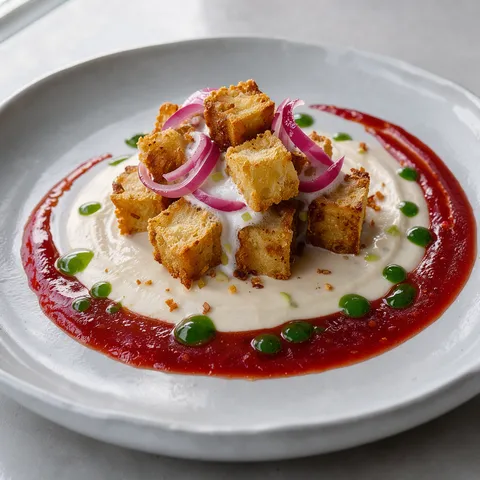 Papara 2.01 hr 10 min · Main course
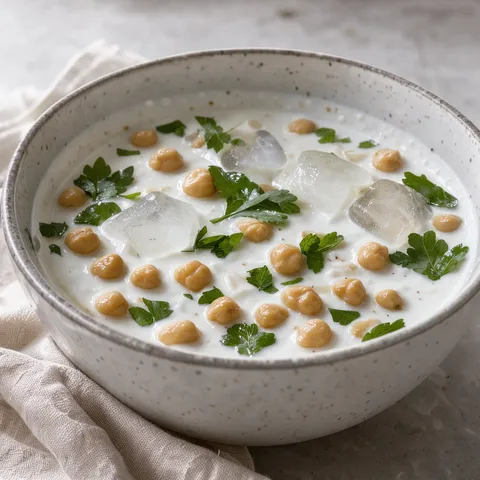 Chilled Wheat Yoghurt Soup1 hr · Soup
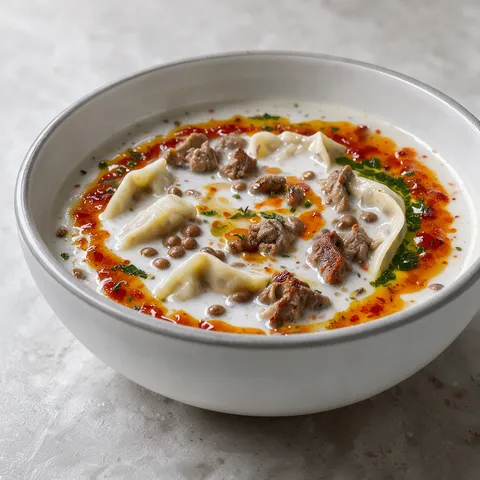 Noodle and Yoghurt Soup1 hr 10 min · Soup
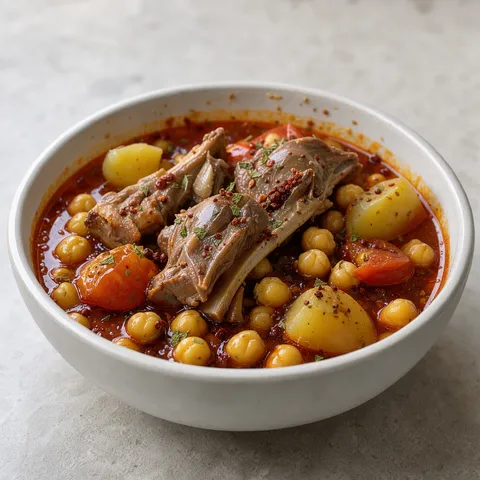 Lamb, Chickpea and Potato Stew1 hr 15 min · Soup
 Marinated Sea Bass30 min · Meze
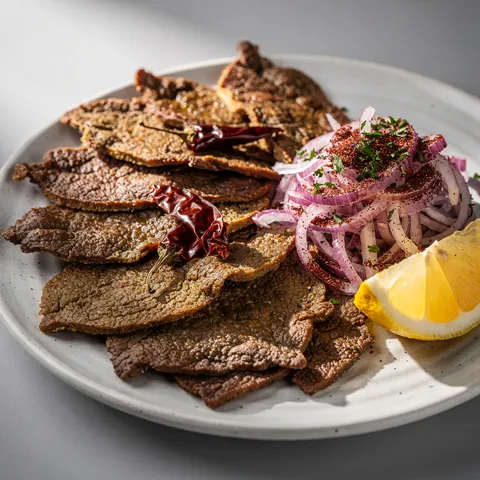 Crispy Fried Liver Slices25 min · Meze
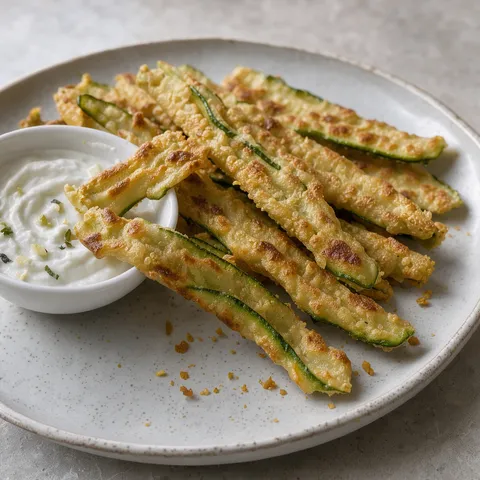 Courgette Crisps30 min · Meze