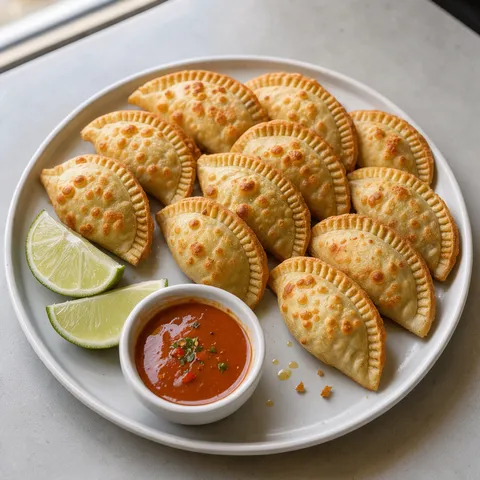
Fried Half-Moon Pastries with Beef Pastelitos Dominicanos
A Dominican Republic bread & pastry. Takes 1 hr 15 min, 12 pieces (4 servings). Difficulty: medium.
At a glance
- Total time
- 1 hr 15 min
- Serves
- 12 pieces (4 servings)
- Difficulty
- Medium
- Cuisine
- Dominican Republic cuisine
- Dish type
- Bread & pastry
- Allergens
- Gluten, Milk, Eggs
Ingredients
Dough
- 300 g plain flour
- 1 tsp baking powder
- 1 tsp salt
- 1 tsp sugar
- 60 g cold butter (cubed)
- 1 egg
- 110-120 ml cold water
Filling (picadillo)
- 400 g beef mince (medium fat)
- 2 tbsp sunflower oil
- 1 small onion (finely chopped)
- 1/2 green pepper (finely chopped)
- 3 garlic cloves
- 1 tbsp tomato paste
- 1/2 tsp dried oregano
- 1/4 tsp cumin
- 1 tsp salt
- 1/2 tsp black pepper
- 8 green olives (chopped)
- 2 tbsp raisins
- 2 tbsp coriander (chopped)
- 60 ml water
Frying
- 1 litre sunflower oil
To serve
- 1 lime
- homemade hot sauce (optional: 1 tsp chilli flakes, 3 tbsp vinegar, 1 crushed garlic clove) (Makes 12, serves 4)
Equipment
- Mixing bowls
- Cling film
- Frying pan
- Rolling pin / oklava
- Heavy-based saucepan
- Probe thermometer
- Colander
- Baking tray
- Chef's knife
- Chopping board
Method
- Knead the dough: Mix the flour, baking powder, salt and sugar. Rub the cold butter into the flour with your fingertips until it looks like coarse sand. Butter that has not melted makes the dough layered and bubbly. Add the egg and water a little at a time and bring together a soft dough that does not stick to your hand, then knead for 3 min until smooth. Wrap in cling film and rest for 20 min. Once the gluten relaxes the dough rolls out thin
- Cook the filling: Heat the oil in a frying pan over medium heat, soften the onion and pepper for 4 min and add the garlic. Add the mince and brown for 6-7 min, breaking it into small pieces with a spoon, until the liquid is absorbed. Add the tomato paste, oregano, cumin, salt and pepper
- Thicken the filling: Add the water, olives and raisins and cook over low heat for 6-8 min, until the liquid is completely absorbed. A wet filling soaks the dough and bursts open when fried. Add the coriander, spread on a wide plate and cool completely
- Roll out the dough: Divide the dough into 12 pieces. On a lightly floured surface roll out each piece with a rolling pin to a 2 mm thickness, into circles about 13 cm across
- Fill and seal: Put 1.5 tbsp of filling on one half of each circle, leaving a 1.5 cm border. Wet the edges with a finger dipped in water, fold the dough in half into a half-moon and push the air out with your finger. Seal thoroughly by pressing the edges with the tines of a fork. If air is left, it puffs up and bursts when frying
- Heat the oil: Bring the oil to 175-180°C in a heavy-based pot, checking with a thermometer. If the oil is cold the dough soaks it up, and if it is too hot the outside burns and the inside of the dough stays raw
- Fry: Lower the pastelitos into the oil 3 at a time, in batches of 3, and fry for 2-3 min, turning once, until puffed and golden with a blistered surface. Lift out with a slotted spoon onto a tray lined with kitchen paper and rest for 2 min
- Plate: Arrange the pastelitos on a serving plate in rows of three or four, leaning on each other like half-moons. Add lime slices and a small bowl of hot sauce alongside and serve hot
Chef's note
Pastelitos are the pastry of street stalls, after-school treats and holiday breakfasts in the Dominican Republic. Versions with chicken and with cheese are also common. Fried pastries should be eaten within a few hours, but filled unfried pastries can be frozen on a tray and dropped straight into hot oil.
Frequently asked questions
- Why must the filling be completely cool and dry?
- A wet filling soaks the dough and the pastries burst open when frying. Cook the picadillo until all the liquid has gone and spread it out on a wide plate to cool.
- Why do the pastelitos puff up and burst while frying?
- Trapped air in the dough makes them puff up and burst. Press the air out with your finger and seal the edges firmly with the tines of a fork.
- What temperature should the oil be?
- Heat the oil to 175-180°C and check it with a thermometer. If it is too cool the dough soaks up oil, and if it is too hot the outside burns while the inside stays raw.
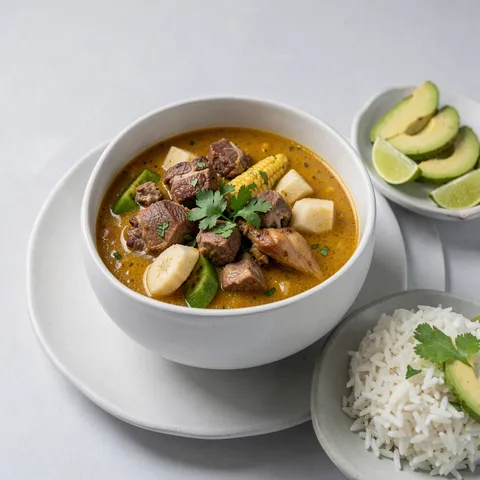 Meat and Root Vegetable Stew1 hr 50 min · Soup
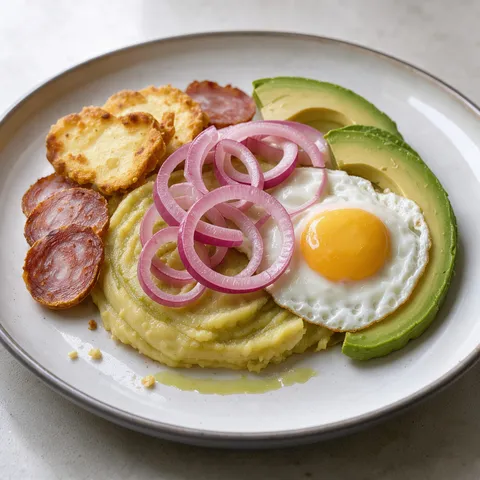 Plantain Mash50 min · Main course
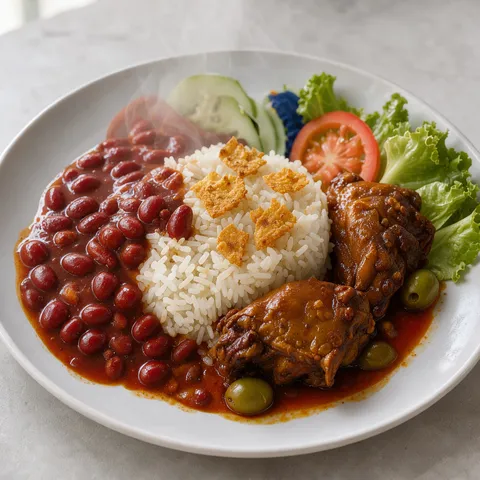 White Rice, Beans and Chicken1 hr 30 min · Main course
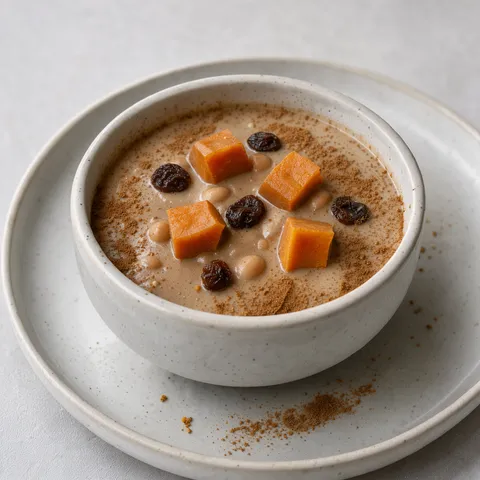 Spiced Coconut Red Bean Dessert1 hr 45 min · Dessert
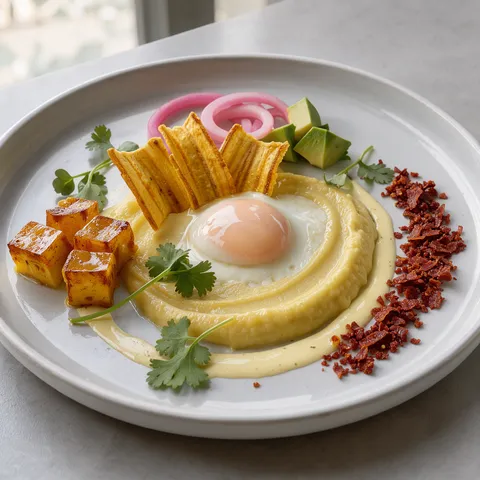 Mangú con Los Tres Golpes 2.01 hr 20 min · Main course
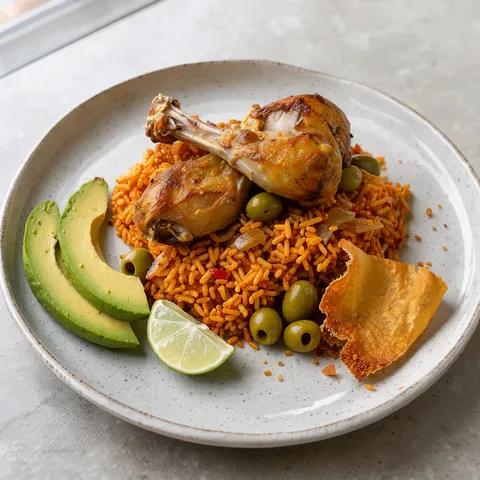 Dominican Chicken and Olive Pilaf1 hr 27 min · Main course