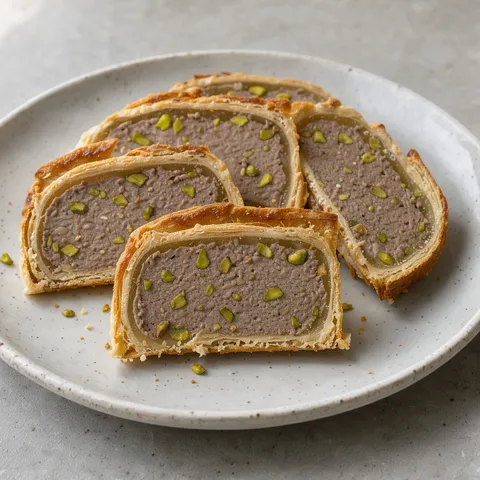
Lyon-Style Beef and Chicken, 32 Slices Pâté en Croûte
A French meze. Takes 3 hr 2 min · +6 hr chilling · +time for Chicken Stock (Basics), 32 slices. Difficulty: professional.
At a glance
- Total time
- 3 hr 2 min · +6 hr chilling · +time for Chicken Stock (Basics)
- Serves
- 32 slices
- Difficulty
- Professional
- Cuisine
- French cuisine
- Dish type
- Meze
- Allergens
- Gluten, Milk, Eggs, Celery, Sulphites
Ingredients
- Dough (Pâte à Croûte, about 450 g, about 270 g needed to line the tin): 250 g plain flour
- 110 g cold butter (diced)
- 1 egg
- 50 ml cold water
- 1/2 tsp salt
- 1/2 tsp sugar
- 1 egg yolk (for glazing)
Tin
- loaf tin 24 cm long at the base
- 7 cm wide and 7 cm deep
Forcemeat (about 950 g)
- 400 g beef mince (20% fat)
- 250 g chicken breast (cubed)
- 100 ml cold whipping cream
- 1 egg
- 2 tbsp brandy
- 2 tsp salt
- 1/2 tsp black pepper
- 1/2 tsp quatre épices
- 100 g shallots (finely chopped, softened in butter)
- 60 g raw pistachios
- 1 tbsp thyme and flat-leaf parsley
Jelly (about 150 ml)
- 150 ml Chicken Stock (Basics)
- 4 g powdered gelatine (beef-derived)
Equipment
- baking paper
- cling film
- funnel
Equipment
- Mixing bowls
- Rolling pin / oklava
- Cake tin
- Saucepan
- Sauté pan
- Food processor
- Pastry brush
- Oven
- Probe thermometer
- Baking tray
- Bread knife
- Baking paper
Method
- Knead the dough: Mix the flour, salt and sugar in a bowl, rub in the cold butter with your fingertips until the pieces are the size of peas, then add the egg and water and bring together into a single mass without kneading. Wrap in cling film and rest in the fridge for 30 min. Cold butter makes the dough crumbly and crisp, whereas overworking it activates the gluten and makes the dough shrink (~12 min)
- Make the forcemeat: Soften the shallots in butter in a sauté pan for 4 min and cool. Process the cold chicken breast in a food processor for 30 sec, add the beef mince, egg, cream, brandy, salt and spices and process for 40 sec. Transfer to a bowl and mix in the shallots, pistachios and herbs. Cook a few tablespoons of the forcemeat in a frying pan for 30 sec, then taste and adjust the salt. Uncooked forcemeat hides its saltiness (~18 min)
- Roll out the dough and line the tin: Roll out two thirds of the dough (about 300 g) with a rolling pin to a 40×25 cm rectangle, 3 mm thick, and press it into the greased tin lined with baking paper overhanging the sides by 3 cm (the "ears"), letting the pastry hang over the edge. The paper ears let you lift the baked pâté out of the tin. Press the pastry against the base and sides with no gaps. If the pastry leaves a gap, the jelly leaks and the crust collapses (~10 min)
- Fill and seal: Press the forcemeat into the tin in two layers, pushing out the air, and level the surface. Roll out the remaining dough to 3 mm thick and cut a lid, then seal the edges by pressing together with egg yolk. Cut two chimney holes, each 1 cm across, in the middle of the lid. Cut 2 mm strips from the leftover dough to decorate the lid and brush with egg yolk (~14 min)
- Bake: Preheat the oven to 200°C. Put the tin on a tray and bake for 10 min, then reduce the heat to 170°C and bake for another 50 min, until the lid is deep golden and the internal temperature measured through the chimney with a thermometer reaches 72°C. The initial high heat seals the pastry, then the lower heat cooks the forcemeat without drying it out. The juices seeping from the chimneys should run clear (~60 min)
- Rest: Rest in the tin for 30 min. During resting the juices redistribute and the forcemeat firms up, and a pâté sliced straight away falls apart. Make the jelly meanwhile (~30 min)
- Make the jelly: Soften the gelatine in 1 tbsp cold water for 5 min, add it to the chicken stock warmed in a small pan, stir until dissolved and cool to 35°C. If it is hot, the pastry goes soggy. The jelly fills the gap between the forcemeat and the crust and keeps the slices moist
- Add the jelly: While the pâté is still warm, fill it with 150 ml jelly through the chimneys with the help of a funnel, topping up as it sinks. If the jelly is too hot it soaks the pastry, and if too cold it sets in the chimney holes. Chill the tin in a tray of iced water for 20 min: the target is to be below 21°C within the first 2 hr and below 5°C within the first 6 hr after baking. Cover with cling film and chill in the fridge for at least 6 hr, ideally overnight (~26 min)
- Slice and plate: Lift the pâté out of the tin by the baking paper ears, trim 1 cm from each end and cut 16 slices 1.3 cm thick with a bread knife using a sawing motion. Halve each slice to make 32 pieces. Place 2 pieces side by side on a flat ceramic plate, cut side up. The crust, forcemeat and jelly should form clear layers (~12 min)
Chef's note
Serve cold (4-8°C). Allow 2 slices per person, 120 people × 2 = 240 slices. Because the recipe makes 32 slices, the multiplier is 240/32 = 7.5, or 8 with 5% waste (2 kg flour, 880 g butter, 3.2 kg beef mince, 2 kg chicken breast, 800 ml cream, 480 g pistachios, 800 g shallots). Make the pâté en croûte 2 days ahead and keep it in the fridge, then slice on the day of service. Sliced pieces hold for 3 hr at 4°C. Oven capacity: 2 tins bake at once in a 2-shelf oven, so 8 batches need 8 tins, which means 4 rounds (4 hr), which is why for a large service it is baked the day before. The original pâté en croûte is made in Lyon with pork, liver and lard. Here it is made with beef and chicken instead of pork, and the gelatine is beef-derived. The internal temperature of the forcemeat must reach 72°C.
Frequently asked questions
- Why should pate en croute pastry be short and crisp, and what happens if it is overworked?
- Cold butter makes the pastry short and crisp. Overworking wakes up the gluten and makes the pastry shrink, so bring the dough together without kneading.
- Why is the jelly poured in through the chimneys after baking?
- The jelly fills the gap between the forcemeat and the crust and keeps the slice moist. Cool the jelly to 35°C, as a higher heat makes the pastry soggy.
- Why is the baked pate not sliced straight away?
- A pate sliced straight away falls apart. Rest it in the tin for 30 minutes, then fill with jelly and chill for at least 6 hours, ideally overnight.
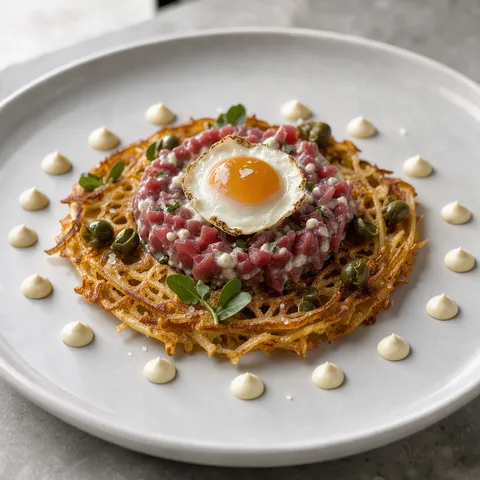 Tuna Tartare, Potato Rösti Disc, Quail's Egg55 min · Starter
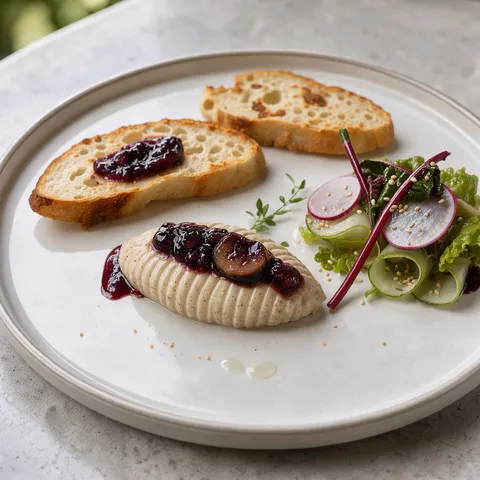 Duck Rillettes, Fig Jam, Crunchy Crostini, Pickle Salad1 hr 30 min · Starter
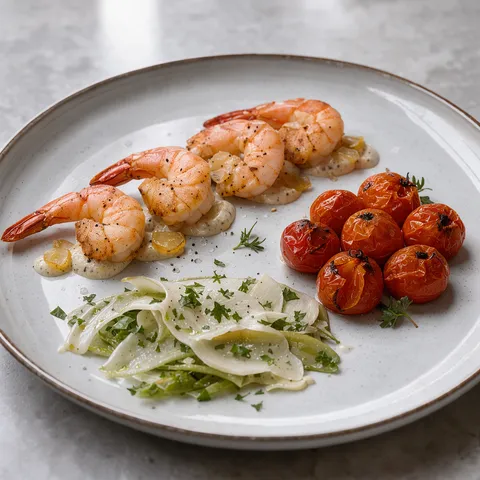 Prawns, Garlic Confit Aioli, Charred Tomatoes, Fennel Salad35 min · Starter
 Beetroot Carpaccio, Goat's Cheese Mousse, Walnuts1 hr · Starter
 Honey Mustard Chicken, Potato Gratin, Asparagus1 hr 30 min · Main course
 Beef Fillet, Red Wine Sauce, Pommes Purée1 hr 10 min · Main course