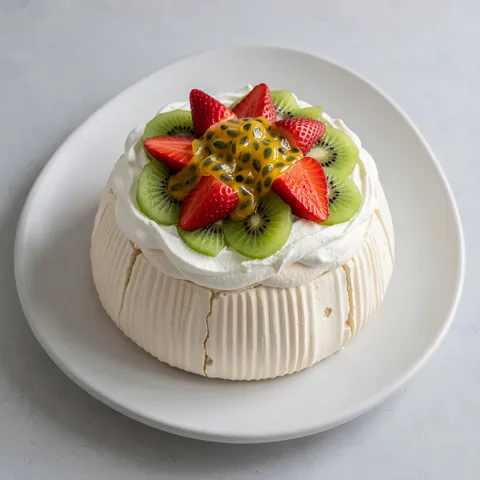
Pavlova
A New Zealand dessert. Takes 1 hr 55 min · +1 hr cooling in the oven, 1 pieces 22 cm pavlova (8 slices). Difficulty: medium.
At a glance
- Total time
- 1 hr 55 min · +1 hr cooling in the oven
- Serves
- 1 pieces 22 cm pavlova (8 slices)
- Difficulty
- Medium
- Cuisine
- New Zealand cuisine
- Dish type
- Dessert
- Diet
- Vegetarian, Gluten-free
- Allergens
- Milk, Eggs
Ingredients
- Meringue (22 cm, 8 slices): 6 egg whites (about 200 g, at room temperature)
- 330 g caster sugar
- a pinch of salt
- 2 tsp cornflour
- 1 tsp white vinegar
- 1 tsp vanilla extract
- 1/4 lemon (for wiping the bowl)
Cream
- 400 ml cold whipping cream (35% fat)
- 1 tbsp icing sugar
- 1/2 tsp vanilla extract
Fruit
- 4 kiwi fruit
- 200 g strawberries
- 4 passion fruit
Equipment
- Oven
- Baking paper
- Baking tray
- Stand mixer
- Silicone spatula
- Fine sieve / chinois
- Palette knife
- Wooden spoon / spatula
- Mixing bowls
- Hand mixer
- Paring knife
- Bread knife
Method
- Prepare the oven and template: Set the oven to 120°C (conventional), without the fan, as the fan pushes the meringue to one side and cracks its surface. Draw a 22 cm circle in pencil on baking paper and lay the paper on a tray with the pencil side down. Wipe the bowl and whisk of the stand mixer with lemon and dry them, as the slightest trace of fat stops the whites from rising
- Whisk the whites: Put the egg whites and salt in the bowl and whisk on medium speed for 3-4 min to soft peaks, where the tip bends softly when the whisk is lifted. Room-temperature whites give more volume, faster, than cold whites
- Add the sugar: Turn the mixer to high and add the sugar one tablespoon at a time at 30 sec intervals, 10-12 min in total. Whisk for 2 min more once all the sugar is in. The meringue should hold glossy, stiff peaks, and when rubbed between your fingers no sugar grit should be felt. Undissolved sugar caramelises in the oven and weeps out of the meringue as beads
- Fold in the cornflour and vinegar: Sift the cornflour over the meringue, add the vinegar and vanilla and fold with a spatula from the bottom up for 30 sec, only until combined. The vinegar and cornflour are what keep the inside of the pavlova soft like marshmallow, so the outside turns crisp while the inside stays moist
- Shape: Pile the meringue inside the circle you drew. With a palette knife pull the sides upwards from the outside to make vertical grooves, hollow the centre slightly and make a nest about 7-8 cm high with the edges a little higher than the middle. The hollow will carry the cream and fruit
- Bake: Put the tray on the middle shelf of the oven and bake at 120°C for 1 hr 15 min, without opening the oven door in that time. The outside should be dry and pale cream, and if it takes colour the temperature is too high. Touched lightly, the crust should be firm but give a little underneath
- Cool in the oven: Turn off the oven, leave the door ajar with a wooden spoon handle and cool the pavlova inside for at least 1 hr. A sudden temperature change leads to large cracks and collapse. Small cracks on the surface are normal, and the cream covers them
- Whip the cream: While the pavlova cools, put the cold cream, icing sugar and vanilla in a chilled bowl and whisk with a hand mixer on medium speed for 3 min to soft peaks. Overwhipped cream turns grainy and becomes butter, and it should leave soft waves as it falls from the spoon
- Prepare the fruit: Peel the kiwi fruit with a peeler and cut into 5 mm rounds, remove the stems from the strawberries and quarter them. Halve the passion fruit and spoon the seeded pulp into a small bowl. Cut the fruit just before serving, as cut kiwi gets watery as it waits
- Plate: Gently lift the pavlova off the paper onto a flat serving plate. Spoon the cream into the hollow in the middle and spread in waves, leaving 2 cm at the edges. Arrange the kiwi rounds and strawberries on the cream, casually but balanced, and drizzle the passion fruit last, so the yellow juice and black seeds glisten on the cream. Serve at once and slice with a bread knife in a sawing motion, as the cream begins to soften the meringue within 30 min
Chef's note
Pavlova is named after the ballerina Anna Pavlova, who toured Australia and New Zealand in the 1920s, and both countries claim the dessert as their own. A large share of the earliest documented recipes come from New Zealand, and kiwi and passion fruit are the classic decoration there. Do not make pavlova on humid days, as the meringue draws moisture from the air and turns sticky.
Frequently asked questions
- Why does a pavlova crack or collapse in the oven?
- A sudden change in temperature causes large cracks and collapse. When it is baked, turn off the oven, leave the door ajar and let the pavlova cool inside for at least 1 hour.
- Why do sugar beads weep from the meringue?
- Undissolved sugar caramelises in the oven and leaks out. Add the sugar a tablespoon at a time and whisk until the meringue no longer feels gritty between your fingers.
- When do you decorate a pavlova with fruit and cream?
- Cut the fruit just before serving, as cut kiwi fruit turns watery as it waits. Serve straight away, because the cream starts to soften the meringue in about 30 minutes.
 Pavlova 2.01 hr 25 min · Dessert
 Whitebait Fritters40 min · Starter
 Hāngī3 hr 45 min · Main course
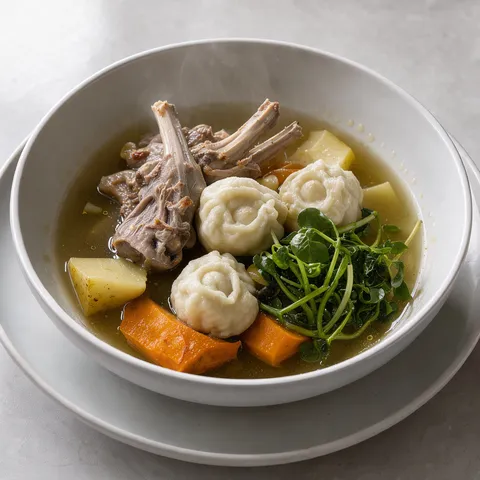 Lamb and Watercress Dumpling Soup1 hr 55 min · Soup
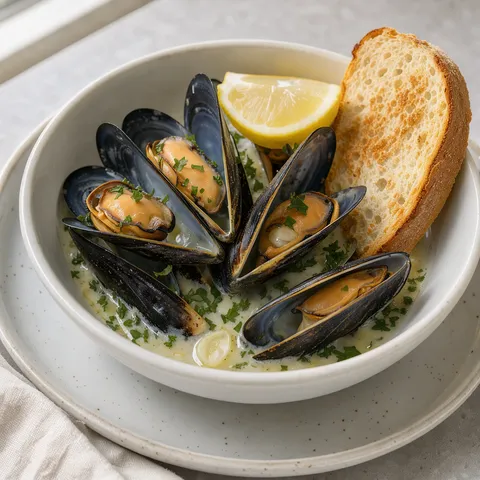 White Wine Cream Mussels40 min · Starter
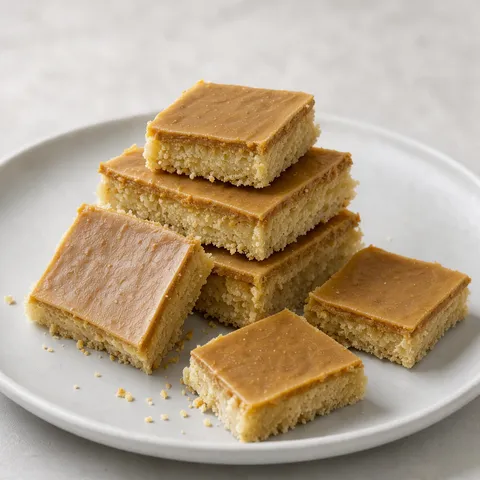 Ginger Crunch50 min · Dessert
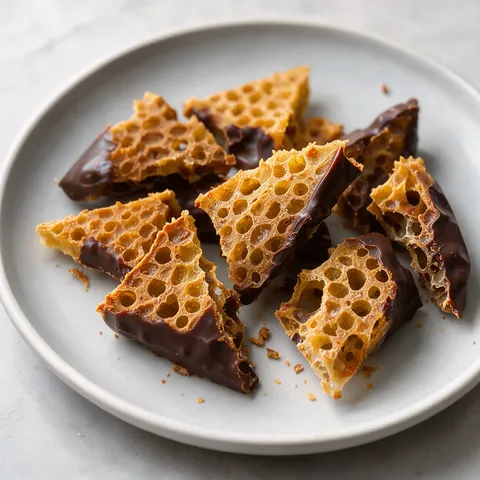 Honeycomb Toffee30 min · Dessert