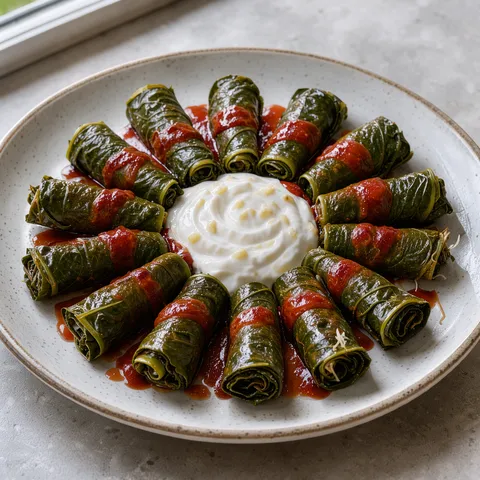
Stuffed Chard Leaves Pazi Dolmasi
A Turkish main course. Takes 1 hr 55 min, Serves 4. Difficulty: medium.
At a glance
- Total time
- 1 hr 55 min
- Serves
- Serves 4
- Difficulty
- Medium
- Cuisine
- Turkish cuisine
- Dish type
- Main course
- Allergens
- Gluten, Milk
Ingredients
Leaves
- 1 large bunch chard (about 20 large leaves)
- 2 litres water and 1 tsp salt for blanching
Filling
- 250 g medium-fat beef mince
- 100 g baldo rice (rinsed)
- 50 g fine bulgur
- 1 medium onion (about 130 g, finely chopped)
- 1 tbsp Turkish red pepper paste
- 1 tbsp tomato paste
- 1/2 bunch flat-leaf parsley (about 20 g, chopped)
- 1 tsp dried mint
- 1 tsp Aleppo pepper
- 1/2 tsp black pepper
- 1 tsp salt
- 2 tbsp olive oil
- 3 tbsp water
Cooking liquid
- 1 tbsp pepper paste
- 3 tbsp pomegranate molasses
- 2 tbsp olive oil
- 500 ml hot water
- 1/2 tsp salt
- 3-4 chard stalks
To serve
- 300 g plain yoghurt
- 1 garlic clove
- a pinch of salt
Equipment
- Chef's knife
- Chopping board
- Saucepan
- Colander
- Mixing bowls
- Heavy-based saucepan
Method
- Separate the leaves: Wash the chard and cut off the thick white stalks where the leaf begins. Set aside 3-4 stalks for the bottom of the pan. Cut each leaf in half along the central rib and cut out the thick lower part of the rib in a V shape. You should have about 40 half-leaves
- Soften the leaves: Bring the 2 litres of water to the boil with the salt in a wide pan. Dip the leaves in five at a time for 20-30 sec, lift out with a slotted spoon and leave to drain. The leaves turn dark green and no longer crack when rolled. Chard boiled for too long tears
- Make the filling: In a bowl, knead the mince, rice, bulgur, onion, both pastes, parsley, mint, Aleppo pepper, black pepper, salt, olive oil and the 3 tbsp water by hand for 2 min. The filling goes in raw: the rice and bulgur swell with the juices from the mince as they cook in the sauce
- Roll: Lay a half-leaf on the work surface, shiny side down, and put a dessertspoonful, about 16 g, of filling at the wide end. Fold in the sides and roll up tightly but without squashing, to the thickness of a finger. Loose rolls open during cooking, while rolls that are too tight burst when the rice swells. You should have about 40 rolls
- Arrange: Line the bottom of a heavy-based 24 cm saucepan with the reserved chard stalks, which protect the base of the rolls. Pack the rolls in tightly, seam side down, in 2 layers and cover with an upturned plate
- Pour in the sauce: Dissolve the pepper paste, pomegranate molasses, olive oil and salt in the hot water and pour it down the side of the pan over the rolls. The liquid should only just cover the top layer
- Cook: Bring to the boil over medium heat, then lower the heat and simmer, covered, for 35-40 min. Cut a roll in half and taste: the rice should be soft and the mince cooked through. A thick, tangy sauce should remain at the bottom of the pan. If the liquid runs out too early, add 100 ml hot water
- Rest and make the yoghurt: Turn off the heat and leave the rolls to rest in the pan for 10 min. Meanwhile, crush the garlic with a pinch of salt, fold it into the yoghurt and whisk
- Plate: Invert a plate over the pan and turn the rolls out, or lift them out one by one and arrange them in a sunburst circle on a wide, shallow plate. Put the garlic yoghurt in the centre, drizzle the sauce left in the pan over the rolls and serve hot
Chef's note
In Gaziantep cooking, chard rolls are known for their sauce soured with pomegranate molasses, and they are cooked often in the region in the winter months. The chard stalks are not thrown away: they protect the base of the pan, or are cooked separately in olive oil. The pepper paste and pomegranate molasses can be shop-bought.
Frequently asked questions
- How do I stop the chard leaves tearing when I roll them?
- Blanch the leaves in boiling water for only 20-30 seconds. Chard blanched for longer tears.
- Why do the rolls come undone or burst while cooking?
- Loosely rolled parcels unroll as they cook and very tight ones burst when the rice swells. Roll them firmly but without squashing, about as thick as a finger.
- Why are chard stalks laid on the bottom of the pan?
- Set aside 3-4 chard stalks to protect the base of the rolls. Pack the rolls closely with the seam sides down.
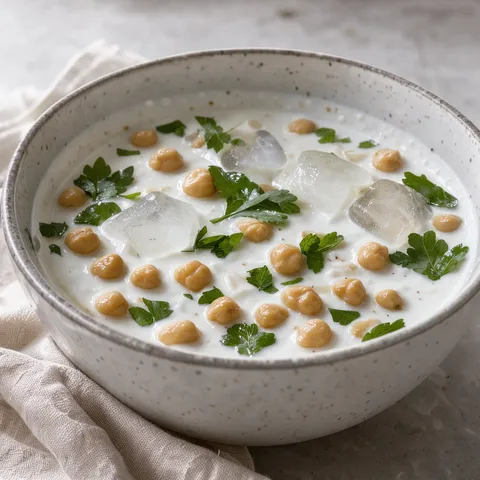 Chilled Wheat Yoghurt Soup1 hr · Soup
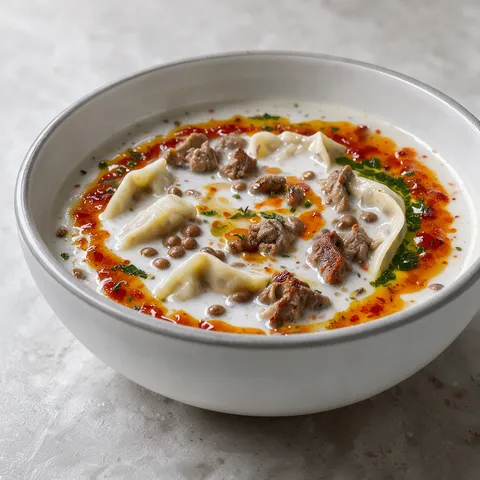 Noodle and Yoghurt Soup1 hr 10 min · Soup
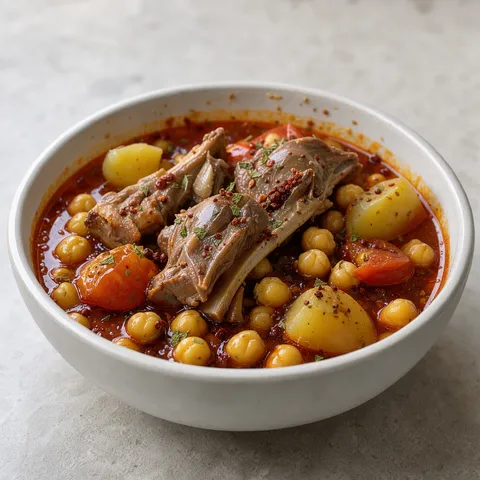 Lamb, Chickpea and Potato Stew1 hr 15 min · Soup
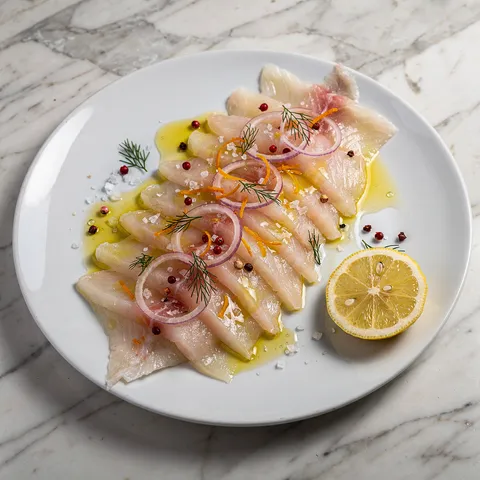 Marinated Sea Bass30 min · Meze
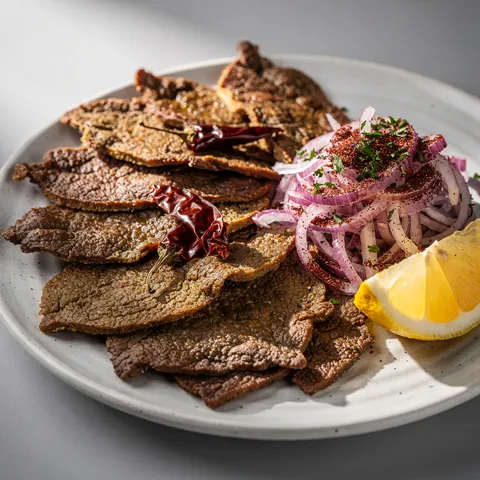 Crispy Fried Liver Slices25 min · Meze
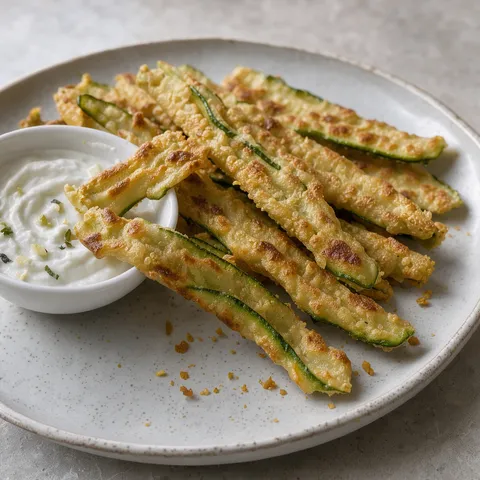 Courgette Crisps30 min · Meze