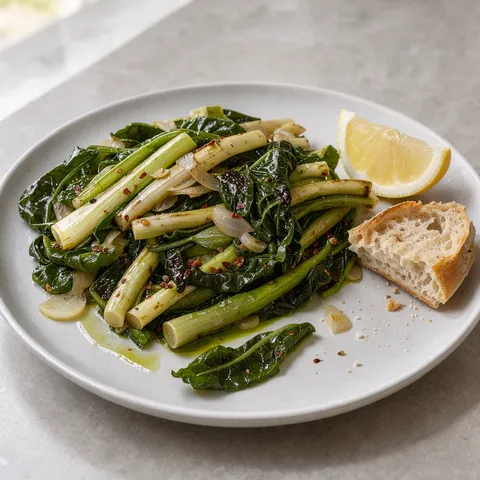
Sautéed Chard Pazi Kavurmasi
A Turkish main course. Takes 24 min, Serves 4. Difficulty: easy.
At a glance
- Total time
- 24 min
- Serves
- Serves 4
- Difficulty
- Easy
- Cuisine
- Turkish cuisine
- Dish type
- Main course
- Diet
- Gluten-free
- Allergens
- Contains none of the 14 listed allergens
Ingredients
Sauté
- 1 large bunch chard (about 700 g)
- 2 medium onions
- 4 garlic cloves
- 4 tbsp olive oil
- 1 tbsp tomato paste
- 1.5 tsp salt
- 1/2 tsp black pepper
- 1 tsp Aleppo pepper
- 100 ml hot water
To serve
- 1 lemon
- 4 slices of village bread
Equipment
- Sauté pan
- Chopping board
- Chef's knife
- Wooden spoon / spatula
Method
- Wash and separate the chard: Wash the chard twice in plenty of water, removing the soil from the folds of the leaves. Cut the white stalks from the leaves with a knife, as the stalks cook more slowly than the leaves and are used separately. (~3 min)
- Chop the chard: Cut the stalks into 1 cm pieces and the leaves into strips 2-3 cm wide, and keep the two in separate bowls. Do not cut the leaves too fine, as they shrink a lot when cooked anyway. Let the washing water drain, as overly wet chard boils instead of frying. (~3 min)
- Prepare the onion and garlic: Thinly slice the onions into half-moons and finely chop the garlic. You will add the garlic after the onion so it does not burn and turn bitter. (~2 min)
- Fry the onion: Heat a wide sauté pan over medium heat, add the olive oil and onions and sprinkle in half the salt. Fry the onion for 4 min, until translucent and lightly yellow at the edges, as the salt draws out the onion's liquid and speeds up softening. Add the garlic and tomato paste and stir for another 1 min to lose the raw smell of the paste. (~5 min)
- Cook the stalks: Add the chard stalks to the pan with the 100 ml of hot water, cover and cook for 4 min. The stalks should be easily pierced with the tip of a knife, so that when the leaves are added, the two soften together. (~4 min)
- Add the leaves: Pile the leaves into the pan and sprinkle over the remaining salt, black pepper and Aleppo pepper. Keeping the heat medium-high, turn the leaves over with a wooden spoon and fry for 5-6 min. The dish is ready when the leaves have turned deep green and the liquid in the pan has almost gone. If the lid stays on, the chard turns watery as if boiled, so leave the lid off. (~6 min)
- Plate and serve: Turn off the heat, squeeze half a lemon into the sauté and stir. Spoon the chard into a deep dish, drizzle over a few drops of olive oil and serve with lemon wedges and bread. It tastes just as good hot or warm, so eating it with bread is the best way to serve. (~1 min)
Chef's note
Chef's note: Sautéed chard is a green dish fried with onion and garlic that comes to the table in summer on the Black Sea and Aegean coasts. If you add yoghurt, it strikes a soft balance between cold and hot serving, and here it is written without yoghurt to keep it vegan and simple. Whether to add tomato paste varies from region to region, and you can leave it out and cook with only onion if you like. If you use spinach in place of chard, the cooking time halves.
Frequently asked questions
- Why are the chard stalks cooked separately from the leaves?
- The stalks cook more slowly than the leaves. Cooking the stalks first and adding the leaves later lets both soften together.
- Why does Pazi Kavurmasi turn watery?
- If the washing water isn't drained off well, the chard stews instead of sautéing. Leave the lid off after adding the leaves, because a closed pan turns watery.
- Is Pazi Kavurmasi eaten hot or warm?
- It tastes just as good hot or warm. Add the lemon juice once the heat is off and serve with bread.
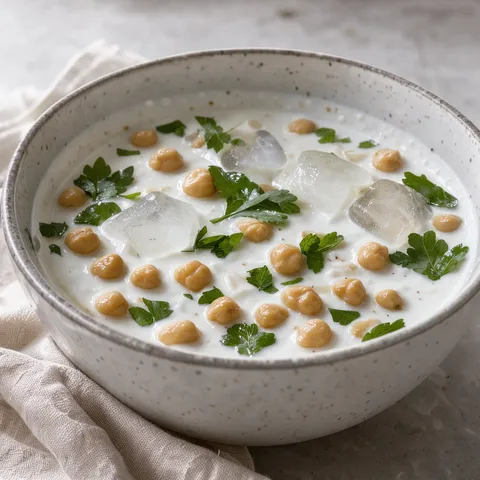 Chilled Wheat Yoghurt Soup1 hr · Soup
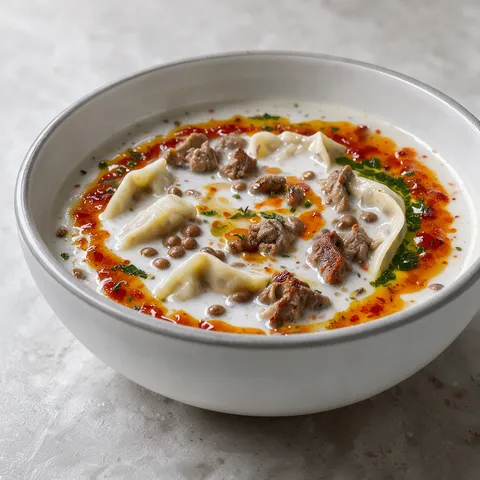 Noodle and Yoghurt Soup1 hr 10 min · Soup
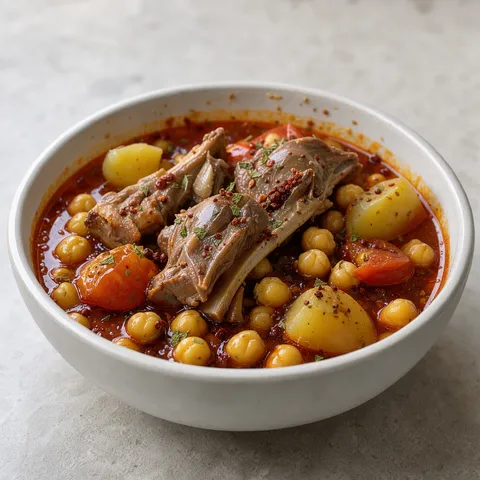 Lamb, Chickpea and Potato Stew1 hr 15 min · Soup
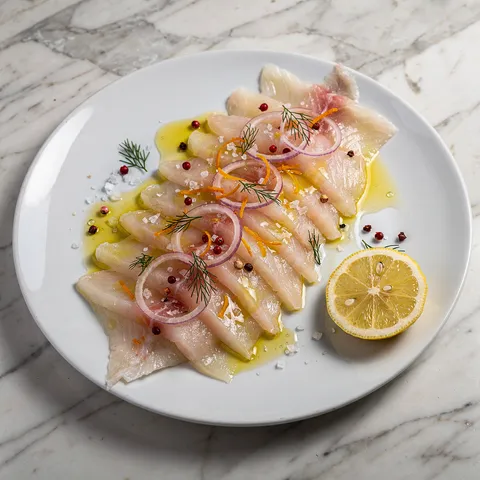 Marinated Sea Bass30 min · Meze
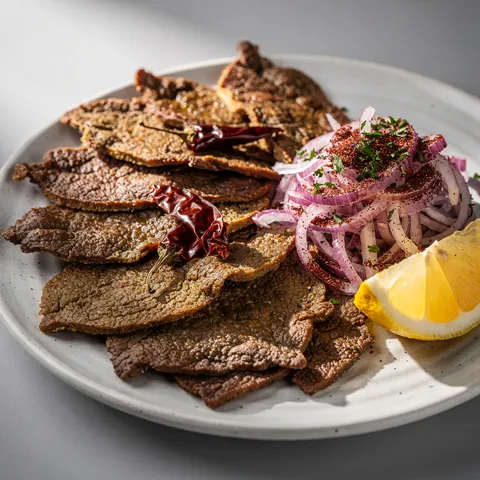 Crispy Fried Liver Slices25 min · Meze
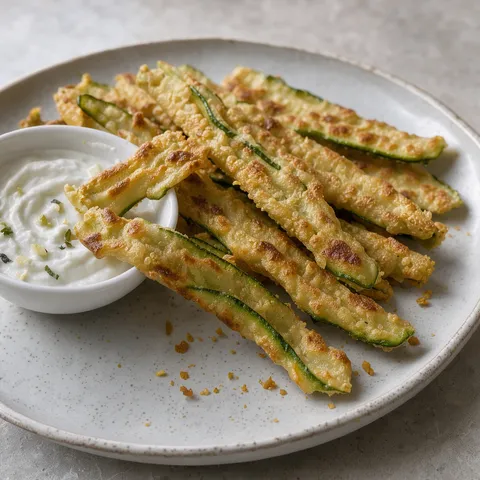 Courgette Crisps30 min · Meze