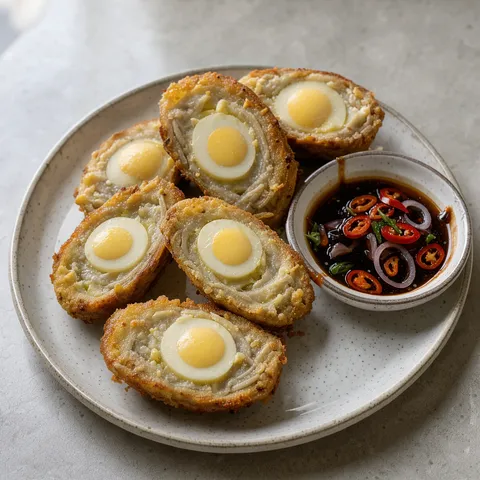
Fish Cakes with Quail's Egg Pempek Kapal Selam
An Indonesian meze. Takes 1 hr 35 min, Makes 24. Difficulty: medium.
At a glance
- Total time
- 1 hr 35 min
- Serves
- Makes 24
- Difficulty
- Medium
- Cuisine
- Indonesian cuisine
- Dish type
- Meze
- Diet
- Gluten-free
- Allergens
- Eggs, Fish
Ingredients
- Dough (24 × 26 g, about 625 g in total): 300 g boneless white fish fillet (sea bass or sea bream, very cold)
- 200 g tapioca starch
- 100 ml iced water
- 1 tsp salt
- 1/2 tsp sugar
- 2 garlic cloves
- 2 tbsp tapioca starch for shaping
Filling
- 24 quail's eggs (boiled for 2.5 min and peeled, about 9 g each)
Boiling
- 3 litres water
- 1 tsp salt
Frying
- 1.5 litres sunflower oil (about 4.8 cm deep in a 20 cm pan). Cuko sauce (24 × 12 g, about 290 ml): 100 g palm sugar (or light brown sugar if unavailable)
- 300 ml water
- 3 garlic cloves
- 2 red chillies
- 3 tbsp cider vinegar
- 1/2 tsp salt
Equipment
- Food processor
- Mixing bowls
- Precision scales
- Saucepan
- Colander
- Heavy-based saucepan
- Probe thermometer
- Baking tray
- Pestle and mortar
- Chef's knife
Method
- Make the fish paste: Cut the cold fish fillet into 3 cm pieces and process in a food processor with the salt, sugar and garlic for 1 min, until a sticky paste forms. Add the iced water and process for 30 sec more. The cold water protects the fish protein from heat, and if the paste warms up its binding is spoiled. Put the paste in a bowl, add the starch in 3 additions and knead by hand for 5 min, until a smooth dough that is soft and pliable, like an earlobe (~14 min)
- Cook the cuko sauce: Boil the palm sugar and water in a pan over medium heat for 6 min, until the sugar dissolves and thickens slightly to a syrup. Crush the garlic and chillies in a mortar, add to the hot syrup with the vinegar and salt and boil for 2 min. The sauce thickens slightly as it cools and should come to about 290 ml. Make this while the dough is being kneaded
- Shape: Weigh the dough into 24 portions of 26 g. Dust your hands and the worktop with starch, flatten each portion, put a quail's egg in the middle and close the edges to form an oval 6 × 3.3 cm long. The seam should have no cracks, as in boiling a crack lets the egg out. Leave the shaped ones on the tray on a bed of starch (~24 min)
- Boil: Bring 3 litres of salted water to the boil in a pan and lower the heat. Lower in 12 pempek and boil for 8-10 min, until all rise to the surface, then cook for 2 min more once they have risen. The internal temperature should reach 74°C. Lift out with a slotted spoon, cool in iced water for 1 min and drain. Cook the second 12 the same way. Cooking in barely simmering water rather than boiling water prevents cracking (~24 min)
- Dry: Leave the boiled pempek on a tray at room temperature for 15 min, until the surface is matt and dry. A wet surface spits in the oil, while a dry one gives a crisp crust. Meanwhile heat the oil to 175°C in a heavy-based 20 cm pan, checking with a thermometer (~15 min)
- Fry: Fry the pempek 6 at a time (6 ovals fit comfortably in a 20 cm pan) for 3 min, turning, until deep golden and crisp, giving 24 in 4 batches. The oil should return to 175°C for every batch. Lift out with a slotted spoon and drain on kitchen paper for 1 min (~14 min)
- Plate: Cut each pempek diagonally in the middle with a chef's knife so that the egg shows. Put 2 pempek cut side up on a flat ceramic plate and spoon 12 ml of cuko sauce beside them. The cuko, with its own sour-sweet-hot balance, cuts the sweetness of the fish (~4 min)
Chef's note
Serve hot, with the cuko at room temperature. Allow 2 per person, 120 people × 2 = 240 pieces. As the recipe makes 24, the multiplier is 240/24 = 10, or 10.5 with 5% allowed for waste (3.15 kg boneless fish fillet, 2.1 kg tapioca starch, 252 quail's eggs, 1.05 kg palm sugar, 53 garlic cloves). The boiled pempek can be prepared 1 day ahead and stored in a dry container in the fridge, and the frying is done just before serving. The cuko keeps for 1 week. Raw fish must be kept at 0-4°C. Capacity: frying 6 pempek per 3 min, so 252 pieces is 42 batches, which takes about 45 min with 3 pans. For boiling, 12 are cooked at once in a 28 cm pan and a batch takes about 12 min, so 252 pieces is 21 batches, about 4 hr in a single pan and about 1.5 hr with 3 boiling pans, and therefore the boiling is done a day ahead. The frying oil is 1.5 litres in a 20 cm pan, 4.8 cm deep. The original pempek kapal selam is made large from half a kilo of dough with tenggiri (a type of mackerel), and here it was reduced to finger size with white fish and quail's eggs
Frequently asked questions
- Why do the pempek crack while boiling?
- If there is a crack where the dough is sealed, the egg comes out while boiling. Boil them over a low heat rather than in fiercely boiling water to stop them cracking.
- Why do the fish and water need to be cold?
- Cold water protects the fish protein from heat. If the dough warms up it loses its binding power, so work with very cold fillet and iced water.
- Why are the boiled pempek dried before frying?
- A wet surface spits in the oil, while a dry surface gives a crisp crust. Leave the boiled pempek on a tray at room temperature for 15 minutes until the surface is matt and dry.
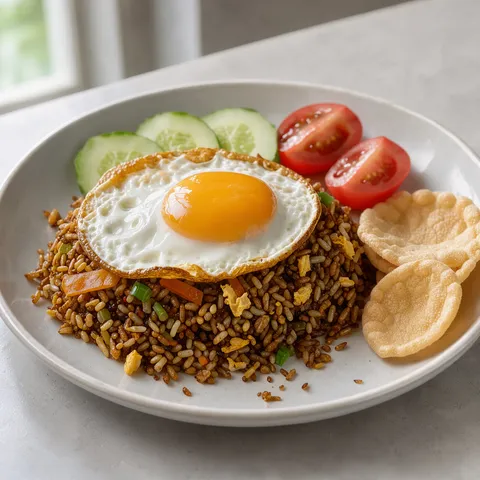 Nasi Goreng25 min · Main course
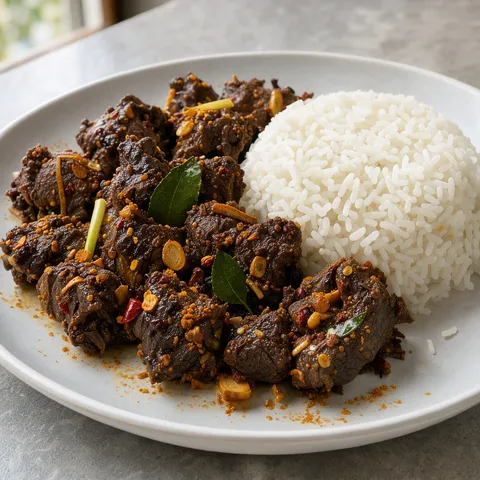 Beef Rendang1 hr 45 min · Main course
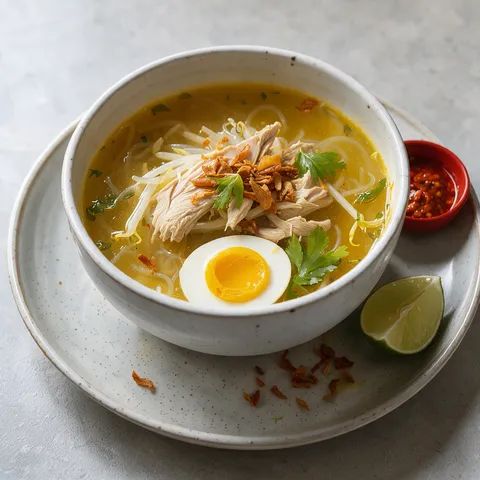 Indonesian Yellow Chicken Soup1 hr · Soup
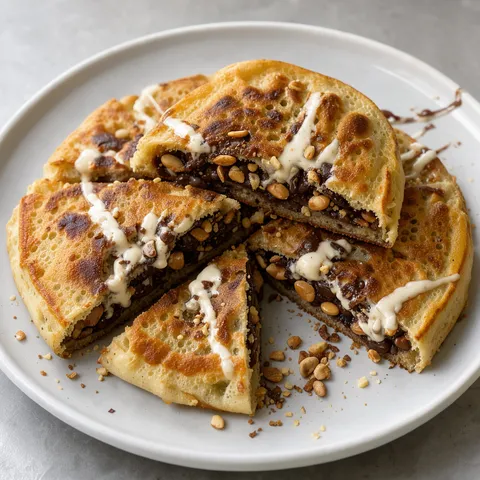 Indonesian Sweet Honeycomb Pancake35 min · Bread & pastry
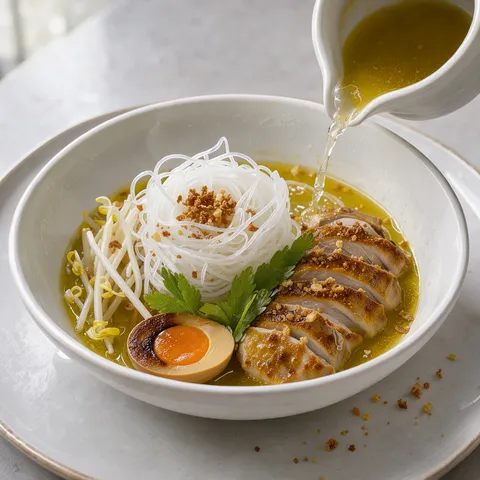 Soto Ayam 2.01 hr 20 min · Soup
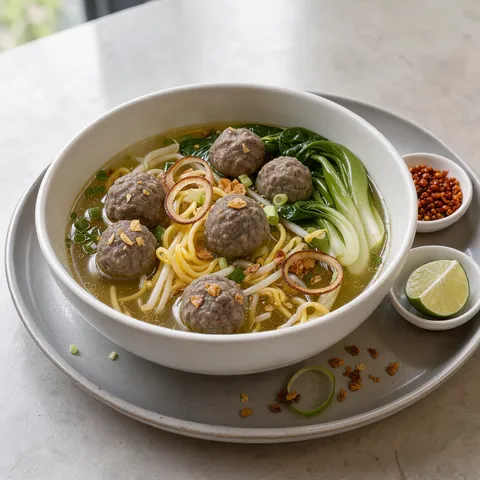 Indonesian Beef Meatball Soup2 hr 50 min · Soup