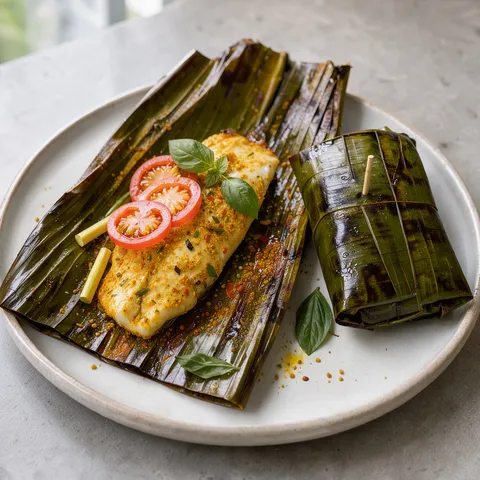
Sea Bass Steamed in Banana Leaf Pepes Ikan
An Indonesian main course. Takes 1 hr 5 min, Serves 4. Difficulty: medium.
At a glance
- Total time
- 1 hr 5 min
- Serves
- Serves 4
- Difficulty
- Medium
- Cuisine
- Indonesian cuisine
- Dish type
- Main course
- Diet
- Gluten-free
- Allergens
- Fish, Tree nuts
Ingredients
Fish
- 4 sea bass or sea bream fillets (about 170 g each, skin-on)
- 1/2 tsp salt
- juice of 1 lime
Spice paste
- 6 shallots (about 90 g)
- 4 garlic cloves
- 3 long red chillies
- 1 hot red chilli
- 3 cm fresh turmeric or 1 tsp ground turmeric
- 2 cm piece of ginger
- 3 raw macadamias or 4 cashews (instead of candlenuts)
- 1 tsp palm sugar or light brown sugar
- 1/2 tsp salt
- 2 tbsp sunflower oil
Filling
- 2 tomatoes (thinly sliced)
- 1 lemongrass stalk (cut into 4 pieces, bruised)
- 4 makrut lime leaves
- 4 bay leaves
- a handful of basil leaves (instead of kemangi)
Wrapping
- 4 pieces of banana leaf (each 30×30 cm, or baking paper with foil over it if unavailable)
- 8 cocktail sticks
Equipment
- Food processor
- Frying pan
- Steamer basket
- Griddle pan
- Probe thermometer (optional)
Method
- Prepare the fish: Pat the fillets dry, rub them with the 1/2 tsp salt and the lime juice and leave for 10 min. The lime removes any fishy smell and firms the flesh slightly
- Blend the paste: Blitz the shallots, garlic, chillies, turmeric, ginger, macadamias, sugar and 1/2 tsp salt in a food processor for 1-2 min. The paste can be smooth but slightly textured. Pepes is traditionally made with a raw paste, but frying it in a 28 cm frying pan with 2 tbsp oil for 4 min takes away the harshness of raw garlic, so this recipe uses it fried. Leave to cool for 5 min
- Soften the banana leaves: Pass the banana leaves over a low gas flame or through a hot frying pan for a few seconds. When the leaf darkens and turns glossy, it becomes pliable and does not tear when folded. Wipe with a damp cloth
- Make the parcels: In the centre of each leaf place 2 tomato slices, 1 bay leaf and 1 lime leaf. Lay the fish on top, skin side down, and spread a quarter of the paste over it in a thick layer. Top with a piece of lemongrass and a few basil leaves. Fold the long sides of the leaf over the fish so they overlap, tuck both ends underneath and secure with a cocktail stick
- Steam: Put 5 cm water in the base of a 28 cm steamer and bring to the boil. Arrange the parcels two to a tier on two tiers, cover and steam over medium-high heat for 13 min. The internal temperature of the fish should be 60°C: open one parcel and check with the tip of a knife. The flesh should be white and flake easily
- Char for flavour: Heat a cast-iron griddle pan over high heat for 4 min. Griddle the parcels in two batches for 2 min on each side, until the banana leaf blackens and blisters in places. This step passes a smoky aroma from the leaf and lightly caramelises the spice paste
- Rest and serve: Rest the parcels for 2 min, then place them on plates still closed. At the table, remove the cocktail sticks and open the leaf so the steam and aroma fill the table. The leaf is not eaten: it serves only as a vessel
Chef's note
Pepes is a wrapped cooking method known in many regions of Indonesia, particularly West Java, and is made with fish, chicken, mushrooms and tofu. Banana leaves are found in the frozen section of Asian supermarkets. If unavailable, wrap the fish in baking paper, cover the outside with foil and, at the griddle stage, open the foil slightly to char the paper. Kemangi (lemon basil) can be replaced with ordinary basil and a little finely grated lemon zest.
Frequently asked questions
- What can I use if I can't find banana leaves?
- The recipe suggests baking paper topped with aluminium foil instead. If you use banana leaf, first pass it over a low gas flame, and once the leaf darkens and turns glossy it becomes pliable and won't tear when folded.
- Can I tell the fish is cooked without opening the parcel?
- Open the parcel and check with the tip of a knife. The internal temperature of the fish should be 60°C and the flesh should be white and flake apart. The parcels steam for 13 minutes.
- Why are the parcels grilled after steaming?
- The steamed parcels are cooked for 2 minutes on each side in a griddle pan, until the leaf is charred in places and puffs up. This step passes a smoky aroma from the leaf and lightly caramelises the spice paste.
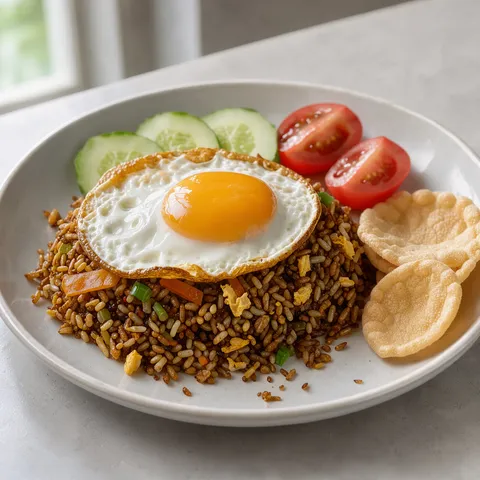 Nasi Goreng25 min · Main course
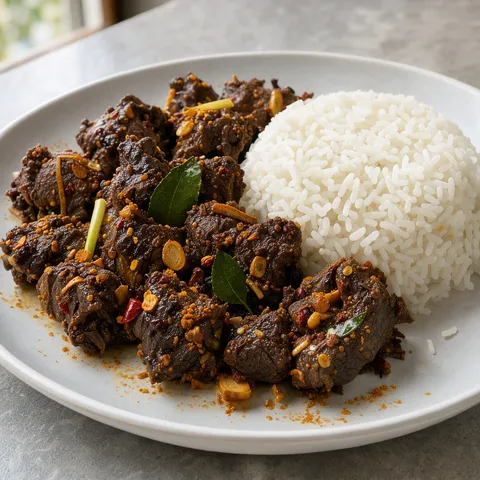 Beef Rendang1 hr 45 min · Main course
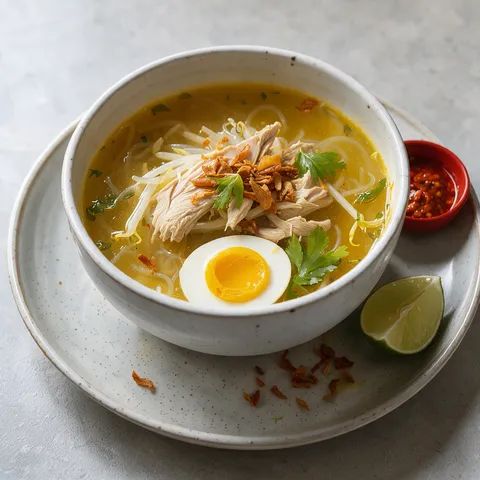 Indonesian Yellow Chicken Soup1 hr · Soup
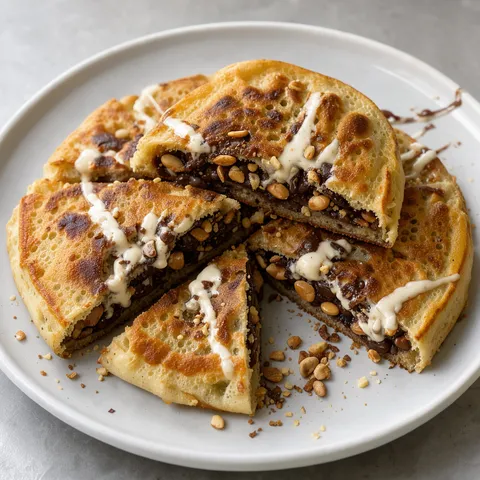 Indonesian Sweet Honeycomb Pancake35 min · Bread & pastry
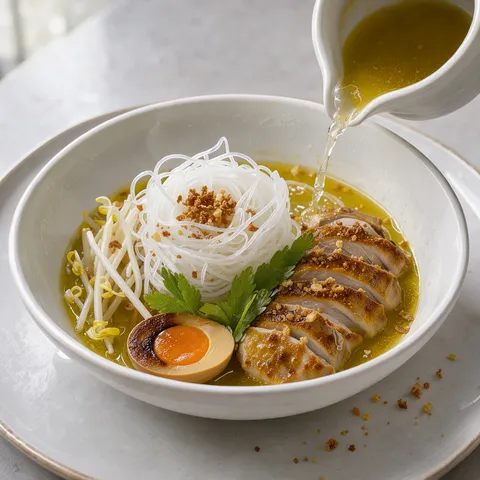 Soto Ayam 2.01 hr 20 min · Soup
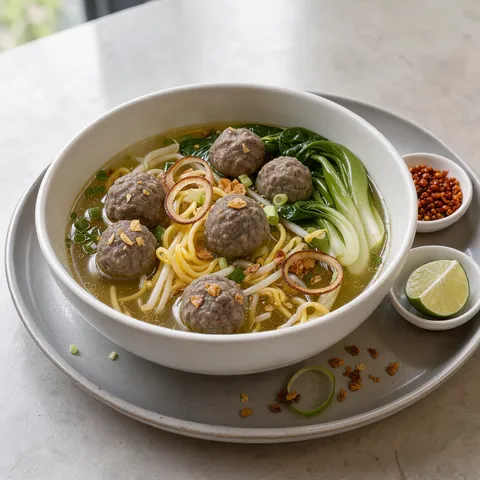 Indonesian Beef Meatball Soup2 hr 50 min · Soup