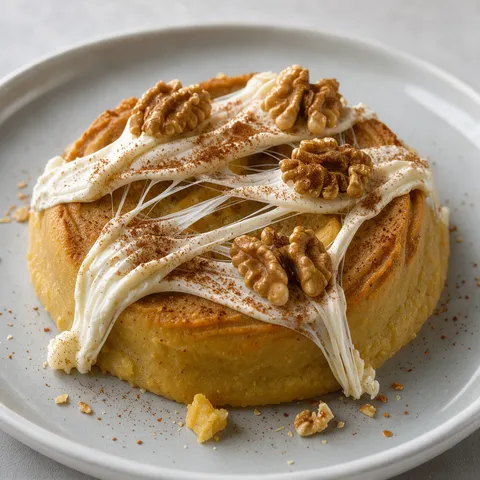
Turkish Flour Halva with Cheese Peynirli Un Helvasi
A Turkish dessert. Takes 35 min, Serves 4. Difficulty: medium.
At a glance
- Total time
- 35 min
- Serves
- Serves 4
- Difficulty
- Medium
- Cuisine
- Turkish cuisine
- Dish type
- Dessert
- Diet
- Vegetarian
- Allergens
- Gluten, Milk, Tree nuts, Sesame
Ingredients
Halva
- 120 g butter
- 200 g plain flour
- 250 g caster sugar
- 600 ml water
- 150 g unsalted fresh cheese (kunefe cheese or fresh string cheese, grated or crumbled)
To serve
- 40 g walnuts (coarsely broken)
- a pinch of cinnamon
Equipment
- Frying pan
- Saucepan
- Wooden spoon / spatula
Method
- Boil the syrup: Heat the water and sugar in a small saucepan for 5 min, until the sugar dissolves and it just simmers. The syrup must stay hot, because cold syrup poured into the toasted flour makes the halva lumpy and makes it spit
- Toast the flour: Melt the butter in a wide, heavy-based pan over low heat, add the flour and toast for 15 min, stirring constantly with a wooden spoon. The flour first turns sandy, then fragrant and light golden, and most of the halva's flavour comes from this colour. If you rush and raise the heat, the flour burns and turns bitter
- Add the syrup: Lower the heat and pour the hot syrup over the flour in a thin thread while stirring quickly. Steam and foam rise from the pan, so keep your face away at this stage. After 2 min of stirring the halva is lump-free and dense
- Fold in the cheese: Sprinkle in the cheese and stir it in. Stir for 3 min, until the cheese strands stretch. If the cheese is salty, soak it in water for an hour beforehand and squeeze it out, otherwise it spoils the taste of the halva
- Toast the walnuts: Meanwhile toast the walnuts in a dry pan over medium heat for 3 min, until fragrant. Toasting releases their oil, which adds crunch to the oily texture of the halva, but if they are over-toasted they turn bitter
- Rest: Turn off the heat and let the halva rest for 5 min. Resting sets the consistency so that it shapes easily, whereas it falls apart when very hot
- Plate: Shape the halva between two spoons and spoon it onto plates in bullet or round shapes. Sprinkle with the coarsely broken walnuts and cinnamon. Serve hot
Chef's note
In Urfa, cheese halva is one of the best-loved versions of flour halva that contain dairy, and the stretching cheese strands are the signature of the dish. If kunefe cheese is unavailable, unsalted string cheese or mozzarella will do, although mozzarella stretches a little less. Keeping the syrup hot and toasting the flour patiently is the whole secret of halva. The halva firms up the next day. To soften it again, add 2 tbsp hot water in a pan and stir over low heat.
Frequently asked questions
- Why is the syrup added hot to flour halva?
- Cold syrup poured onto toasted flour makes the halva lumpy and spit. Keep the syrup hot and pour it in as a thin stream.
- Why does flour halva turn bitter?
- If the heat is too high, the flour burns and turns bitter. Toast the flour over a low heat until light golden.
- Can I use salted cheese in the halva?
- Salted cheese must first be soaked in water for an hour and squeezed dry, otherwise it spoils the flavour of the halva. The recipe uses unsalted fresh cheese.
 Chilled Wheat Yoghurt Soup1 hr · Soup
 Noodle and Yoghurt Soup1 hr 10 min · Soup
 Lamb, Chickpea and Potato Stew1 hr 15 min · Soup
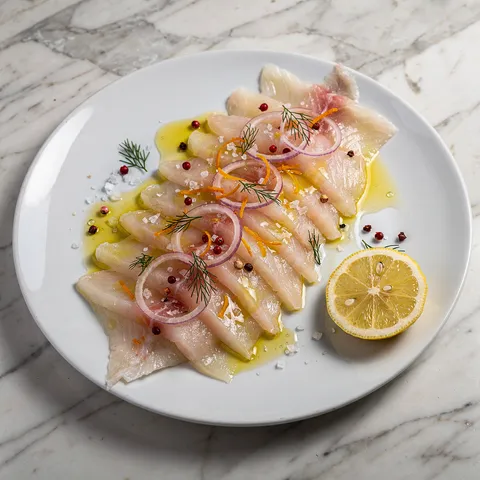 Marinated Sea Bass30 min · Meze
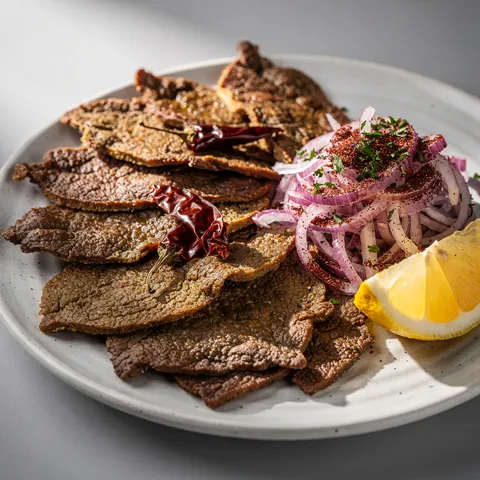 Crispy Fried Liver Slices25 min · Meze
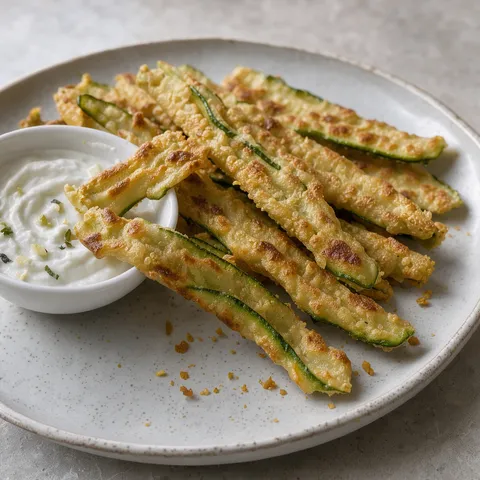 Courgette Crisps30 min · Meze