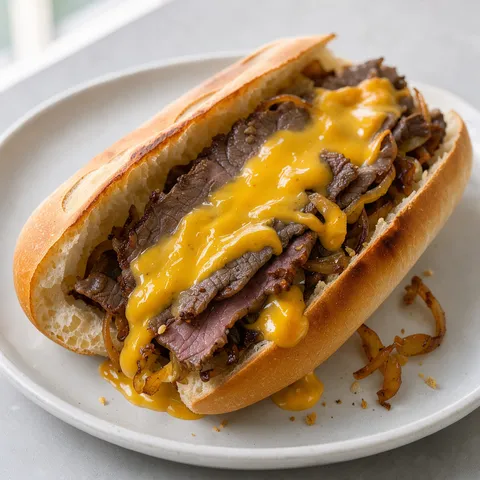
Ribeye and Cheese Roll Philadelphia Cheesesteak
An American main course. Takes 55 min · +1 hr 25 min rising, Serves 4. Difficulty: challenging.
At a glance
- Total time
- 55 min · +1 hr 25 min rising
- Serves
- Serves 4
- Difficulty
- Challenging
- Cuisine
- American cuisine
- Dish type
- Main course
- Allergens
- Gluten, Milk, Fish, Soya, Mustard, Sulphites
Ingredients
Bread (hoagie rolls)
- 270 g plain flour
- 175 ml lukewarm water (about 38°C)
- 5 g fast-action dried yeast
- 1 tsp sugar
- 1 tsp salt
- 15 g soft butter
- 1 tsp sunflower oil (for the bowl)
Beef
- 600 g boneless beef rib-eye (fatty)
- 3/4 tsp salt
- 1/2 tsp black pepper
- 1 tbsp sunflower oil
Onions
- 2 large onions (about 400 g, thin half-moons)
- 1 tbsp sunflower oil
- 1/4 tsp salt
Cheese sauce
- 20 g butter
- 20 g plain flour
- 300 ml milk
- 120 g cheddar (grated)
- 80 g fresh mild semi-hard cheese (grated)
- 1 tsp Homemade Dijon-Style Mustard (Basics)
- 1 tsp Worcestershire-Style Sauce (Basics)
- 1/4 tsp salt
- a pinch of black pepper
Equipment
- Stand mixer
- Mixing bowls
- Cling film
- Chopping board
- Chef's knife
- Cast-iron frying pan
- Saucepan
- Balloon whisk
- Wooden spoon / spatula
- Precision scales
- Baking tray
- Baking paper
- Oven
- Bread knife
- Silicone spatula
Method
- Knead the dough: In the bowl of a stand mixer, mix the 175 ml of lukewarm water, yeast and sugar and leave for 5 min, until foam forms on the surface. If it does not foam, the yeast is dead, so start again. Add the flour and salt and knead with the dough hook at medium speed for 5 min, then add the soft butter and knead for another 4 min. The dough should be smooth, slightly sticky and glossy, and a stretched piece should form a thin membrane without tearing (about 15 min in total). The butter makes the rolls soft and easy to bite
- Prove: Shape into a ball, put it in a bowl oiled with sunflower oil, cover with cling film and prove in a warm place for 1 hr, until doubled in size. Do the next four steps within this 1 hr
- Freeze the beef: Cut the rib-eye into long pieces on a chopping board with a chef's knife, wrap in cling film and put in the freezer. After 30 min the meat should be firm but not frozen in the middle, and should give slightly when pressed with a finger. Cold meat slices thinly, while meat at room temperature slides and is cut thick
- Caramelise the onions: While the beef is in the freezer, heat the oil in a 28 cm cast-iron pan over medium heat and add the onions and salt. Cook for 15 min, stirring occasionally with a wooden spoon, until soft and deep golden at the edges. Transfer to a bowl and wipe the pan with kitchen paper. The salt draws out the water in the onion and speeds up caramelisation
- Make the cheese sauce: Melt the butter in a saucepan over low heat, add the flour and whisk for 1 min without letting it colour. Add the milk a little at a time, whisking, and when it boils reduce the heat to the lowest and cook for 3 min, until it coats the back of a spoon. Take the pan off the heat, add the cheddar, semi-hard cheese, mustard, Worcestershire sauce, salt and black pepper and stir with a wooden spoon until the cheeses melt (about 8 min in total). In a boiling sauce the cheese separates its fat and clumps, so add the cheese off the heat. Cover and keep warm
- Slice the beef: Slice the beef from the freezer against the grain as thinly as possible, about 2 mm, with a chef's knife on a chopping board, and put on a wide plate (about 8 min). Thin slices cook in seconds in the pan and fit easily in the roll. Sprinkle the salt and black pepper over the slices
- Shape the rolls: When the dough has doubled, divide it on the scales into 4 equal pieces (about 120 g). Spread each piece out by hand into a 12×18 cm rectangle, roll up tightly from the long edge, pinch the seam and roll to 22 cm long. Arrange on a tray lined with baking paper, spaced apart with the seam underneath, brush with water, cover and leave for a second prove of 25 min. Meanwhile set the oven to 220°C (about 8 min of preparation in total). A tightly rolled roll rises evenly in the oven
- Bake: Slide the tray into the oven and bake at 220°C for 18 min, until the outside is deep golden and the base sounds hollow when tapped. Start the next step at the 10 min mark of baking. Rest the rolls from the oven on the tray for 5 min, as hot bread is squashed when squeezed
- Brown the beef: Heat the cast-iron pan in which the onions were cooked over high heat for 2 min, add the oil, spread half the beef in a single layer and brown for 1 min without moving it. Turn with a spatula, chop in half and cook for another 1 min, until no pink remains and the edges are browned. Transfer to a plate and cook the rest in the same way. Add the caramelised onions and stir for 1 min (about 6 min in total). Overfilling the pan boils the meat, so cooking in two batches browns it
- Assemble and serve: Split the rolls lengthways with a bread knife from the long edge, without cutting through the opposite edge. Fill each roll with a quarter of the beef and onion mixture and drizzle over plenty of the hot cheese sauce (about 4 min in total). Serve immediately. It should be eaten before the sauce soaks the bread
Chef's note
The Philadelphia cheesesteak is said to have appeared in the 1930s at a hot dog stand in South Philadelphia. It is served with thinly sliced meat, onion and cheese, and in the city an order with onion is called "wit". Traditionally the hoagie rolls are bought ready-made from the bakery. Here they are made at home. The cheese is usually provolone, American cheese or a ready-made cheese sauce, and here a hot cheddar and semi-hard cheese sauce is made at home. Freezing the meat to firm it for slicing is the easiest way to get thin slices at home without a butcher. Leftover rolls the next day crisp up again when heated in the oven for 5 min.
Frequently asked questions
- How do I slice the beef thinly?
- Freeze the rib-eye for 30 minutes. The meat should be firm but not frozen in the middle. Cold meat slices thinly, while meat at room temperature slips and gets cut thick.
- Why does the cheese sauce go lumpy?
- Cheese releases its fat and turns lumpy in a boiling sauce. Take the pan off the heat before stirring in the cheese.
- Why do we sear the beef in two batches?
- Overcrowding the pan boils the meat instead of browning it. Cooking in two batches lets the beef brown properly.
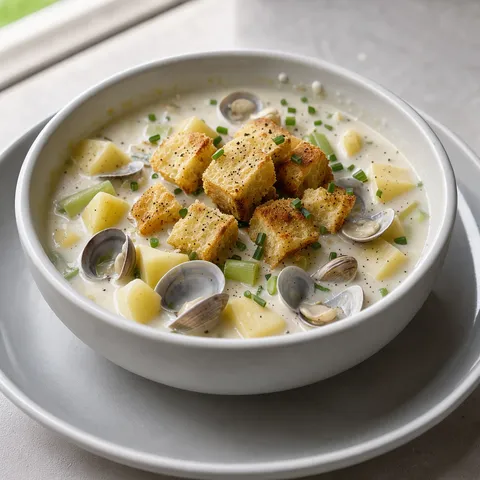 New England Clam Chowder1 hr 15 min · Soup
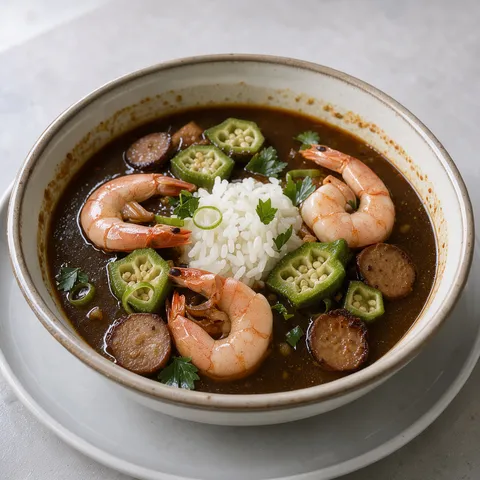 Louisiana Prawn and Okra Gumbo2 hr 15 min · Soup
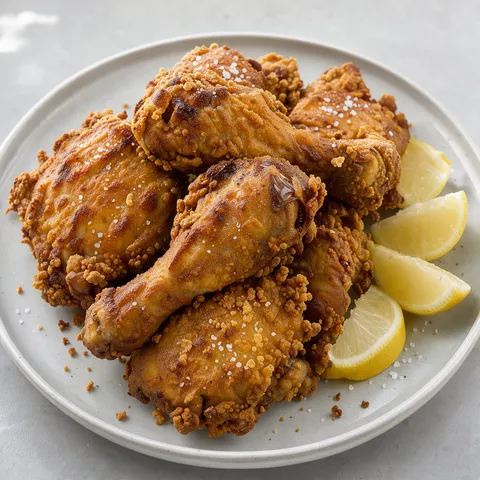 Southern Fried Chicken1 hr 35 min · Main course
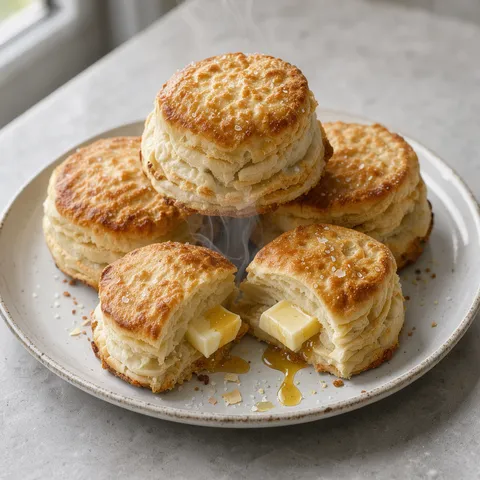 Flaky Southern Scones50 min · Bread & pastry
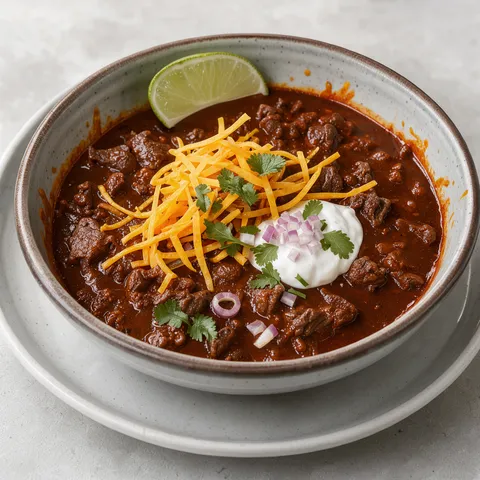 Bean-Free Chili con Carne3 hr · Main course
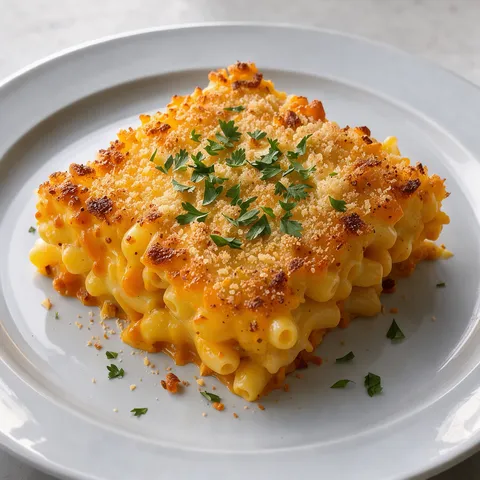 Baked Cheddar Macaroni55 min · Main course