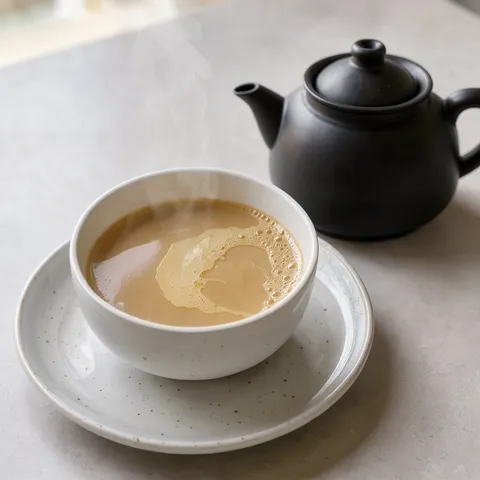
Po Cha Tibetan Salted Butter Tea
A Chinese drink. Takes 21 min, Serves 4. Difficulty: medium.
At a glance
- Total time
- 21 min
- Serves
- Serves 4
- Difficulty
- Medium
- Cuisine
- Chinese cuisine
- Dish type
- Drink
- Diet
- Vegetarian, Gluten-free
- Allergens
- Milk
Ingredients
Tea
- 4 tbsp strong black tea (preferably pu-erh or a strong brewed black tea)
- 1 litre water
Milk
- 400 ml whole milk
Fat
- 40 g unsalted butter (at room temperature)
Seasoning
- 1 tsp salt
Equipment
- Saucepan
- Fine sieve / chinois
- Blender
Method
- Boil the tea: Boil the water in a pan, add the tea and lower the heat. Simmer gently for 10 min until the tea becomes a dark brown-red concentrate. Long boiling brings out the tannin and depth of colour in the tea (~12 min)
- Strain: Pass the tea through a fine sieve into another pan. If tea leaves remain, the drink turns bitter (~1 min)
- Heat the milk: Heat the milk in a separate pan to below boiling point. The milk should not foam and boil over, just give off steam (~3 min)
- Combine: Combine the milk, tea concentrate, butter and salt in a blender jug in two batches, filling the jug no more than half. The hot liquid melts the butter (~1 min)
- Churn: In each batch open the vent of the lid, hold a cloth over it and run on low speed for 20-30 sec. In a closed lid the hot liquid can burst from steam pressure. The tea should look smooth, lightly foamy and the fat should be mixed in without separating on the surface (~2 min)
- Adjust the seasoning: Take a sip: the salt should be felt more strongly than the tea but not overwhelm. Add a pinch of salt if needed (~1 min)
- Serve: Pour into warmed bowls and drink straight away, hot. If it cools, the fat rises to the surface, so churn again (~1 min)
Chef's note
Po cha is the salted tea with yak butter that is drunk many times a day in Tibet. Here unsalted butter is used in place of yak butter. Traditionally it is churned in a long wooden churning cylinder (dongmo). It is drunk with tsampa, poured into a bowl and kneaded with barley flour to eat. Long boiling of the tea gives the dark colour. You can reduce the amount of salt to taste, but in the Tibetan style the tea is clearly salty. When reheating leftover tea do not boil it, or the fat separates. You can serve roasted barley flour (tsampa) or plain bread alongside. The butter should be soft at room temperature so that it mixes faster in the blender and no rings of fat stay on the surface. Warming the tea bowl beforehand with hot water keeps the tea hot for longer.
Frequently asked questions
- Why is po cha salty?
- At high altitude, salt and fat keep the body warm and reduce thirst. That is why Tibetan tea is salty, not sweet.
- What can I use instead of yak butter?
- Unsalted cow's butter is a good substitute. It has a milder flavour.
- Why do rings of fat form on the surface of the tea?
- If the fat cools without being blended in, it rises to the surface. While the tea is hot, blend it in two batches at low speed for 20-30 seconds with the lid vent open and covered with a cloth, and it stays smooth.
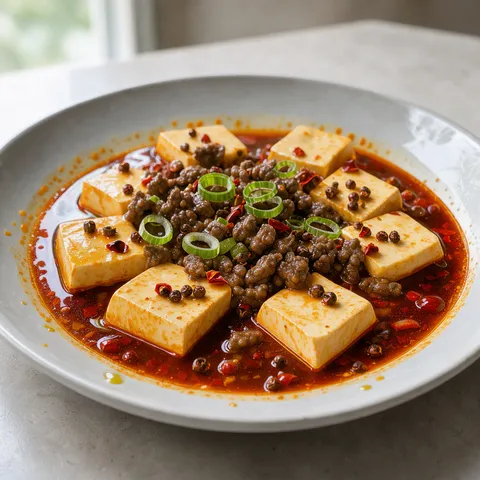 Mapo Tofu35 min · Main course
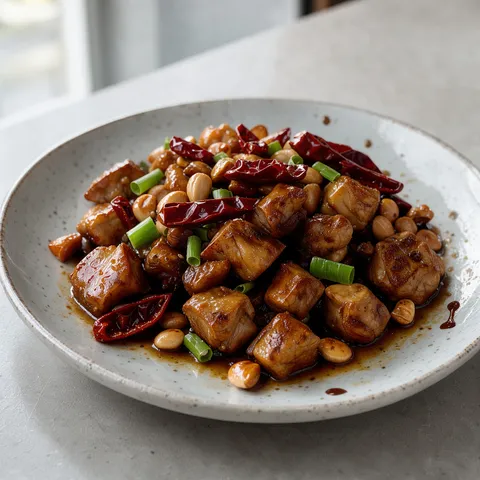 Kung Pao Chicken30 min · Main course
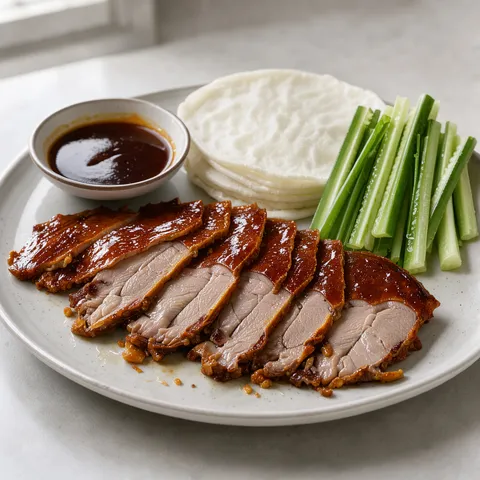 Peking Duck2 hr · Main course
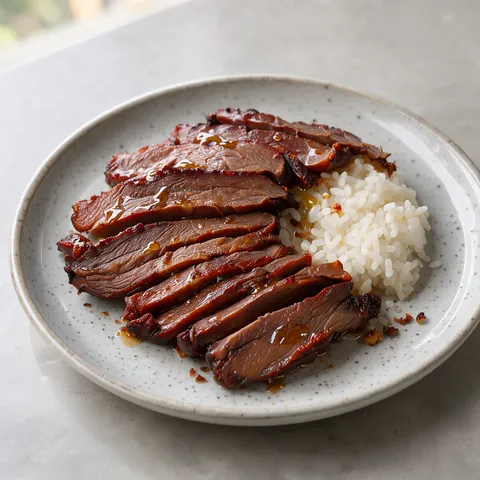 Char Siu1 hr · Main course
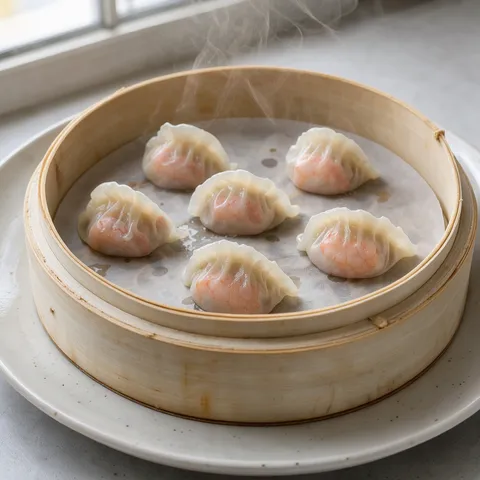 Crystal Prawn Dumplings1 hr 30 min · Starter
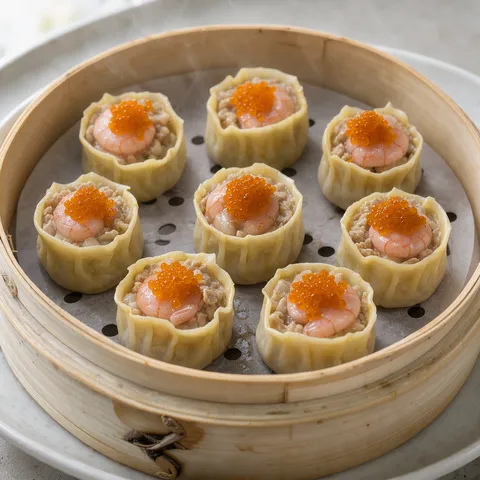 Open-Topped Dumplings50 min · Starter