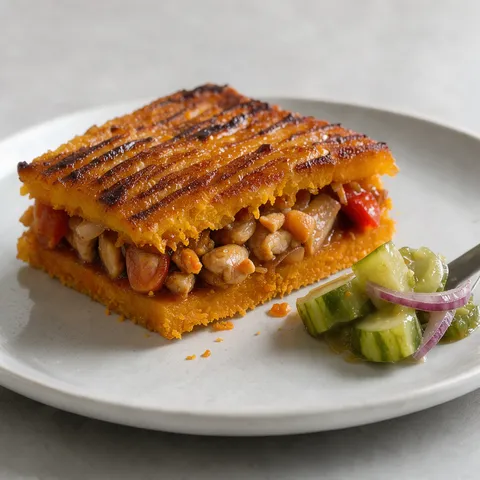
Surinamese Taro and Chicken Bake Pom
A Surinamese main course. Takes 3 hr 20 min, 4 servings (20×25 cm dishes). Difficulty: challenging.
At a glance
- Total time
- 3 hr 20 min
- Serves
- 4 servings (20×25 cm dishes)
- Difficulty
- Challenging
- Cuisine
- Surinamese cuisine
- Dish type
- Main course
- Diet
- Gluten-free
- Allergens
- Milk, Celery
Ingredients
Chicken and marinade
- 1 kg bone-in skin-on chicken thighs (mixed thighs and drumsticks, 6-8 pieces)
- juice of 1 lemon
- 3 garlic cloves (crushed)
- 1 tsp salt
- 1/2 tsp black pepper
- 1/2 tsp grated nutmeg
Sauce
- 2 tbsp sunflower oil
- 30 g butter
- 2 onions (finely chopped)
- 2 tomatoes (peeled and chopped)
- 1 tbsp tomato paste
- 1/2 Madame Jeanette pepper (if unavailable, 1/2 habanero or 1 hot yellow long pepper, deseeded, very finely chopped)
- 1 celery stick (including leaves, finely chopped)
- 300 ml water
Pom mixture
- 900 g pomtajer (sold frozen and grated in Surinamese shops, if unavailable, 900 g peeled fresh taro)
- 100 g butter (melted)
- 150 ml fresh orange juice (2 oranges)
- juice of 1 lemon
- 1 tbsp caster sugar
- 1 tsp salt
- 1/2 tsp grated nutmeg
- 200 ml chicken cooking liquid (taken from the sauce)
Tin
- 10 g butter
Atjar (on the side)
- 1 cucumber
- 1/2 red onion
- 3 tbsp white vinegar
- 1 tsp caster sugar
- 1/2 tsp salt
Equipment
- Heavy-based saucepan
- Probe thermometer
- Box grater
- Chef's knife
- Chopping board
- Mixing bowls
- Oven
- Baking tray
- Silicone spatula
- Food processor (optional)
Method
- Marinate: Rub the chicken pieces with the lemon juice, garlic, salt, pepper and nutmeg and leave for 20 min, or up to 1 hr in the fridge. In Surinamese cooking, chicken is rubbed with lemon before cooking, which gives it a slightly sour background
- Sear the chicken: In a large heavy-based pan, heat the oil and butter over medium-high heat. Sear the chicken in 2 batches, skin side down, for 5 min each, until golden all over (10 min in total), and transfer to a plate
- Start the sauce: In the same fat, fry the onions over medium heat for 6 min, until soft and golden. Add the tomatoes, tomato paste, chilli, and the celery with its leaves and cook for 4 min, until the tomato breaks down. Add the chicken and the water, bring to the boil, then cover and simmer over low heat for 30 min. The internal temperature at the thickest part of the thigh, near the bone, should reach 74°C
- Prepare the taro: While the chicken cooks, put on gloves, as raw taro and pomtajer irritate the skin. Peel the taro and grate it finely (faster with the fine grating disc of a food processor). Thaw frozen pomtajer in the fridge beforehand and use it with its liquid. Mix the grated taro immediately with the orange juice and lemon juice, otherwise it darkens quickly
- Pick the chicken: Remove the chicken and let cool slightly for 10 min. Separate the meat from the skin and bones and cut it into 2 cm pieces, which gives about 550 g meat. Set aside 200 ml of the sauce from the pan for the pom mixture. Boil the remaining sauce (about 150 ml) over medium heat for 5 min until thickened and mix with the chicken. The filling should be moist but should not turn watery on the plate
- Make the pom mixture: Mix the citrus taro thoroughly with the melted butter, sugar, salt, nutmeg and the 200 ml of sauce set aside. It should be a thick, wet mixture that spreads with a spoon but does not run. Do not taste the raw taro
- Assemble: Preheat the oven to 180°C. Grease a 20×25 cm ovenproof dish, at least 6 cm deep, with butter. Spread half the pom mixture over the base about 1.2 cm thick, scatter the chicken filling in an even layer, spoon the remaining pom mixture on top and level with a spatula. Draw fine lines across the surface with a fork, as these lines form a crisp surface that darkens in the oven
- Bake: Bake on the middle shelf for 1 hr 10 min to 1 hr 15 min. The top should be deep golden-orange with caramelised edges. A knife inserted in the centre should come out hot and soft, not sticky and raw. Taro and pomtajer contain calcium oxalate when raw and cause a burning sensation in the mouth, so do not take the dish out before it is fully cooked. If the top darkens too much in the first 40 min, move the dish to the bottom shelf
- Make the atjar: While the pom bakes, slice the cucumber into thin half-moons and cut the onion into thin matchsticks. Mix with the vinegar, sugar and salt and leave for at least 20 min
- Rest: Take the pom out of the oven and rest for 15 min. Pom cut while hot falls apart, and resting lets the layers settle
- Plate: Cut square portions and place each on the plate with the layers visible from the side: orange-golden pom at the bottom and top, chicken in the middle. Add a spoonful of atjar on the side
Chef's note
Pom is the best-known dish of Suriname's festive and birthday tables, described as a bake where Jewish and Creole cooking traditions meet. Pomtajer is sold frozen in Surinamese shops in the Netherlands. In Türkiye the closest root is taro (sold at markets in Antalya, Mersin and Hatay), with a similar texture but a slightly milder flavour. Madame Jeanette pepper is Suriname's fruity chilli. In Suriname, pom is often eaten in a bread roll too.
Frequently asked questions
- Why should raw taro be handled with gloves?
- Raw taro and pomtajer irritate the skin. So wear gloves and never taste the raw taro.
- Why is the grated taro mixed with orange and lemon juice straight away?
- Otherwise the taro darkens quickly. Mix it with the citrus juice as soon as it is grated.
- How do you tell when the pom is done?
- The top should be a deep golden orange with caramelised edges. A knife pushed into the centre should come out hot and soft, and the dish should not come out until fully cooked.
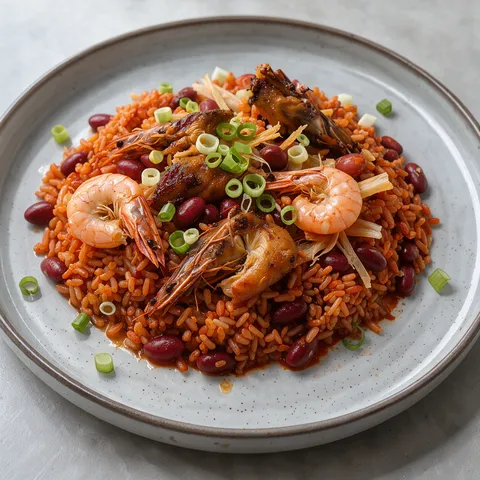 Surinamese Mixed Rice with Prawns1 hr 40 min · Main course
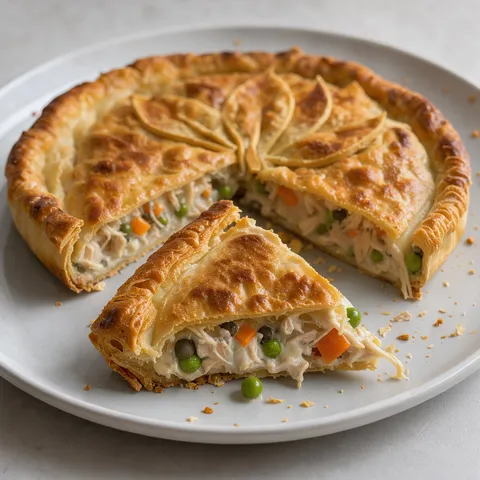 Surinamese Chicken and Turkey Pie2 hr 25 min · Bread & pastry
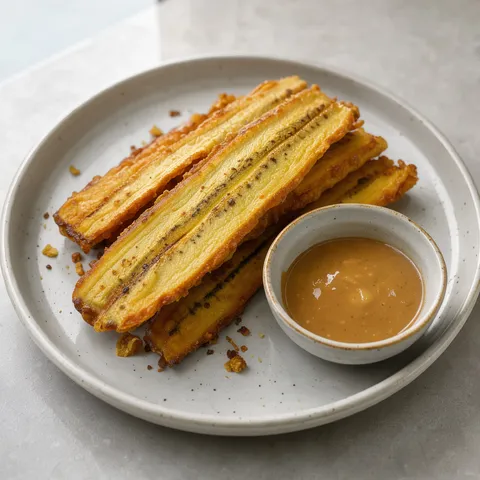 Fried Plantain with Peanut Sauce50 min · Meze
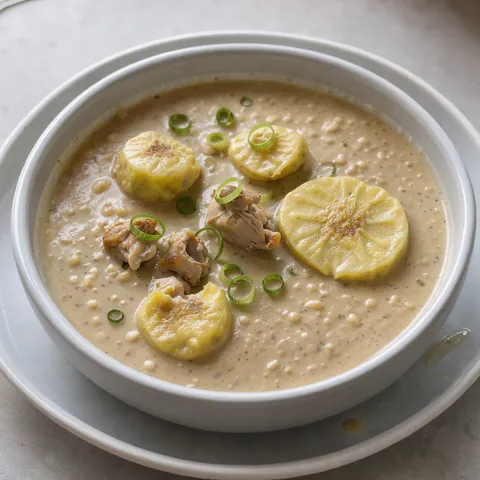 Peanut Soup with Plantain Dumplings1 hr 10 min · Soup
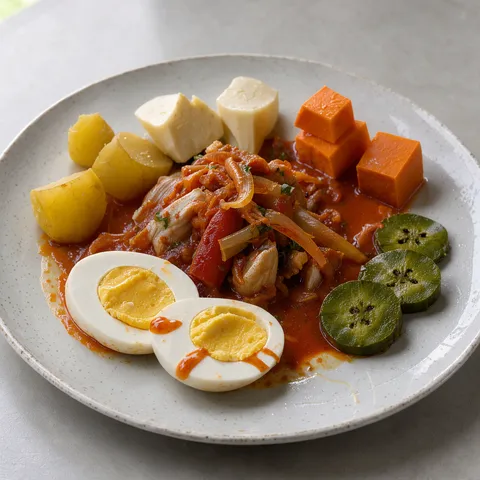 Boiled Roots with Salt Cod45 min · Main course
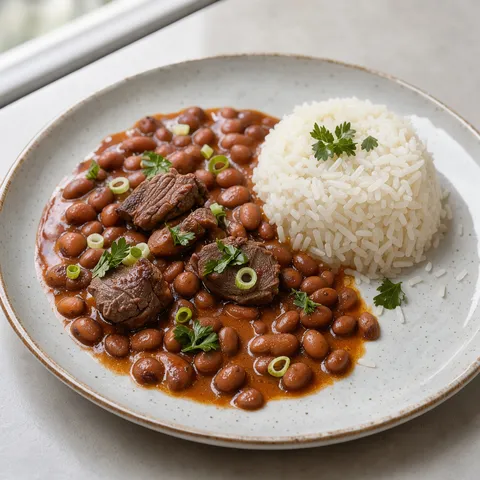 Brown Bean Stew with Rice1 hr 50 min · Main course