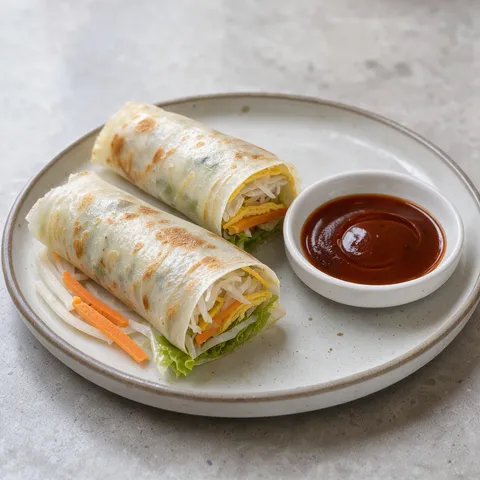
Fujian Fresh Spring Rolls Popiah
A Chinese bread & pastry. Takes 42 min, 8 rolls (4 servings). Difficulty: medium.
At a glance
- Total time
- 42 min
- Serves
- 8 rolls (4 servings)
- Difficulty
- Medium
- Cuisine
- Chinese cuisine
- Dish type
- Bread & pastry
- Allergens
- Gluten, Milk, Eggs, Peanuts, Sesame, Soya
Ingredients
Wrappers
- 150 g plain flour
- 250 ml water
- 1/2 tsp salt
- 1 tbsp neutral oil (for the pan)
Filling
- 1 medium white radish (daikon, about 400 g, grated)
- 2 carrots (150 g, grated)
- 300 g white cabbage (finely chopped)
- 200 g firm tofu (cubed)
- 4 eggs
- 3 garlic cloves (finely chopped)
- 3 tbsp neutral oil
- 2 tbsp soy sauce
- 1 tsp sugar
- 1/2 tsp white pepper
- salt
Sauce and extras
- 3 tbsp Hoisin Sauce (Basics)
- 1 tbsp soy sauce (for the sauce)
- 1/2 tsp sugar (for the sauce)
- 1 tbsp Sriracha-Style Chilli Sauce (Basics)
- 1 tbsp crushed roasted peanuts
- 8 lettuce leaves
- 1 bunch coriander
To serve
- hot or at room temperature
Equipment
- Balloon whisk
- Mixing bowls
- Box grater
- Chef's knife
- Chopping board
- Frying pan
- Ladle (optional)
Method
- Make the wrapper batter (3 min): Whisk the flour, water and salt in a bowl with a whisk into a lump-free liquid batter. It should be slightly runnier than crêpe batter. Rest the batter while you prepare the vegetables (10 min+)
- Chop and grate the vegetables (8 min, alongside the batter resting): Grate the radish and carrot, finely chop the cabbage and cube the tofu. Work with a chef's knife. Squeeze the juice from the radish in your palm and set it aside
- Cook the filling (12 min): Heat the oil in a wide pan and turn the garlic for 20 sec. Add the radish, carrot and cabbage and stir over medium heat for 8 min, until the vegetables soften and the liquid is absorbed. Add the soy sauce, sugar, pepper and salt, fold in the tofu and cook for 2 min more. A wet filling tears the roll, so keep the pan uncovered to let excess liquid evaporate. If the filling dries out too much and sticks to the pan, add 1-2 tbsp of the radish juice you set aside
- Cook the eggs (4 min): Beat the eggs and cook as a thin omelette in an oiled pan. Cook 1.5 min on one side and 30 sec on the other. Cut the omelette into strips
- Cook the wrappers (8 min): Heat a flat pan over low heat and grease lightly. Stir the batter and pour in 1 ladleful (about 45 ml), swirling the pan to make a thin circle. When the edges lift (about 40 sec), take it out without turning, making 8 wrappers. Cover with a damp cloth so they do not dry out
- Make the sauce (2 min): Mix the hoisin sauce, soy sauce, sugar and chilli sauce so the sugar dissolves. It should be like a thin paste
- Roll (5 min): Spread 1 tsp of sauce on a wrapper, lay the lettuce and 4-5 tbsp of the filling in a long strip. Add the egg strips, peanuts and coriander. Fold in the sides and roll up tightly from the bottom. The filling should be tight. Cut across diagonally in the middle and serve
Chef's note
Popiah is a roll that Hokkien migrants from Fujian took to Singapore and Malaysia, presented here in its original form in Chinese cooking. The original recipe uses jicama (yam bean) and pork. Here it is made with daikon and tofu, and this recipe contains no pork. Because the wrappers are made by hand, no ready-made yufka (Turkish thin pastry sheets) is used. The wrappers and filling can be prepared ahead and rolled at serving time for the freshest result.
Frequently asked questions
- What happens if the popiah filling is wet?
- A wet filling tears the roll. Cook the filling uncovered so the excess water evaporates, and squeeze out the radish juice and set it aside.
- How are popiah wrappers cooked?
- Spread a ladle of batter in a circle on a flat pan over a low heat. When the edges lift, take the wrapper off without turning it and cover it with a damp cloth so it does not dry out.
- Which sauce goes in popiah?
- Mix hoisin sauce, soy sauce, sugar and chilli sauce into a thin paste. Spread a teaspoon on each wrapper.
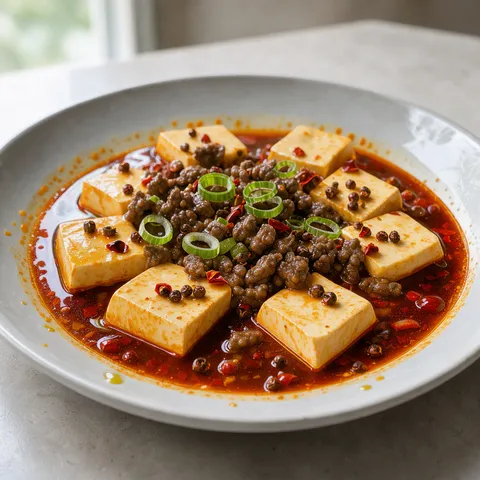 Mapo Tofu35 min · Main course
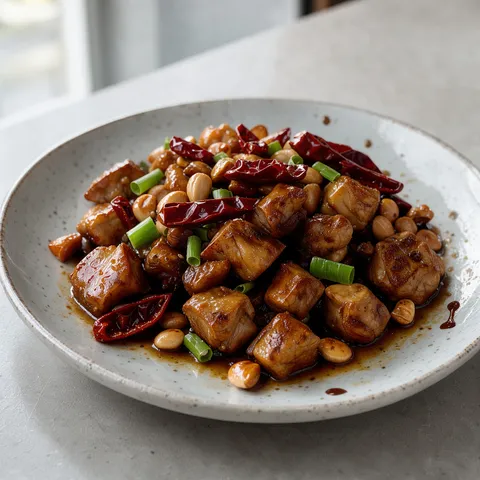 Kung Pao Chicken30 min · Main course
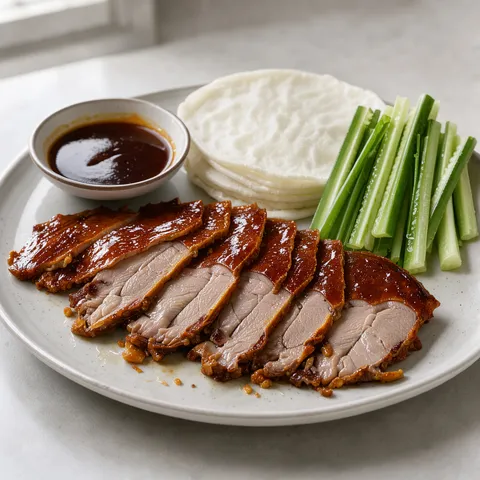 Peking Duck2 hr · Main course
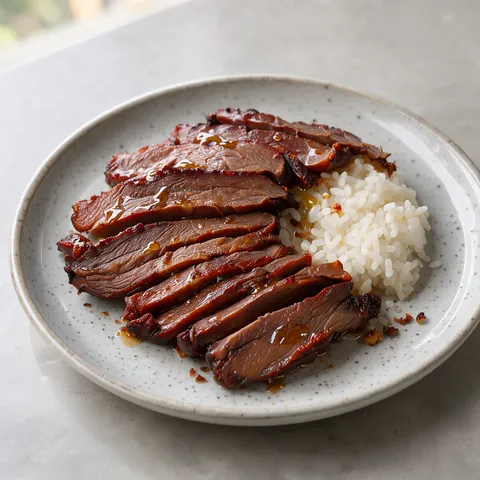 Char Siu1 hr · Main course
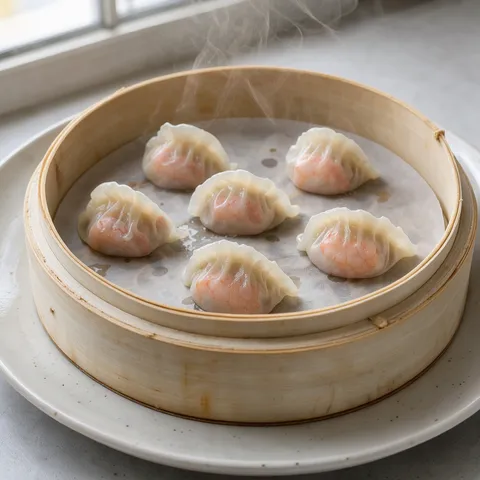 Crystal Prawn Dumplings1 hr 30 min · Starter
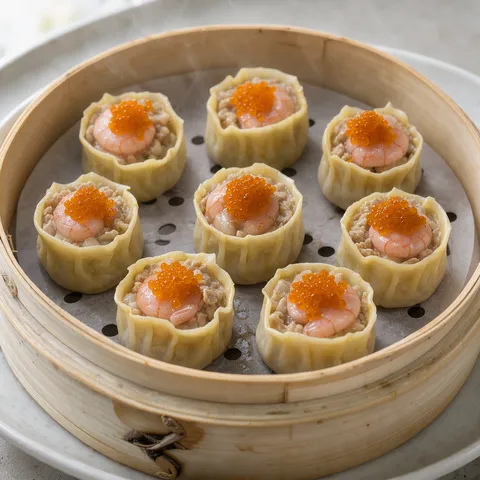 Open-Topped Dumplings50 min · Starter