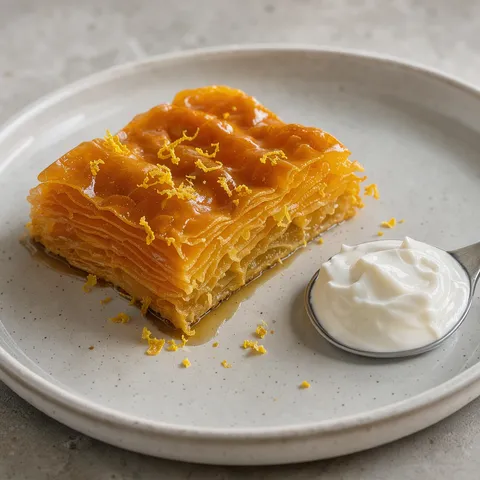
Greek Orange Syrup Cake with Dried Filo Portokalopita
A Greek dessert. Takes 1 hr 50 min · +1 hr soaking, Serves 4. Difficulty: challenging.
At a glance
- Total time
- 1 hr 50 min · +1 hr soaking
- Serves
- Serves 4
- Difficulty
- Challenging
- Cuisine
- Greek cuisine
- Dish type
- Dessert
- Allergens
- Gluten, Milk, Eggs
Ingredients
Pastry
- 450 g Homemade Baklava Filo (Basics)
Syrup
- 350 g caster sugar
- 300 ml water
- 150 ml freshly squeezed orange juice
- 2 strips of orange peel (without the white pith)
- 1 cinnamon stick
Batter
- 4 eggs (at room temperature)
- 200 g caster sugar
- 250 g strained (Greek-style) yoghurt
- 200 ml sunflower oil
- grated zest of 2 oranges
- 100 ml freshly squeezed orange juice
- 1 tsp vanilla extract
- 15 g baking powder
- a pinch of salt
Tin
- 20 g butter (soft)
Equipment
- Saucepan
- Oven
- Baking tray
- Pastry brush
- Mixing bowls
- Hand mixer
- Silicone spatula
- Chef's knife
- Ladle
- Baking paper
- Fine grater
Method
- Boil the syrup: Put the sugar, water, orange juice, orange peel and cinnamon in a small saucepan. Stir over medium heat until the sugar dissolves, then once it boils, boil without stirring for 5 min, until slightly thickened and coating the back of a spoon in a thin film. Remove the peel and cinnamon and leave the syrup to cool at room temperature. The rule of portokalopita is cold syrup and hot cake: if both are hot, the cake turns doughy, and if both are cold, it does not absorb the syrup. This takes 10 min
- Dry the filo: Preheat the oven to 150°C (conventional, fan off). Open out the filo sheets one by one, crumple them roughly and spread them loosely in heaps over two large trays. Dry for 25 min, turning the heaps halfway, until the sheets are completely dry, the edges are a very pale biscuit colour and they crackle when broken by hand. Dry filo soaks up the liquid of the batter like a sponge, and this is where the cake gets its distinctive moist but layered texture. Filo that stays damp clumps like dough inside the cake
- Break up the filo: Leave the dried sheets to cool on the trays for 5 min, then break them by hand into 2-3 cm pieces. Do not crush them to a powder: they should stay in pieces in the batter. Meanwhile, raise the oven to 180°C (conventional) and brush the base and sides of a 24×30 cm tin with the soft butter. This takes 8 min
- Whisk the batter: In a large bowl, whisk the eggs and sugar with an electric hand mixer for 4 min, until pale and slightly frothy. Add the yoghurt, oil, orange zest, orange juice and vanilla and mix on low speed for 1 min. Add the baking powder and salt last and mix for another 20 sec. The yoghurt reacts with the baking powder and lightens the cake, so the batter must be used straight away. This takes 7 min
- Soak the filo in the batter: Add the broken filo to the batter in three batches, folding it in each time with a spatula from the bottom up. The filo pieces absorb the batter and start to soften. Leave the mixture to rest for 5 min: no dry filo should remain on the surface, and all the pieces should look wet and glossy
- Bake: Pour the mixture into the greased tin and level it with a spatula without pressing down. Bake at 180°C on the middle shelf for 40-45 min, until the top is deep golden and a skewer inserted in the centre comes out clean. Do not open the oven door for the first 30 min, or the cake sinks in the middle. If the top darkens too quickly, cover it with baking paper for the last 10 min
- Pour over the syrup: As soon as the cake comes out of the oven, cut it in the tin into 12 squares with a sharp knife, so the syrup runs down the cuts to the base. Ladle the cooled syrup slowly over the whole surface, first around the edges and then in the middle. The cake sizzles as it absorbs the syrup. This takes 3 min
- Leave to soak: Leave the tin uncovered at room temperature for at least 1 hr. In that time the syrup is fully absorbed and no liquid remains in the bottom of the tin. The cake should be moist and heavy but still hold a slice. If covered, the surface gets wet with steam and loses its crispness
- Plate: Lift a slice onto a plate with a spatula and sprinkle with finely grated fresh orange zest. If you like, add a spoonful of strained yoghurt or clotted cream alongside, as the tartness of the yoghurt balances the sweetness of the syrup. This step takes 3 min
Chef's note
Portokalopita (orange pita) is a syrup-soaked tray cake especially loved in homes in Epirus and the Peloponnese, in which filo takes the place of flour. If the Homemade Baklava Filo (Basics) is rolled out in advance and left to air-dry for a day, the oven-drying step drops to 5 min. Some recipes add a tablespoon of brandy to the batter, but here it is made without alcohol. The cake tastes even better the next day and keeps in a sealed container in the fridge for 4 days.
Frequently asked questions
- Why is the filo dried out beforehand for Portokalopita?
- Dry filo soaks up the liquid in the batter like a sponge, giving the cake its moist but layered texture. Filo that stays damp clumps like dough inside the cake.
- Is the syrup poured on hot or cold?
- The rule is cold syrup on a hot cake. If both are hot the cake turns pasty, and if both are cold it does not soak up the syrup.
- Why does the middle of my Portokalopita sink?
- If the oven door is opened in the first 30 minutes, the cake sinks in the middle. If the top browns too quickly, cover it with baking paper for the last 10 minutes.
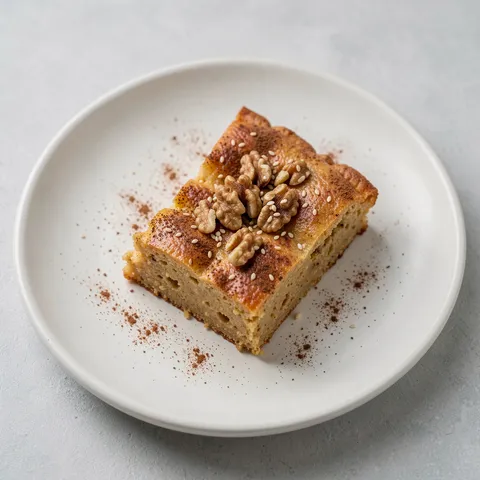 Greek Tahini Cake1 hr 2 min · Patisserie
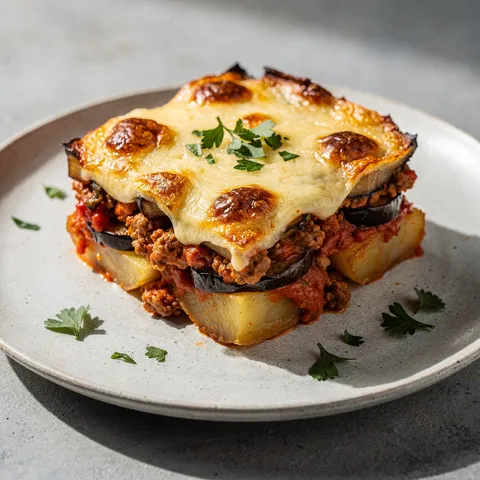 Moussaka2 hr 15 min · Main course
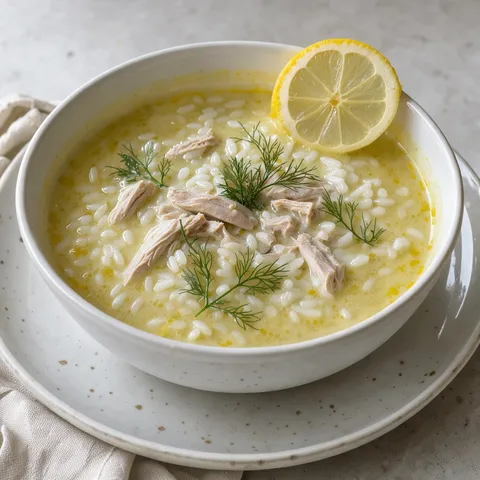 Greek Egg and Lemon Chicken Soup1 hr 05 min · Soup
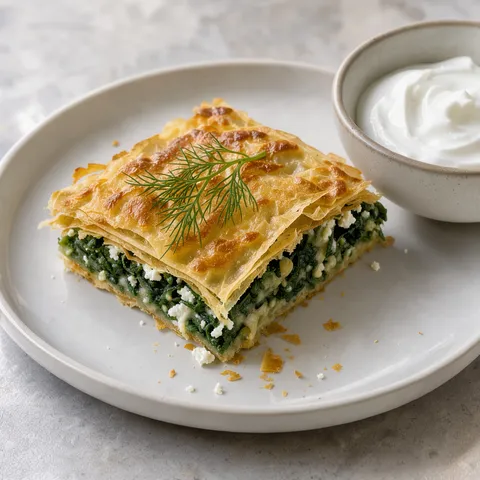 Greek Spinach and Feta Pie2 hr 10 min · Bread & pastry
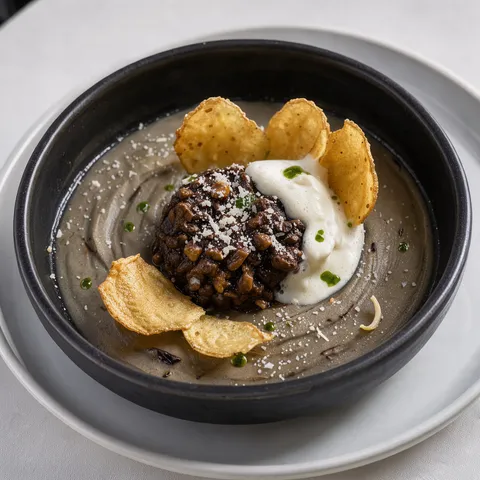 Moussaka 2.01 hr 25 min · Main course
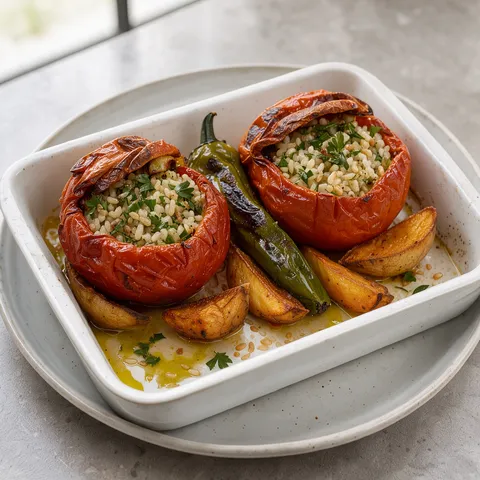 Greek Stuffed Tomatoes and Peppers1 hr 50 min · Main course