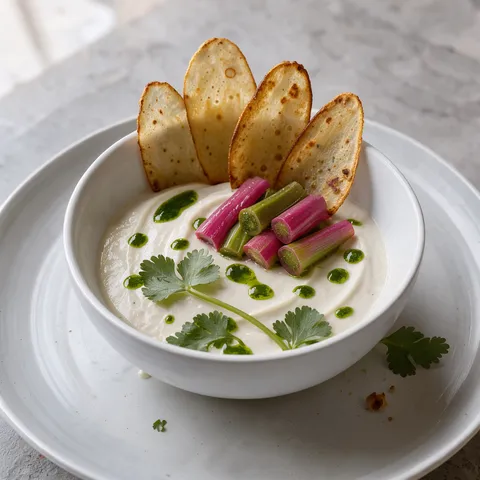
Taro and Chard Stew with Garlic and Coriander 2.0
An Egyptian main course. Takes 54 min, Serves 4. Difficulty: medium.
At a glance
- Total time
- 54 min
- Serves
- Serves 4
- Difficulty
- Medium
- Cuisine
- Egyptian cuisine
- Dish type
- Main course
- Diet
- Vegetarian, Gluten-free
- Allergens
- Milk, Celery
Ingredients
Taro cream
- 600 g taro root (peeled)
- 2 tbsp olive oil
- 1 onion (finely chopped)
- 6 garlic cloves (crushed)
- 1 tsp ground coriander
- 600 ml Vegetable Stock (Basics)
- 2 tbsp lemon juice
- 1 tsp salt
Chard and coriander oil
- 100 g chard leaves
- 1 small bunch fresh coriander
- 80 ml light olive oil
- 1 small garlic clove
Taro crisps
- 1 small taro root (about 150 g)
- 250 ml sunflower oil
- 1/4 tsp salt
Pickle
- chard stalks (about 80 g, thinly sliced)
- 3 tbsp cider vinegar
- 3 tbsp water
- 1 tsp sugar
- 1/4 tsp salt
To finish
- fresh coriander leaves
- flaky salt
Equipment
- Frying pan
- Saucepan
- Mixing bowls
- Blender
- Fine sieve / chinois
- Mandoline
Method
- Prepare the taro: Wearing gloves, peel the taro, as raw taro makes the skin itch. Cut the large taro into 2 cm cubes. Set the small taro aside in cold water for the crisps. Separate the chard leaves from the stalks and slice the stalks thinly (~10 min)
- Fry the aromatics: Heat the olive oil in a large pan and cook the onion until soft. Add the garlic and ground coriander and stir until fragrant. The garlic must not colour. Add the taro cubes and stir until coated (~6 min)
- Cook the taro: Add the vegetable stock and salt, bring to the boil, turn the heat down and leave the lid ajar. Cook until the taro is completely soft and can be mashed with a fork. The taro must be cooked thoroughly, as raw taro irritates the throat. The other preparations are done during this time (~25 min)
- Make the pickle: While the taro cooks, put the chard stalks in a small bowl. Mix the vinegar, water, sugar and salt and pour over the stalks. The acid brightens the colour of the stalks and cuts the weight of the cream. The liquid should cover the stalks (~5 min)
- Fry the taro crisps: Slice the small taro paper-thin with a mandoline and dry thoroughly with kitchen paper. In a small pan, bring the oil to 170°C and fry the slices a few at a time until golden. Lift onto kitchen paper and salt at once. They turn crisp as they cool (~10 min)
- Make the chard and coriander oil: Briefly boil the chard leaves in boiling water in a separate small pan, put them straight into iced water and squeeze out the water. Put the leaves, coriander, garlic and olive oil in a blender and blend until smooth. Pass through a fine sieve to get a bright green oil. The iced water keeps the colour (~10 min)
- Blend the cream: Put the cooked taro with its liquid into the blender and blend until smooth and silky. Add the lemon juice and pass through a fine sieve. Taro becomes very thick because of its natural starch, so add hot water until the consistency becomes a runny cream (~6 min)
- Warm the cream: Warm the cream in a small pan over low heat, stirring. Check the salt and lemon. Taro creams thicken as they rest, so loosen with a little hot water if needed. The cream should be runny but dense enough to coat the back of a spoon, and it should not run over the edge when spread on the plate (~3 min)
- Plate: Pour the taro cream into a wide pool in the centre of a deep plate. Pile the drained chard stalk pickle in the middle. Stand the taro crisps upright. Drip drops of chard and coriander oil over the cream. Scatter over the coriander leaves and finish with flaky salt. Serve at once (~4 min)
Chef's note
The classic qolqas is a stew of taro, chard and coriander. Here three elements are separated: taro cream, green oil and crisp taro slices. The chard stalks, which are thrown away in the classic, become a pickle. The taro must be cooked thoroughly, otherwise it leaves an irritating feeling in the cream. The oil and cream are served warm, and the crisps and pickle at room temperature so the contrast of texture is kept.
Frequently asked questions
- How do I get crisp taro crisps?
- Slice the taro paper-thin, dry it well and fry in oil at 170°C. They crisp up as they cool.
- Why does the taro cream get so thick?
- Taro contains natural starch and thickens as it stands. Loosen it with hot water to adjust the consistency.
- Why pickle the chard stalks?
- Chard stalks are crunchy and shouldn't be thrown away. The sharp pickle balances the richness of the cream.
 Taro and Chard Stew with Garlic and Coriander58 min · Main course
 Egyptian Mashed Fava Beans2 hr · Meze
 Koshari1 hr 30 min · Main course
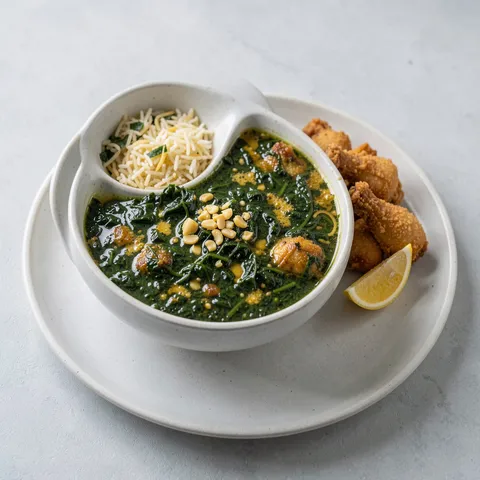 Molokhia1 hr 30 min · Main course
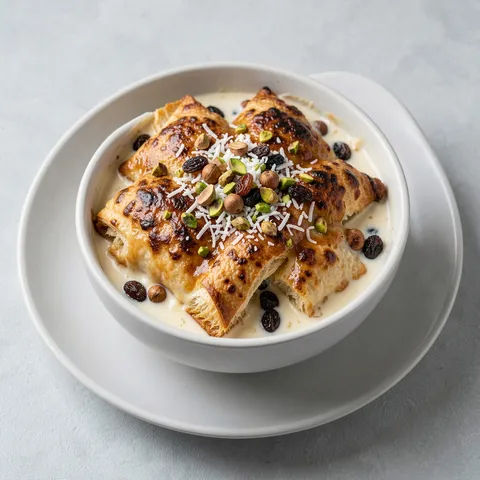 Egyptian Baked Milk and Pastry Pudding1 hr · Dessert
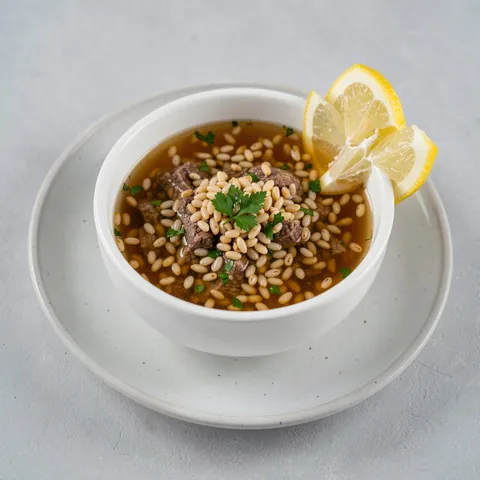 Egyptian Orzo Soup in Beef Stock1 hr 50 min · Soup
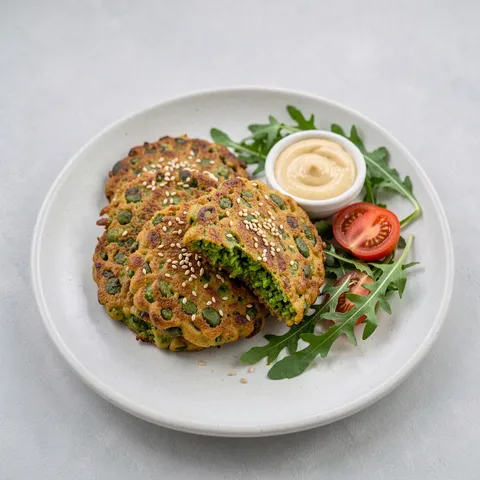 Ta'ameya1 hr 10 min · Starter