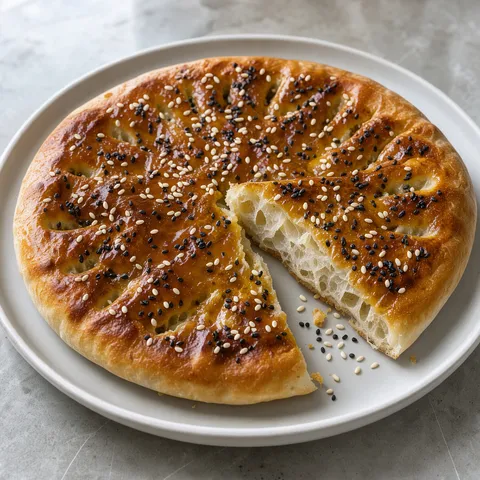
Ramadan Pide
A Turkish bread & pastry. Takes 1 hr 43 min, 2 pide (8 slices). Difficulty: medium.
At a glance
- Total time
- 1 hr 43 min
- Serves
- 2 pide (8 slices)
- Difficulty
- Medium
- Cuisine
- Turkish cuisine
- Dish type
- Bread & pastry
- Allergens
- Gluten, Eggs, Sesame
Ingredients
Dough
- 500 g strong white bread flour
- 7 g (1 sachet) fast-action dried yeast
- 1 tsp caster sugar
- 10 g salt (2 tsp)
- 330 ml lukewarm water (about 35°C)
- 2 tbsp olive oil
Glaze (egg-free glaze brushed on instead of egg)
- 2 tbsp plain flour
- 3 tbsp cold water
- 150 ml hot water
- 1 tbsp grape molasses
- 1 tbsp olive oil
Topping
- 2 tbsp sesame seeds
- 1 tbsp nigella seeds
- a little flour for the worktop
Equipment
- Oven
- Baking tray
- Mixing bowls
- Baking paper
- Wooden spoon / spatula
- Pastry brush (optional)
Method
- Knead the dough: Mix the flour, yeast, sugar and salt in a large bowl. Make a well in the middle and pour in the lukewarm water and olive oil. Knead first with a spoon, then by hand for 10 min, until the dough stops sticking to the worktop and your hands and forms a smooth, slightly soft ball. When you pull the dough it should stretch into a thin membrane, which shows the gluten is ready.
- Prove: Put the dough in an oiled bowl, cover with a damp tea towel and leave in a warm place for 45 min, until doubled in size. If a dent made by lightly pressing with your finger slowly springs back, the dough is ready. In a cold room it takes longer, so a warm oven that is switched off with only its light on is a suitable place.
- Make the glaze: While the dough proves, mix the flour smooth with 3 tbsp of cold water in a small pan, then add the remaining hot water and the molasses. Stir over low heat for 3 min, until it reaches a thin custard consistency, then fold in the olive oil and let cool slightly. In the oven this mixture makes a glossy, slightly sweet crust and takes the place of egg. Do this while the dough proves.
- Shape: Divide the proved dough into two equal pieces. On a floured worktop, spread each piece by hand into a round or oval about 22 cm across and 1.5 cm thick. Turn the dough gently without knocking out the air. Hard kneading tightens the dough and it shrinks in the oven. Shaping the two pides takes about 6 min.
- Rest and preheat the oven: Put the pides on two trays lined with baking paper, cover and rest for 15 min. Meanwhile preheat the oven to 230°C. The rested dough rises once more and opens up quickly in the oven, giving the crust and crumb an extra lightness.
- Brush on the glaze, make the pattern: Brush a thin coat of the glaze over the pides with a brush or the back of a spoon. Dip your fingertips in water and press rhythmic dimples 2 cm apart over the surface of the pide, then sprinkle with the sesame and nigella seeds. The dimples let the pide bake evenly without puffing up. (~4 min)
- Bake: Put the two trays in the oven at the same time on the lower-middle and upper-middle shelves and bake for 18 min, until the top and edge of the pide are deep golden and the base sounds hollow when tapped. Do not open the oven door for the first 9 min, and swap the trays quickly at the 9th min. At 230°C the molasses surface darkens quickly, so watch the pides after the 12th min.
- Rest and serve: Take the pides out of the oven and cover with a clean tea towel for 5 min. The steam softens the crust and gives a texture that does not fall apart when cut. Cut into four slices and serve warm. If you warm it lightly in a pan the next day, the crispness comes back.
Chef's note
Traditional Ramadan pide is mostly glazed with egg or milk, and the egg-free glaze of flour and molasses is a home adaptation made for this recipe, giving the same glossy crust. Do not reduce the water if you want the dough to stay both moist and soft. The taste of the molasses is fine and mildly sweet, and if you want a darker colour add 1 more tbsp.
Frequently asked questions
- What is brushed on Ramadan Pide instead of egg?
- A thin glaze made from flour, water, molasses and olive oil, cooked over a low heat to a custard-like consistency. In the oven it forms a glossy, lightly sweet crust.
- Why are dimples pressed into the pide with a finger?
- Dip your fingertips in water and press dimples into the surface 2 cm apart. The dimples help the pide bake flat and evenly without puffing up.
- How do I revive pide left over until the next day?
- Warm it lightly in a pan and the crispness comes back.
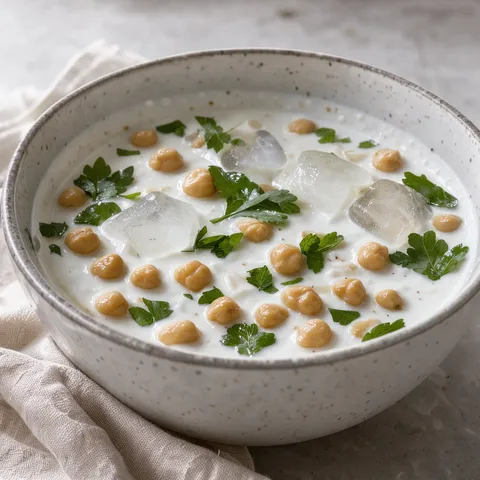 Chilled Wheat Yoghurt Soup1 hr · Soup
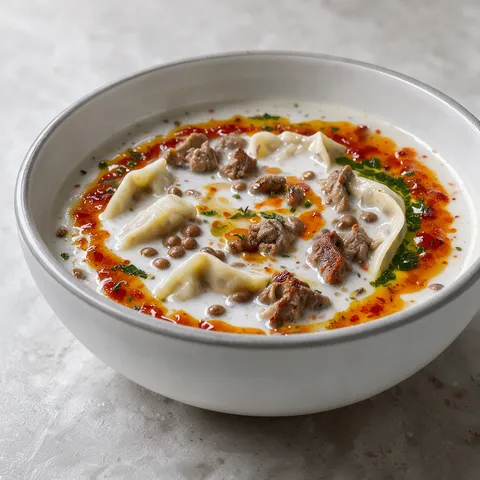 Noodle and Yoghurt Soup1 hr 10 min · Soup
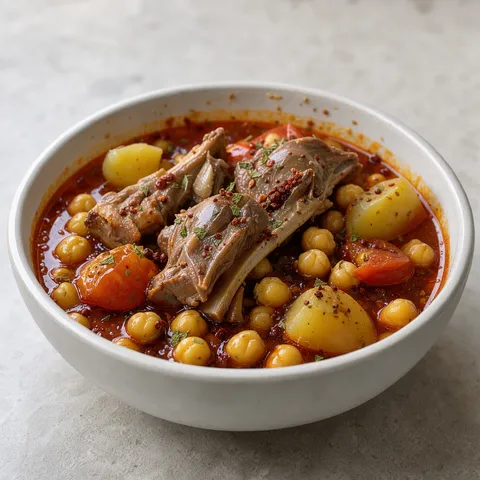 Lamb, Chickpea and Potato Stew1 hr 15 min · Soup
 Marinated Sea Bass30 min · Meze
 Crispy Fried Liver Slices25 min · Meze
 Courgette Crisps30 min · Meze