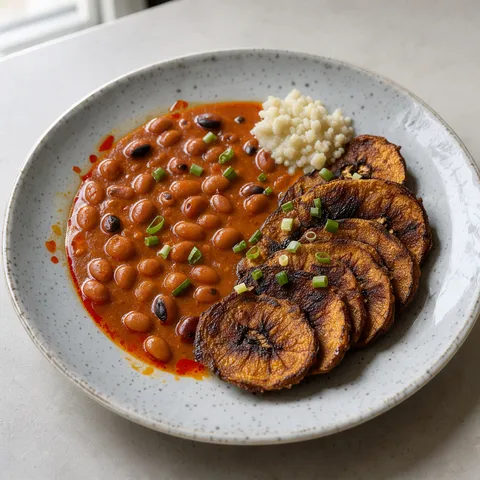
Black-Eyed Bean Stew with Plantain Red Red
A Ghanaian main course. Takes 1 hr 15 min (pressure cooker: ~50 min), Serves 4. Difficulty: medium.
At a glance
- Total time
- 1 hr 15 min (pressure cooker: ~50 min)
- Serves
- Serves 4
- Difficulty
- Medium
- Cuisine
- Ghanaian cuisine
- Dish type
- Main course
- Diet
- Gluten-free
- Allergens
- Milk
Ingredients
Black-eyed beans
- 350 g dried black-eyed beans
- 2 litres water (500 ml for the first boil, 1.5 litres for cooking)
- 1 tsp salt
Sauce
- 100 ml red palm oil (if unavailable use 100 ml sunflower oil + 1 tsp sweet paprika)
- 2 onions (finely chopped, about 250 g)
- 3 garlic cloves (finely chopped)
- 20 g ginger (grated)
- 1 scotch bonnet chilli (deseeded, finely chopped, half for milder heat, or substitute habanero or 1-2 dried hot red chillies)
- 2 tbsp tomato paste
- 3 tomatoes (grated, about 400 g)
- 1 tsp salt
- 1/2 tsp black pepper
- 200 ml bean cooking liquid (reserved)
Plantain
- 3 ripe plantains (skins heavily blotched with black, about 750 g)
- 1/2 tsp salt
- 1/4 tsp hot paprika
- 400 ml sunflower oil (for a 26 cm pan)
To serve
- 1 spring onion (finely chopped)
- 4 tbsp gari (optional)
Equipment
- Saucepan
- Frying pan
- Probe thermometer
- Colander
- Chef's knife
- Chopping board
- Box grater
- Wooden spoon / spatula
- Pressure cooker (optional)
Method
- Pick over the beans: Spread the beans on a tray and pick out any broken or blackened beans and stones. Wash twice in cold water
- First boil: Put the beans in a pan with 500 ml water, bring to the boil, boil for 5 min and pour off the water. This first water takes away some of the gas-forming sugars of the pulses, and the scum
- Cook the beans: Add 1.5 litres of fresh water, and once boiling lower the heat and cook with the lid ajar for 35-45 min, until the beans are whole and one mashes creamily when pressed with a finger. Add the salt for the last 5 min. Set aside 200 ml of the cooking liquid and drain the beans. In a pressure cooker, 10-12 min is enough after steam appears, and let the pressure release naturally
- Sauce base: While the beans cook, melt the palm oil over medium heat in a large pan, but do not heat it until it smokes, as overheated palm oil loses its colour and turns bitter. If you are using sunflower oil, stir 1 tsp sweet paprika in the oil for 30 sec (for the colour). Cook the onion for 8 min until soft and golden. Add the garlic, ginger and scotch bonnet and stir for 2 min
- Cook the tomato: Add the tomato paste and fry for 2 min until thickened. Add the grated tomatoes, salt and black pepper. Cook over medium-low heat for 12-15 min, stirring now and then, until the tomato liquid has been absorbed, the oil separates on the surface and a red ring of oil forms at the edges. This separated red oil is the source of the colour that gives the dish its name
- Bring the beans and sauce together: Add the drained beans and the reserved 200 ml cooking liquid to the sauce. Cook over low heat for 10 min. Mash a handful of beans against the side of the pan with a wooden spoon, and the sauce thickens. It should be a dark, glossy stew that does not run when taken on a spoon. Check the salt
- Fry the plantain: While the beans simmer in the sauce, peel the plantains, cut into 1 cm slices on the diagonal and mix with the salt and hot paprika. Put 400 ml oil in a 26 cm pan (about 1 cm deep, shallow-fry) and heat to 170°C. Arrange the slices in a single layer in 2 batches and fry for 2-3 min on each side until dark caramel-coloured, turning each slice once. Ripe plantain is sugary and darkens quickly, so do not go to a high heat
- Drain: Transfer the plantains to kitchen paper. While they wait for a few min the outsides firm up slightly and the insides stay soft and sweet
- Plate: Put two ladlefuls of red red on one half of a deep plate, with the red of the palm oil shining on the surface. Fan 5-6 slices of plantain on the other half. Sprinkle the chopped spring onion over the stew and, for anyone who wants it, a spoonful of gari. Serve hot
Chef's note
Red red takes its name from the two reds that the palm oil gives the stew and the fried plantain gives the plate. In Ghana it is the best-loved lunch dish, served at the cheap eateries called chop bars. In some homes smoked fish or dried prawns are added to the sauce. Red palm oil and gari (toasted cassava granules) are ready-made products from African food shops, and gari is optional and adds a crisp texture to the plate. If you cannot find palm oil, add 1 tsp sweet paprika to sunflower oil for colour, and use habanero or 1-2 dried hot red chillies instead of scotch bonnet. Do not use banana instead of plantain, as it falls apart in frying.
Frequently asked questions
- Why is the first boiling water for the beans poured away in Red Red?
- This first water takes away some of the gas-producing sugars of the beans, and the scum. Boil the beans for 5 min, pour off the water and then cook in fresh water.
- Where does the name Red Red come from?
- When the tomato and palm oil sauce is cooked, red oil separates on the surface and forms a red ring of oil at the edges. That separated red oil is the source of the colour that gives the dish its name.
- What if I can't find palm oil, and how do I choose plantain?
- Use sunflower oil and fry 1 tsp sweet paprika in the oil for 30 sec (for colour). Choose ripe plantain with plenty of black spots on the skin. Ripe plantain is sugary and darkens quickly, so don't turn up the heat.
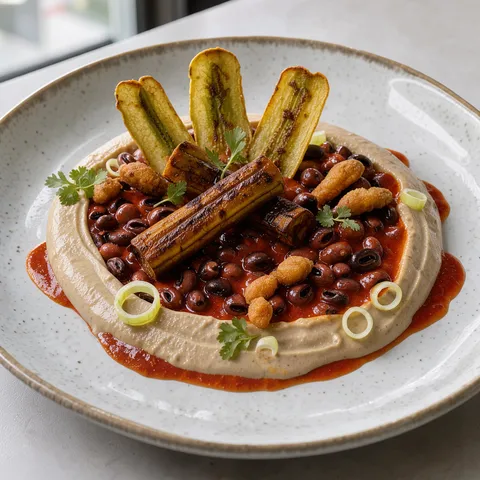 Red Red 2.01 hr 25 min · Main course
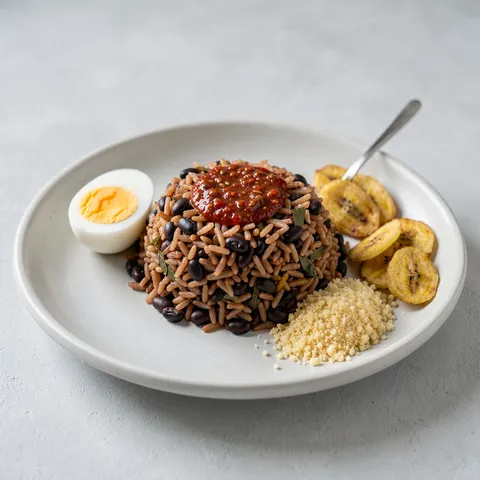 Ghanaian Rice and Black-Eyed Beans1 hr 15 min · Main course
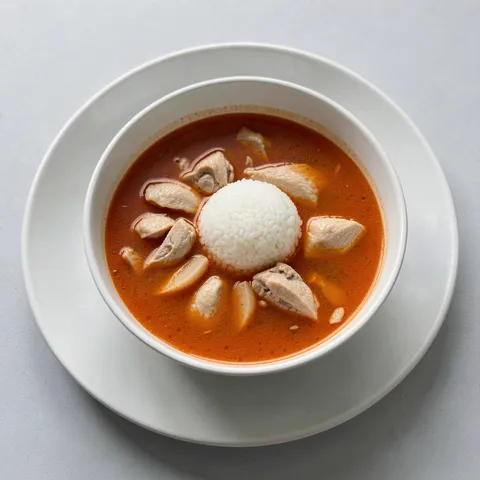 Ghanaian Tomato and Chicken Soup1 hr 10 min · Soup
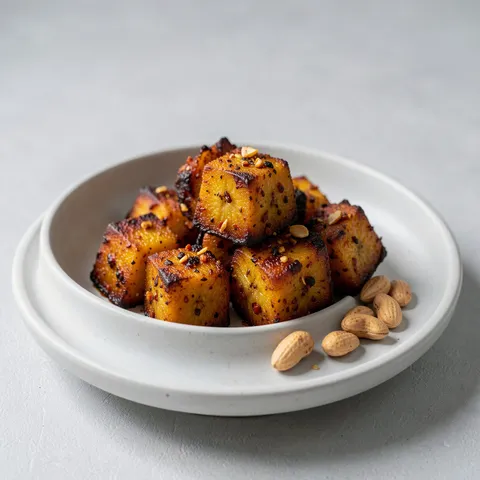 Ghanaian Spiced Fried Plantain35 min · Starter
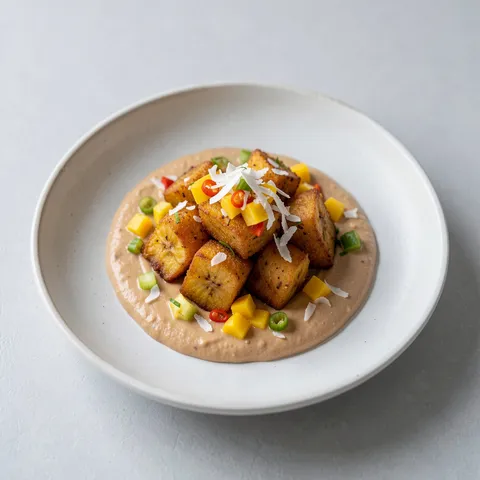 Kelewele 2.055 min · Starter
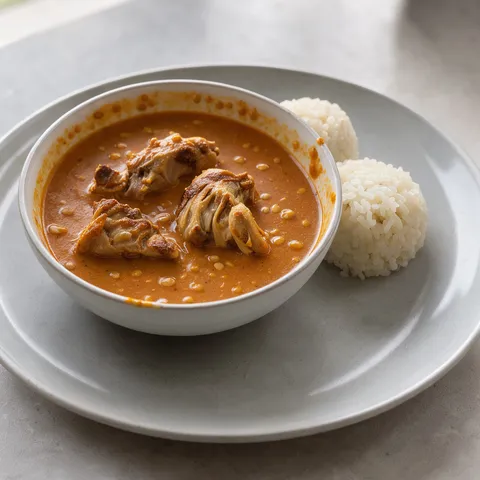 Nkatenkwan and Omo Tuo1 hr 25 min · Soup
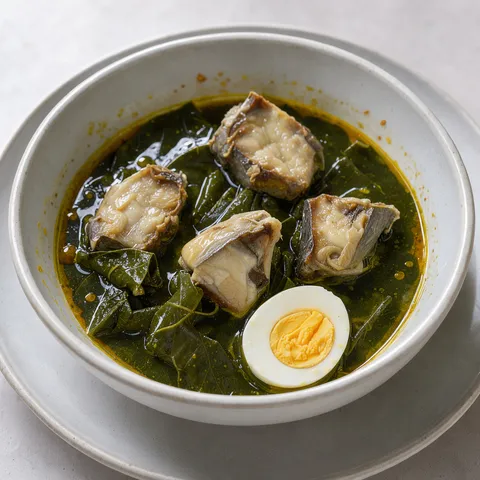 Taro Leaves with Melon Seed1 hr 15 min · Main course