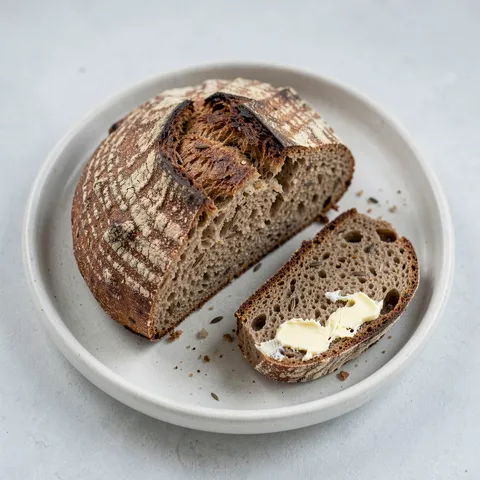
German Rye and Wheat Bread Roggenmischbrot
A German bread & pastry. Takes 1 hr 6 min · +2 hr 40 min rising and cooling, 1 loaf, 12 slices. Difficulty: medium.
At a glance
- Total time
- 1 hr 6 min · +2 hr 40 min rising and cooling
- Serves
- 1 loaf, 12 slices
- Difficulty
- Medium
- Cuisine
- German cuisine
- Dish type
- Bread & pastry
- Allergens
- Gluten
Ingredients
Dough
- 300 g rye flour
- 300 g strong white bread flour
- 12 g fine salt
- 7 g fast-action dried yeast
- 1 tbsp dark grape molasses
- 1 tbsp cider vinegar
- 1 tsp ground caraway
- 450 ml lukewarm water (about 35°C)
Baking
- 1 tbsp flour (for the worktop)
- lidded cast-iron casserole
Makes
- 1 loaf
- about 12 slices (4 people)
Equipment
- Mixing bowls
- Probe thermometer
- Oven
- Cast-iron casserole
- Baking paper
- Stand mixer (optional)
Method
- Knead the dough: Mix the flours, salt, yeast and caraway in a large bowl. Add the water, molasses and vinegar and knead by hand or with a dough-hook mixer for 8-10 min. Rye dough does not become elastic like wheat dough, and stays sticky and soft, so do not add flour. The vinegar raises the acidity of the rye and gives the bread a taste close to sourdough. (~10 min)
- First prove: Cover the bowl with a damp cloth and prove in a warm place for 60 min, until 1.5 times its original size (waiting: 60 min). Rye proves slowly, so do not wait for twice the volume, or the dough collapses.
- Shape: Turn the dough onto a floured worktop, fold the edges into the middle and turn 2-3 times to make an oval ball. Place it seam side down in a floured bowl lined with baking paper. Tight shaping makes the bread rise upwards as it bakes rather than spreading sideways. (~4 min)
- Second prove and preheat the pot: While the dough rests for 40 min (waiting: 40 min), heat the lidded casserole in the oven at 230°C. Baking paper is heat-resistant to around 220°C, so do not go up to 250°C. The hot pot traps steam and makes the crust crisp. If the surface of the dough begins to crack, move on to baking at once.
- Bake: Take out the hot casserole with oven gloves, lower the dough into it with its baking paper and slash the surface with a knife in a cross, 1 cm deep. Trim off any baking paper overhanging the pot, as overhanging paper burns. Cover and bake at 230°C for 18 min, then uncover and bake at 200°C for 30 min. The crust should be dark brown and sound hollow when tapped on the base. (~48 min)
- Check the internal temperature: Insert a thermometer into the middle of the loaf. If it reads 96-98°C it is baked, and if lower, bake for 5-10 min more. Rye stays moist, and a thermometer removes the risk of a raw middle. (~2 min)
- Cool and slice: Cool the bread on a wire rack or in the open for at least 1 hr (waiting: 1 hr). If you cut it hot, the rye starch stays sticky. It slices more easily the next day and the flavour settles. (~2 min)
Chef's note
Roggenmischbrot is the most common everyday bread in Germany, and part of the rye is mixed with wheat flour, so the bread stays both moist and light. Traditionally sourdough (Sauerteig) is used, while here dried yeast and vinegar were chosen for practicality. If you have sourdough starter, reduce the water by 150 g, fold the starter into the dough and cut the dried yeast to 3 g. Caraway gives the bread the characteristic aroma of German bakeries. Eat it with butter and thinly sliced radish, or with cheese.
Frequently asked questions
- Why does rye dough stay sticky, and should I add more flour?
- Rye dough does not turn elastic like wheat dough and stays sticky and soft. This is normal, so do not add flour.
- How do I know the bread is baked?
- It is done when a thermometer reads 96-98°C in the middle of the loaf. If it is lower, bake for 5-10 minutes more. The crust should be dark brown and sound hollow when you tap the base.
- Can I slice rye bread while it is hot?
- If you cut it hot, the rye starch stays gummy. Cool the loaf for at least 1 hour. It slices more easily the next day, and the flavour settles.
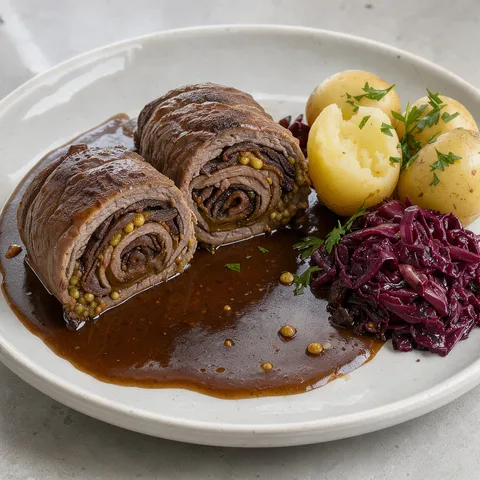 German Beef Roulades2 hr 30 min · Main course
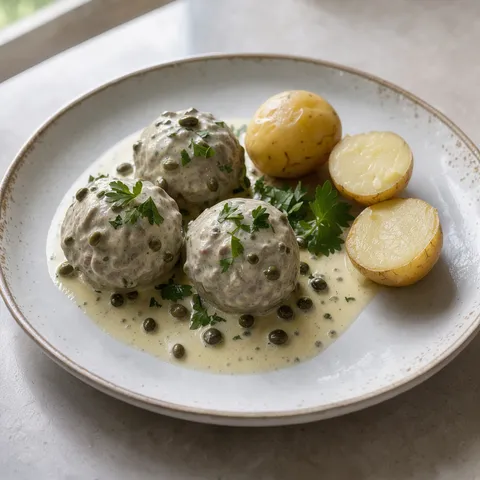 Meatballs in Caper Sauce1 hr 05 min · Main course
 Swabian Cheese Noodles55 min · Main course
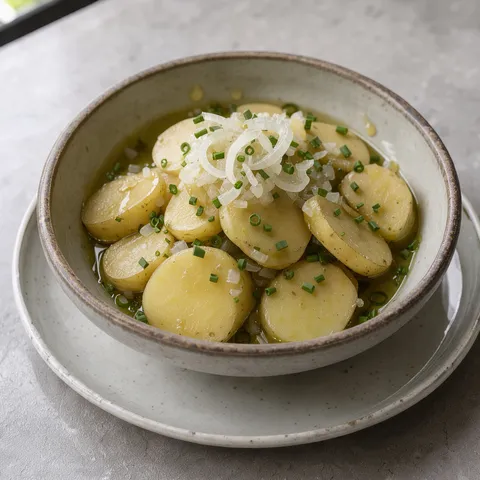 Swabian Potato Salad1 hr · Side dish
 Bavarian Pretzels1 hr 55 min · Bread & pastry
 Käsespätzle 2.01 hr 20 min · Main course