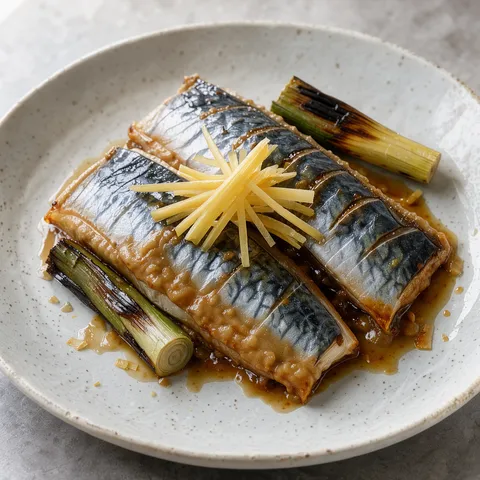
Mackerel Simmered in Miso Saba no Misoni
A Japanese main course. Takes 55 min, Serves 4. Difficulty: medium.
At a glance
- Total time
- 55 min
- Serves
- Serves 4
- Difficulty
- Medium
- Cuisine
- Japanese cuisine
- Dish type
- Main course
- Diet
- Gluten-free
- Allergens
- Fish, Soya
Ingredients
Fish
- 2 medium mackerel (about 900 g in total, 600 g once filleted, 4 pieces)
- 1 tsp salt
Cooking liquid
- 200 ml water
- 100 ml sake
- 3 tbsp mirin
- 2 tbsp sugar
- 30 g fresh ginger (half thinly sliced, half cut into hair-thin julienne)
- 70 g awase miso (a mix of red and white)
Garnish
- white part of 1 thick leek (instead of negi, about 150 g)
Rice
- 300 g Japanese short-grain rice
- 360 ml water
Equipment
- Saucepan
- Plating tweezers
- Chef's knife
- Chopping board
- Colander
- Mixing bowls
- Sauté pan
- Baking paper
- Ladle
- Frying pan
Method
- Start the rice: Wash the rice in cold water 3-4 times, rubbing it between your palms, until the water runs almost clear. Soak in a saucepan with the 360 ml water for 30 min. Bring to the boil covered, cook over the lowest heat for 12 min, then turn off the heat and leave to steam for 10 min without lifting the lid. Prepare the fish while the rice soaks
- Fillet and score: Remove the pin bones from the mackerel fillets with tweezers and cut each fillet in half. Make two shallow diagonal cuts in the skin. Scoring stops the skin shrinking and curling the fish as it cooks, and lets the sauce penetrate the flesh
- Salt and scald (shimofuri): Sprinkle both sides of the pieces with salt and leave for 10 min: the water drawn to the surface carries the fishy smell. Arrange the pieces in a colander and pour water at 80-85°C over them. As soon as the surfaces turn white, plunge them into iced water. Rub off any remaining blood and scales with your fingertips and pat dry with kitchen paper. This step is the secret of the clean, odour-free flavour of misoni
- Boil the liquid: Put the water, sake, mirin, sugar and sliced ginger in a sauté pan wide enough to hold the fish in a single layer and bring to the boil over medium heat. The boiling liquid cooks off the alcohol and prevents the muddy smell you get from putting fish into cold liquid
- First cook: Lay the fish skin-side up in the boiling liquid. Set a drop lid of baking paper with a hole in it (otoshibuta) on top and cook over medium heat for 5 min. Do not turn the fish during this time: mackerel flesh is delicate and breaks up
- Add the miso twice: Loosen half the miso by mashing it into a ladleful of the hot liquid, add to the pan and cook for another 5 min under the drop lid. Loosen and add the remaining miso the same way. Adding the miso in two batches gives depth from the first half, which cooks for longer, and fresh miso aroma from the second
- Glaze with the sauce: Lift off the drop lid, turn the heat up to medium-high and, tilting the pan slightly, keep spooning the sauce over the fish for 3-4 min. It is ready when the sauce coats the back of a spoon in a thin film and the bubbles are large and burst slowly. The internal temperature of the fish should be at least 63°C
- Cook the leek: Cut the leek into 4 cm cylinders and brown them in a dry frying pan over medium heat for 2 min on each side, until lightly charred. For the last 1 min, glaze with 2 tbsp of the misoni sauce
- Plate: Place two pieces of fish skin-side up on a shallow, slightly dished plate, leaning gently against each other. Spoon plenty of the dark, glossy sauce from the pan over the top: it should form a small pool on the plate. Lay the leek cylinders alongside and pile the ginger julienne in a small mound on top of the fish. Serve the rice in a separate bowl, with misoshiru
Chef's note
This is a teishoku dish from Japanese home cooking. The mackerel must be fresh: bright eyes, red gills, firm flesh. Miso is traditionally bought ready-made. If you reduce the sauce too much, it will turn to caramel as it cools: keep it fluid on the plate.
Frequently asked questions
- How do you get rid of the fishy smell in misoni?
- The pieces are salted and left to stand, then scalded with hot water and moved to iced water (shimofuri). This step is the secret to a clean, odour-free misoni.
- Why is the miso added in two batches?
- The first half, cooked for longer, gives depth and the second half gives fresh miso aroma. The miso is loosened by mashing it into the hot liquid.
- Why isn't the mackerel turned while it cooks?
- Mackerel flesh is delicate and breaks up if turned. The pieces are cooked skin side up under a drop lid.
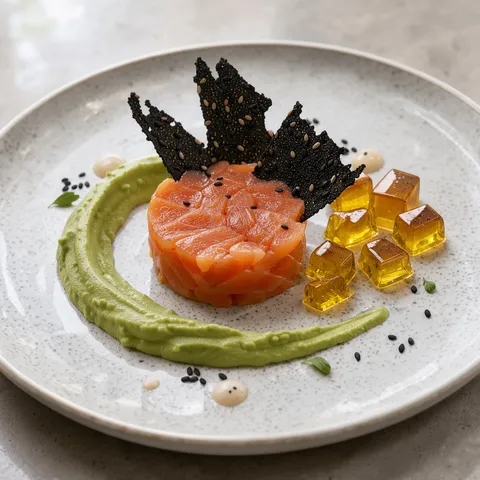 Salmon Tartare, Black Sesame Crisp, Wasabi Avocado45 min · Starter
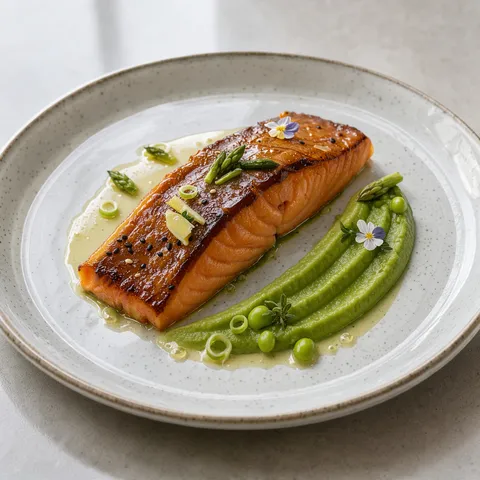 Salmon, Miso Glaze, Dashi Beurre Blanc, Edamame Purée50 min · Main course
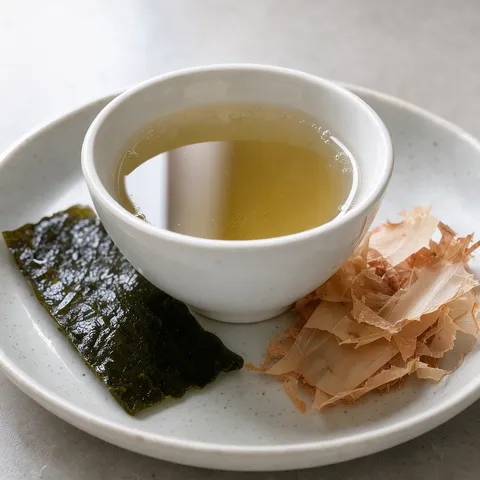 Ichiban Dashi1 hr 45 min · Basic recipe
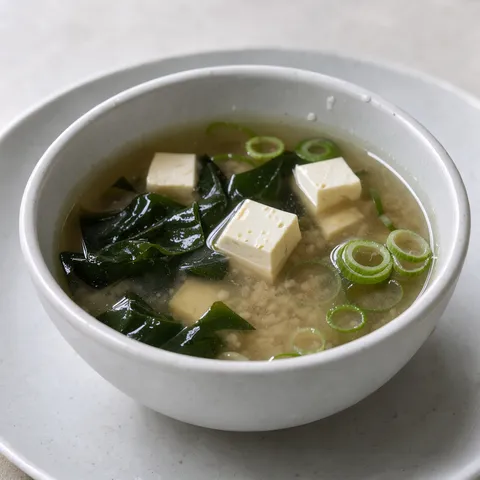 Miso Soup15 min · Soup
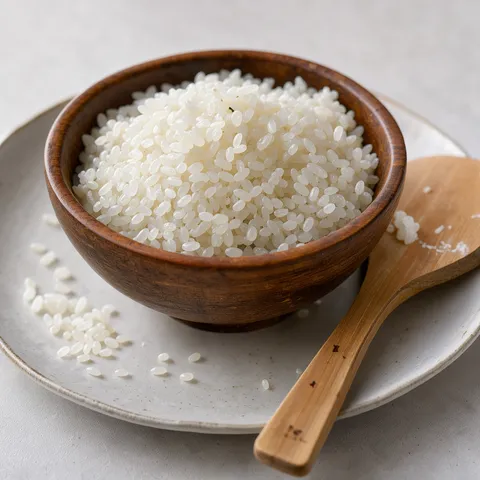 Sushi Rice1 hr 15 min · Basic recipe
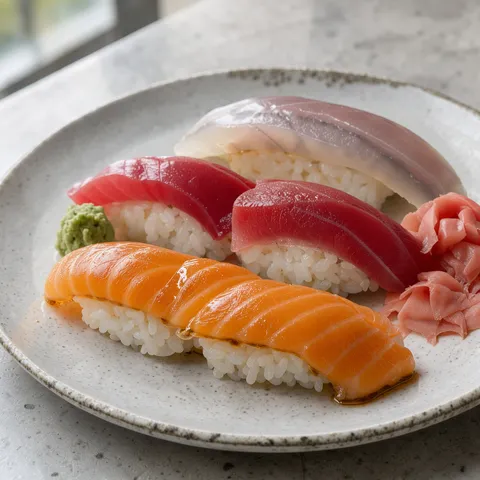 Nigiri45 min · Main course