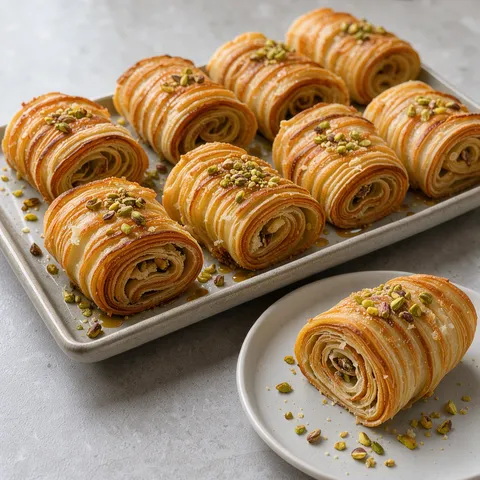
Clotted Cream Pastry in Syrup Sac Arasi
A Turkish dessert. Takes 2 hr · +30 min resting, +30 min soaking in syrup, +overnight (kaymak), 24×30 cm tin, 12 pieces (4 servings). Difficulty: challenging.
At a glance
- Total time
- 2 hr · +30 min resting, +30 min soaking in syrup, +overnight (kaymak)
- Serves
- 24×30 cm tin, 12 pieces (4 servings)
- Difficulty
- Challenging
- Cuisine
- Turkish cuisine
- Dish type
- Dessert
- Allergens
- Gluten, Milk, Eggs
Ingredients
Syrup
- 400 g caster sugar
- 400 ml water
- juice of 1/2 lemon
Dough
- 400 g plain flour
- 1 egg
- 50 g butter (melted)
- 150 ml lukewarm milk
- 1 tsp cider vinegar
- 1/2 tsp salt
Layers
- 150 g Homemade Clotted Cream (Basics)
- 120 g butter (melted)
- 60 g wheat starch for rolling
Topping
- 40 g pistachios
Equipment
- Saucepan
- Mixing bowls
- Cling film
- Baking tray
- Rolling pin / oklava
- Pastry brush
- Chef's knife
- Chopping board
- Oven
- Ladle
Method
- Make the syrup: Stir the sugar and water together in a saucepan and bring to the boil, then simmer over low heat for 10 min. Add the lemon juice, boil for 1 more min, take off the heat and leave to cool completely. Cold syrup poured over the hot pastry is absorbed quickly, yet the layers stay crisp
- Knead the dough: Put the flour and salt in a bowl and add the egg, the 50 g melted butter, the milk and the vinegar to the centre. Bring together in the bowl, then knead on the worktop for 10 min, until smooth and soft and pliable, like an earlobe. The vinegar relaxes the gluten, so the dough does not spring back when rolled thinly
- Rest: Wrap the dough in cling film and leave to rest at room temperature for 30 min
- Divide into balls: Divide the dough into 8 equal pieces and roll into balls. Using a pastry brush, grease a 24×30 cm tin, at least 5 cm deep, with 1 tbsp of the 120 g melted butter
- Roll out the sheets: Dust the worktop and the balls with starch and roll each ball out with a rolling pin to about 40 cm across, thin enough for light to pass through. Unlike flour, starch does not blend into the dough and keeps the layers separate
- Brush and roll: Brush the whole sheet with melted butter and dot an eighth of the clotted cream over the surface in hazelnut-sized pieces. Roll the sheet loosely towards you into a log about 4 cm thick. A tightly rolled log will not puff up in the oven
- Cut and arrange: Cut the log into 6 cm pieces and pack them tightly side by side in the tin, cut sides up. Repeat the rolling, brushing, rolling up and cutting with the remaining balls and drizzle the rest of the butter over the pieces. Meanwhile, preheat the oven to 180°C
- Bake: Bake on the middle shelf of the oven at 180°C for 35-40 min, until the top and edges are deep golden. The layers should be browned and separate, and the pieces in the centre should not be pale
- Soak in syrup: Finely chop the pistachios. Slowly and evenly ladle the cold syrup over the hot pastry straight from the oven: the sizzle shows the syrup is being absorbed at once. Scatter over the pistachios and leave for at least 30 min to soak up the syrup
- Serve: Cut into 12 pieces and serve warm or at room temperature
Chef's note
Domed griddle Arasi is a Konya dessert filled with clotted cream and soaked in syrup, reminiscent of baklava. Its name is said to come from the sheets once being cooked on a saj (domed griddle), or folded between saj sheets. Homemade Clotted Cream (Basics) needs to be made the night before; if you are short of time, use the same amount of dairy-made clotted cream. There are also versions made with walnuts instead of pistachios. Locally it is also served with ice cream or a spoonful of clotted cream.
Frequently asked questions
- Why should the syrup be cold and the pastry hot for Sac Arasi?
- Cold syrup poured over hot pastry is absorbed quickly while the layers stay crisp. Make the syrup ahead and leave it to cool completely.
- Why use starch rather than flour for rolling out the sheets?
- Starch does not work into the dough like flour and keeps the layers apart. Dust both the work surface and the dough balls and roll the sheets out to about 40 cm across.
- Why doesn't Sac Arasi puff up in the oven?
- If the roll is wound tightly, it will not puff up in the oven. Roll the sheet loosely towards you into a roll about 4 cm thick.
 Chilled Wheat Yoghurt Soup1 hr · Soup
 Noodle and Yoghurt Soup1 hr 10 min · Soup
 Lamb, Chickpea and Potato Stew1 hr 15 min · Soup
 Marinated Sea Bass30 min · Meze
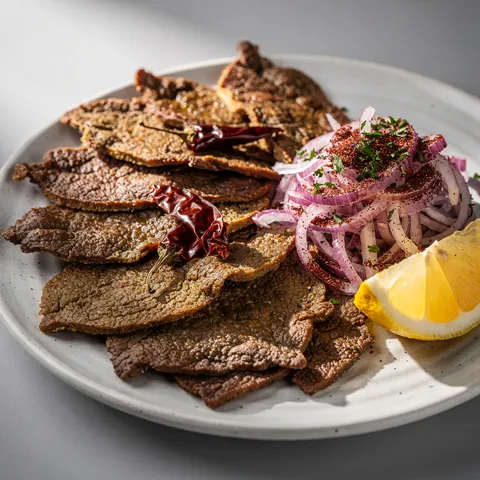 Crispy Fried Liver Slices25 min · Meze
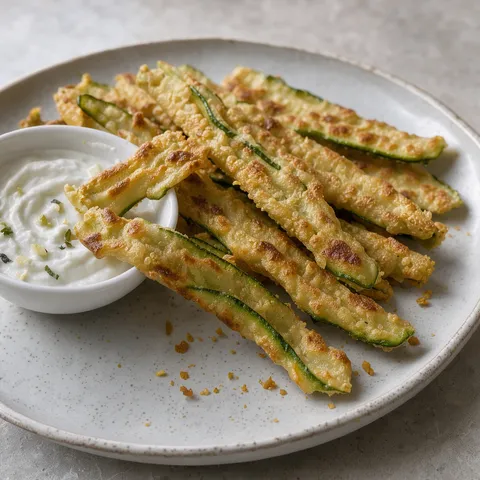 Courgette Crisps30 min · Meze