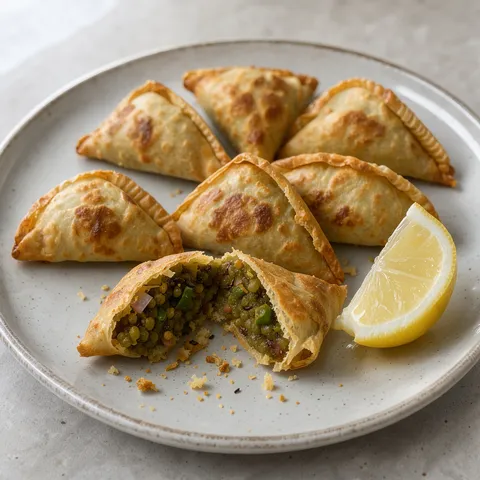
Ethiopian Lentil Triangle Pastries Sambusa
An Ethiopian meze. Takes 1 hr 30 min, Makes 24. Difficulty: medium.
At a glance
- Total time
- 1 hr 30 min
- Serves
- Makes 24
- Difficulty
- Medium
- Cuisine
- Ethiopian cuisine
- Dish type
- Meze
- Diet
- Vegetarian, Vegan
- Allergens
- Gluten
Ingredients
- Dough (24 strips 6×24 cm, about 16 g each, about 385 g in total): 250 g plain flour
- 125 ml water
- 10 ml neutral oil
- 1/2 tsp salt
- a mixture of 1 tbsp flour and 2 tbsp water (for sticking)
- 3 tbsp cornflour (for rolling out)
Extra
- cling film. Filling (24 × 12 g, about 290 g): 85 g green lentils (dried)
- 120 g onion (3 mm dice)
- 20 g green chilli (deseeded, finely chopped)
- 2 garlic cloves
- 1 tsp cumin
- 1/2 tsp turmeric
- 1 tbsp neutral oil
- 1 tsp salt
Frying
- 1.5 litres oil for deep-frying (about 4.8 cm deep in a 20 cm pan)
Equipment
- Mixing bowls
- Precision scales
- Rolling pin / oklava
- Chef's knife
- Saucepan
- Colander
- Heavy-based saucepan
- Probe thermometer
- Baking tray
Method
- Knead the dough: Knead the flour, salt, oil and water in a bowl for 5 min, until you have a firm but elastic dough. A firm dough does not blister and puff in frying, so it stays thin and crisp. Wrap in cling film and rest for 20 min, so that the gluten relaxes and the dough does not tear when rolled. (~25 min)
- Cook the lentils: Wash the lentils and boil them in a saucepan with 3 times their volume of water over medium heat for 18 min, until the grains are soft but not broken, then drain in a colander. Overcooked lentils turn mushy, and the filling stays sticky and wet. Do this while the dough rests
- Make the filling: Heat the oil in a saucepan, fry the onion for 6 min, until golden at the edges, add the garlic, chilli, cumin and turmeric and stir for 1 min. Add the lentils and salt and cook for 2 min, stirring, until the liquid is absorbed. The filling should be loose enough to crumble but firm enough to stay on a spoon, and it makes about 290 g. Spread it on a plate and cool completely, since warm filling softens the dough and tears it (~12 min)
- Roll out and cut into strips: Weigh the dough and divide it into 6 equal pieces. Roll each out on a worktop dusted with cornflour into a 24×24 cm square about 1 mm thick, because the cornflour stops the thin dough sticking to the worktop. Cut each square with a knife into 4 strips 6 cm wide, giving 24 strips in total (6×24 cm). Keep the strips covered with a damp cloth, because dough that dries cracks when folded (~12 min)
- Fill and fold: Put 12 g of filling at the end of a strip. Fold the bottom left corner of the strip over to the top edge to make a triangle, then flip the triangle up, to the right and up again, folding it like a flag until the strip runs out (about 4 folds). Press down the last end with the flour-and-water paste. The result should be a triangle with sides of about 6 cm. Corners left open spill the filling into the oil in frying (~18 min)
- Heat the oil: Heat the oil to 175°C in a 20 cm heavy-based saucepan and check with a thermometer. If you have no thermometer, the oil is ready when a pinch of dough rises to the surface in 5 sec and fries with bubbles. It is important to keep the temperature around 175°C, because at a low heat the sambusa soaks up oil (~6 min)
- Fry: Fry the sambusas in batches of 6, turning, for 2.5 min, until golden, and 4 batches give 24 pieces. The oil must return to 175°C for every batch. Lift out with a slotted spoon and drain for 1 min on a tray lined with kitchen paper (~14 min)
- Plate: Lean 3 triangles against one another on a flat ceramic plate and put a slice of lemon beside them. Eat hot, as the contrast of crisp pastry and soft lentils is best in the first 10 min (~3 min)
Chef's note
Serve hot. Allow 2 pieces per person, 120 people × 2 = 240 pieces. As the recipe makes 24 pieces, the multiplier is 240/24 = 10, or 10.5 with 5% allowed for waste (2.63 kg flour, 890 g green lentils, 1.26 kg onion, 210 g green chilli). The dough can be kneaded 1 day ahead and kept in the fridge. Wrapped raw sambusas can be frozen on a tray and bagged, kept for 1 month and fried without thawing (3 min). The frying oil is 1.5 litres in a 20 cm pan, 4.8 cm deep. Capacity: 6 pieces per 2.5 min, so 252 pieces is 42 batches, which takes about 40 min with 3 pans. Being a vegan snack for fasting days is part of its original identity, and mince is sometimes used instead of lentils. In Ethiopia the dough is rolled as thin as paper, and here it is limited to 1 mm. How it differs from Sambuusa (Somali Meat-Filled Triangle Pastries): that is a meat-filled, spiced Somali pastry, while this is the Ethiopian sambusa, whose filling is meat-free green lentils, fresh green chilli and cumin, it is a vegan snack for fasting days and its dough is much thinner. It also differs from Aloo Samosa (Indian Potato Pastries) in having a lentil filling, strip-folded and vegan.
Frequently asked questions
- Why is my sambusa filling wet and sticky?
- Overcooked lentils turn mushy and make the filling sticky and wet. Boil the lentils until soft but not broken up, then drain them. The filling should be loose enough to crumble but hold on a spoon.
- Why do the sambusas open up while frying?
- Open corners let the filling leak into the oil. Fold the strip like a flag and press the last end down with the flour and water paste.
- Why is the dough kneaded firmly and the strips covered with a cloth?
- A firm dough does not blister when fried and stays thin and crisp. Keep the strips under a damp cloth, as dough that dries out cracks when folded.
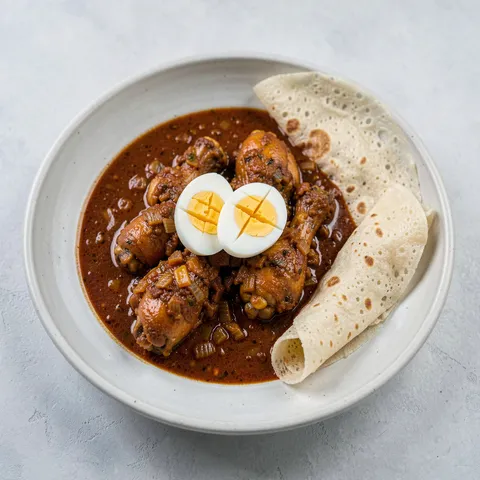 Ethiopian Chicken Stew1 hr 30 min · Main course
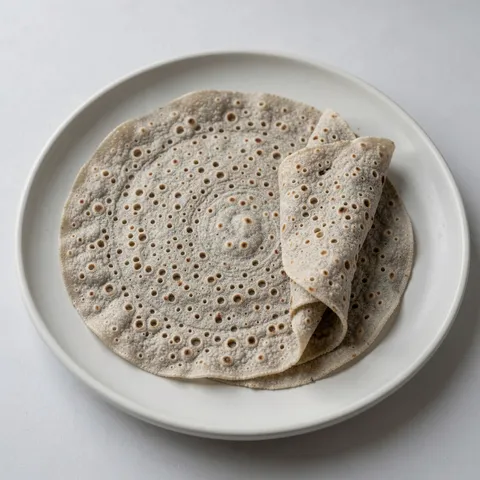 Ethiopian Sour Fermented Flatbread40 min · Bread & pastry
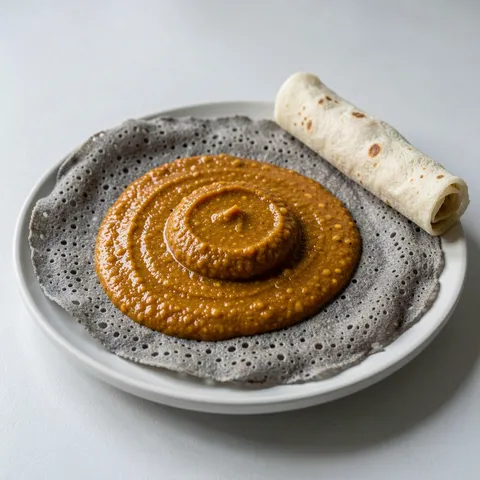 Ethiopian Chickpea Flour Stew55 min · Main course
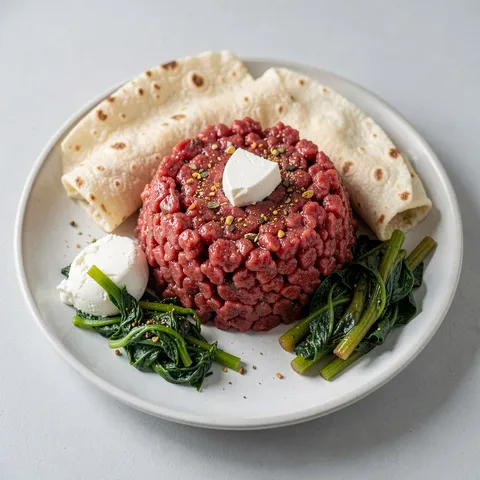 Ethiopian Spiced Beef Tartare30 min · Main course
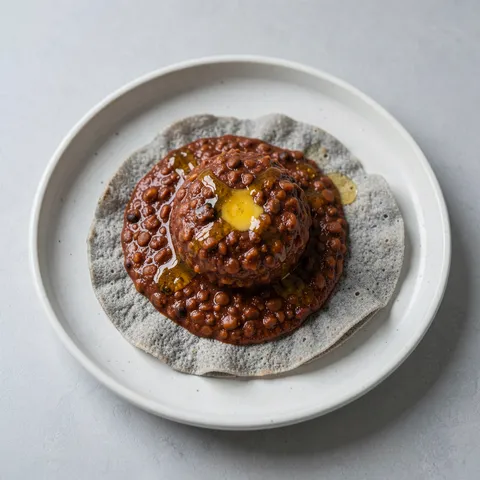 Ethiopian Red Lentil Stew50 min · Main course
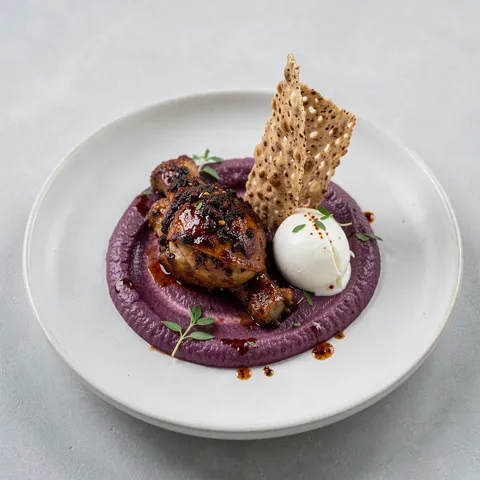 Doro Wat 2.01 hr 15 min · Main course