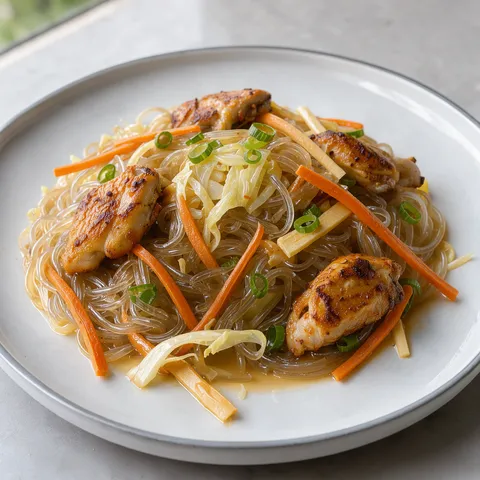
Samoan Chicken Glass Noodle Stir-Fry Sapasui
A Samoan main course. Takes 50 min, Serves 4. Difficulty: medium.
At a glance
- Total time
- 50 min
- Serves
- Serves 4
- Difficulty
- Medium
- Cuisine
- Samoan cuisine
- Dish type
- Main course
- Allergens
- Gluten, Soya, Celery
Ingredients
Chicken
- 600 g boneless skinless chicken thighs (cut into 1 cm strips)
- 2 tbsp soy sauce
- 1 tsp finely grated fresh ginger
- 2 garlic cloves (crushed)
Noodles
- 200 g dried glass noodles (made from mung bean starch)
- lukewarm water
Vegetables and sauce
- 2 tbsp sunflower oil
- 1 large onion (sliced into half-moons)
- 3 garlic cloves (finely chopped)
- 30 g fresh ginger (cut into matchsticks)
- 1 carrot (cut into matchsticks)
- 250 g white cabbage (finely shredded)
- 500 ml Chicken Stock (Basics)
- 4 tbsp soy sauce
- 1 tsp sugar
- 1/2 tsp black pepper
To finish
- 3 spring onions (cut into 2 cm pieces)
Equipment
- Mixing bowls
- Wok
- Chef's knife
- Chopping board
- Wooden spoon / spatula
- Fine sieve / chinois
- Kitchen scissors
- Box grater
- Probe thermometer (optional)
Method
- Soak the noodles: Put the glass noodles in a large bowl, pour over enough lukewarm water to cover and leave for 20 min, until soft and pliable. Do not soak them in boiling water, or they will fall apart in the stir-fry. Drain in a sieve and cut into 15 cm lengths with kitchen scissors, as long noodles clump in the pan
- Marinate the chicken: While the noodles soak, mix the chicken strips with 2 tbsp soy sauce, the grated ginger and the crushed garlic and leave for 15 min. The soy seasons the surface of the chicken and gives it a good colour in the wok
- Prepare the vegetables: Chop the onion, garlic, ginger, carrot and cabbage and line them up in order next to the hob. Wok cooking moves very fast, and if the ingredients are not ready, something will burn
- Sear the chicken: Heat the wok over a high heat until smoking hot and add 1 tbsp oil. Stir-fry the chicken in two batches, without crowding the wok, for 4-5 min, until golden brown, then transfer to a plate. In a crowded wok the chicken releases its juices and stews instead of browning
- Sauté the aromatics and vegetables: Add the remaining oil and stir-fry the onion for 3 min, until the edges are soft and lightly browned. Add the garlic and ginger and fry for 1 min, until fragrant. Add the carrot and cabbage and stir-fry for 3 min, until the cabbage starts to wilt but still has some bite
- Add the liquid and noodles: Return the chicken to the wok, add the stock, soy sauce, sugar and pepper and bring to the boil. Add the noodles and cook for 5-6 min, lifting and turning them constantly with tongs or two wooden spoons. The noodles should absorb most of the liquid and turn translucent and glossy, with a little sauce left at the bottom. Samoan sapasui is not dry but slightly saucy and slippery. The internal temperature of the chicken strips should reach 74°C
- Finish: Fold in the spring onions, toss for 30 sec and check the seasoning. The soy is already salty, so extra salt is rarely needed. Turn off the heat
- Plate: Pile the sapasui into deep bowls with plenty of sauce, so the chicken and vegetables show on top of the noodles. In Samoa it is usually served with a scoop of white rice. Serve hot
Chef's note
Sapasui takes its name from the English "chop suey" and is thought to have grown out of dishes brought to Samoa by Chinese labourers in the early 20th century. Today it is a fixture of Samoan weddings, church meals and Sunday lunches, made in huge pots. Versions with beef or salted beef are also common. For glass noodles, choose ones made from mung bean starch, as potato starch noodles quickly fall apart in a stir-fry.
Frequently asked questions
- How do you prepare the glass noodles for Sapasui?
- Soak the noodles in lukewarm water for 20 minutes, as boiling water makes them fall apart. Drain and cut with scissors to 15 cm, because long noodles clump in the pan.
- Why cook the chicken in two batches in the wok?
- In a crowded wok the chicken releases its liquid and stews instead of browning. Stir-fry it over a high heat in two batches for 4-5 minutes.
- Should Sapasui be dry or saucy?
- Samoan sapasui isn't dry but slightly saucy and slippery. The noodles should soak up most of the liquid and look clear and glossy, with a little sauce left in the bottom.
 Samoan Coconut Buns1 hr 10 min · Bread & pastry
 Samoan Banana and Tapioca Soup27 min · Dessert
 Samoan Rice Porridge with Cocoa26 min · Dessert