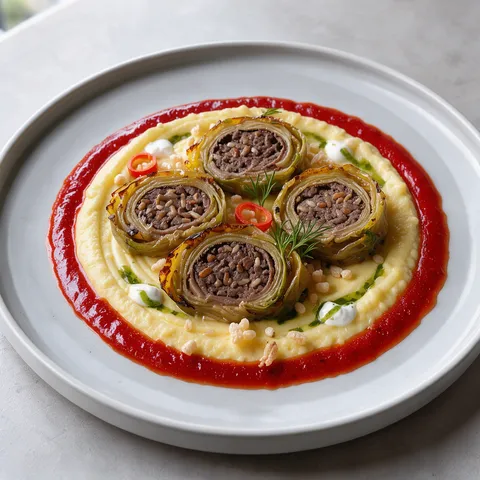
Sarmale 2.0
A Romanian main course. Takes 1 hr 30 min, Serves 4. Difficulty: professional.
At a glance
- Total time
- 1 hr 30 min
- Serves
- Serves 4
- Difficulty
- Professional
- Cuisine
- Romanian cuisine
- Dish type
- Main course
- Diet
- Gluten-free
- Allergens
- Milk, Eggs, Celery
Ingredients
Roulade
- 8 large white cabbage leaves
- 2 litres water
- 1 tbsp salt
- 50 ml cider vinegar
- 350 g beef mince
- 250 g lamb mince
- 60 g smoked cured beef without fenugreek coating (very finely chopped)
- 1 shallot (finely chopped)
- 1 tbsp chopped dill
- 1 tsp dried summer savory (cimbru)
- 1/2 tsp sweet paprika
- 8 g salt
- 1/2 tsp black pepper
- 1 egg white
- 20 g butter
Tomato and cured beef jus
- 600 g ripe tomatoes (grated)
- 40 g smoked beef cured beef without fenugreek coating
- 1 shallot
- 1 bay leaf
- 1 tsp black peppercorns
- 300 ml Brown Beef Stock (Basics)
- 20 g cold butter
- 1 tsp cider vinegar
Puffed rice
- 60 g rice
- 500 ml water
- 1 litre sunflower oil
- flaky salt
Mămăligă cream
- 60 g fine cornmeal
- 250 ml milk
- 200 ml water
- 30 g butter
- 30 g grated telemea or white brined cheese
- salt
Soured cream
- 120 g soured cream (smântână)
- juice of 1/2 lemon
Dill oil
- 1 bunch dill (about 40 g)
- 80 ml sunflower oil
Acidity
- 2 red chillies
- 60 ml cider vinegar
- 60 ml water
- 1 tsp sugar
- 1/2 tsp salt
To finish
- dill fronds
Equipment
- Saucepan
- Baking tray
- Baking paper
- Oven
- Chef's knife
- Chopping board
- Mixing bowls
- Cling film
- Probe thermometer
- Fine sieve / chinois
- Heavy-based saucepan
- Stick blender
- Squeezy bottle
- Sauté pan
- Blender
- Muslin
Method
- Boil the rice: The rice is the first step in the workflow. Boil the rice in the 500 ml boiling water for 18 min, until the grains are very soft and bursting, drain and spread in a thin single layer on a tray lined with baking paper. Dry in an oven preheated to 120°C for 45-60 min, until the grains are hard as glass and snap with a crunch between your fingers. If they are not there yet, leave for another 10 min. Rice that is not fully dry does not puff in the oil. The cooked and dried starch puffs in the hot oil and gives a light crunch, and this crunch is the new texture of the rice in the classic
- Chilli pickle: Cut the chillies into thin rings. Bring the vinegar, water, sugar and salt to the boil, pour over the rings and leave for at least 30 min. The chilli that is bitten alongside sarmale on the Romanian table becomes the point of acidity on this plate
- Prepare the leaves: Bring the water to the boil with the salt and vinegar, blanch the cabbage leaves for 2 min and transfer immediately to iced water. Pat dry with kitchen paper and, holding the knife flat, shave the thick central rib down to the thickness of the leaf. The vinegared water quickly imitates the sourness of pickled cabbage, and the ice sets the bright green of the leaf
- Make the farce: Knead the minces, chopped cured beef, shallot, dill, savory, paprika, salt, pepper and egg white in a cold bowl for 3 min, until sticky. The egg white binds the farce and gives an even texture with no gaps when sliced. The rice does not go into the farce, as it comes separately as a crisp element
- Roll the roulades: Lay 2 layers of heatproof cling film (suitable for 100°C) on the work surface. Overlap four cabbage leaves slightly to make a 20×25 cm rectangle. Lay half the farce along the long edge in a cylinder 4 cm thick, roll it up tightly in the leaves and wrap in 4-5 layers of cling film, twisting the ends like a sweet wrapper to tighten. Make the second roulade the same way
- Poach the roulades: Hold the water in a wide saucepan at 85°C, monitoring it with a thermometer. Poach the roulades for 30 min. The internal temperature should reach 71°C, so check by pushing the thermometer through the cling film. Water that is not boiling cooks the cabbage without breaking it up and keeps the farce juicy
- Cook the jus: While the roulades poach, bring the tomatoes, cured beef, shallot, bay leaf, peppercorns and stock to the boil in a saucepan and cook over medium heat for 20 min. Strain through a fine sieve, pressing, and reduce the sauce over high heat for 8-10 min, until about 200 ml remains and it coats the back of a spoon. Just before serving, take off the heat and whisk in the cold butter and vinegar to give it a gloss
- Cook the mămăligă cream: Bring the milk and water to the boil, whisk in the cornmeal like rain and cook over low heat for 20 min, scraping the bottom. Add the butter and cheese, blitz with a stick blender for 30 sec until smooth and pass through a fine sieve. It should be a cream that runs slowly off the spoon. If it thickens, loosen it with hot milk
- Puff the rice: Heat the oil to 210°C in a deep saucepan. Lower a small handful of the dried rice into the oil in a fine sieve and lift it out when it turns white and puffs, within 5-8 sec. Transfer to kitchen paper and sprinkle with flaky salt. Puff all the rice in batches
- Make the soured cream: Whisk the soured cream with the lemon juice and a pinch of salt and pour into a squeeze bottle
- Make the dill oil: Blanch the dill in boiling water for 10 sec, transfer to iced water and squeeze well. Blend with the oil for 2 min and, once the mixture has cooled slightly, strain it drop by drop through muslin. This is the Herb Oils (Basics) method, using dill instead of parsley. Pour the bright green oil into a squeeze bottle
- Sear the roulades: Unwrap the roulades and pat dry with kitchen paper. Heat the butter in a sauté pan over high heat until foaming and turn the roulades for 3-4 min, until the cabbage is blackened at the edges and caramelised on every side. The charred cabbage edge brings to the plate the flavour of the caramelised leaves left on the bottom of the pan in the classic. Cut each roulade into 6 slices with a sharp knife. The cut face should show a pinkish-brown farce inside a green ring
- Plate: Put a spoonful of mămăligă cream in the centre of a warm deep plate and spread it into a wide circle with the back of a spoon. Arrange three roulade slices on top in a triangle, cut faces up. Pour the jus around the slices and along the edge of the cream to form a glossy red ring
- Finish: Pipe three dots of soured cream between the slices and add a drop of dill oil beside each dot. Scatter a pinch of puffed rice over the slices, and add three pickled chilli rings and dill fronds. Serve immediately
Chef's note
All the elements of the classic sarmale are split into separate textures here: the rice comes out of the filling and becomes a puffed crunch, the mămăligă becomes a cream, and the caramelised cabbage from the bottom of the pan moves to a seared edge. The original recipe uses pork mince and smoked pork bacon; here it is made with beef and lamb mince and beef cured beef. Drying and puffing the rice runs in parallel with everything else, and the workflow needs 4 burners and the oven at the same time. Beef cured beef is traditionally bought from the butcher. Choose smoked beef without fenugreek coating or scrape the spice coating off regular cured beef.
Frequently asked questions
- Why is the rice boiled and dried first?
- Boiled rice dried in a 120°C oven puffs up when it hits hot oil and gives a light crispness. Rice that isn't fully dry won't puff, so the grains should be glassy and hard and snap crisply between your fingers.
- What temperature should the water be when poaching the cabbage roulade?
- Keep the water at 85°C and check with a thermometer. Water that isn't boiling cooks the cabbage without breaking it up and keeps the filling juicy, and the core should reach 71°C.
- Why is the filling bound with egg white?
- The egg white binds the filling and gives a neat, gap-free texture when sliced. The rice isn't added to the filling and is served separately as a crisp garnish.
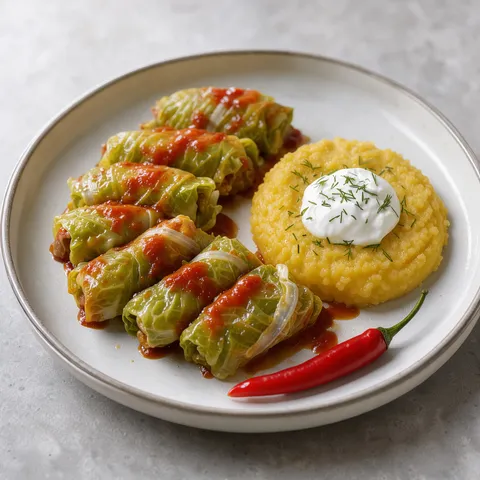 Romanian Stuffed Cabbage Rolls3 hr 10 min · Main course
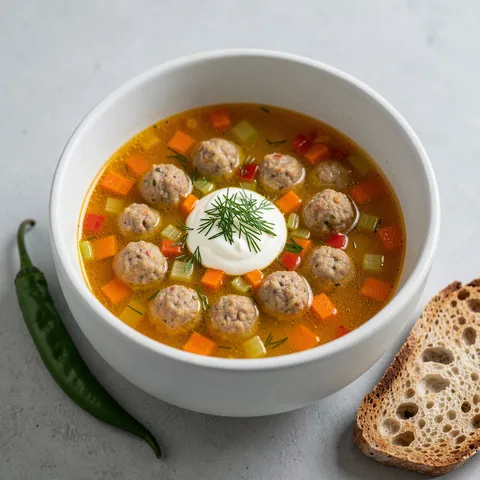 Romanian Sour Meatball Soup1 hr 15 min · Soup
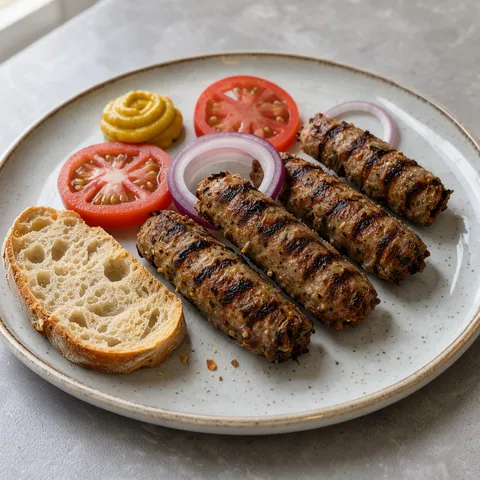 Romanian Chargrilled Mince Rolls45 min · Main course
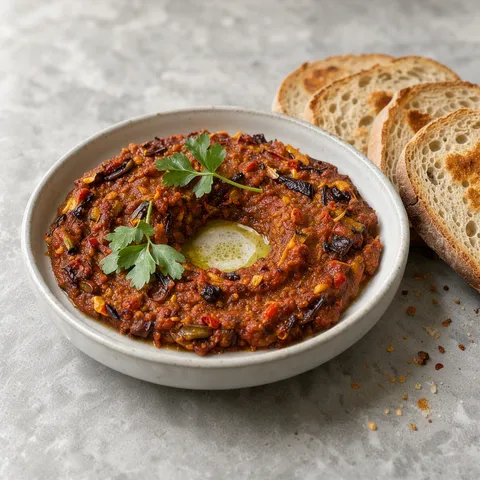 Romanian Charred Aubergine and Pepper Spread1 hr 50 min · Meze
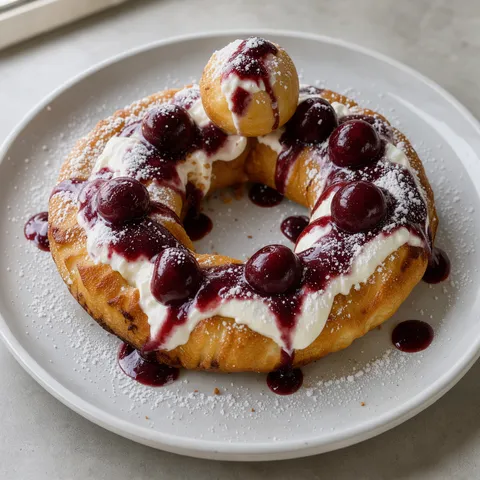 Romanian Fried Cheese Doughnuts55 min · Dessert
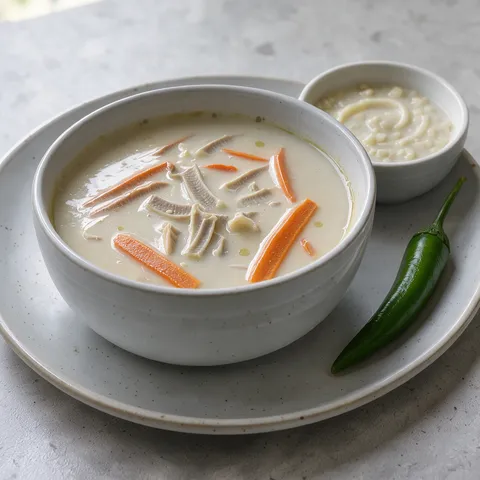 Romanian Sour Tripe Soup with Garlic4 hr · Soup
 Romanian Polenta45 min · Main course