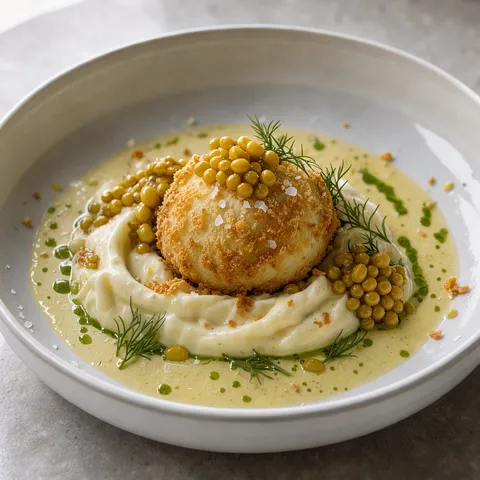
Senfeier 2.0
A German starter. Takes 1 hr, Serves 4. Difficulty: professional.
At a glance
- Total time
- 1 hr
- Serves
- Serves 4
- Difficulty
- Professional
- Cuisine
- German cuisine
- Dish type
- Starter
- Diet
- Vegetarian
- Allergens
- Gluten, Milk, Eggs, Mustard, Sulphites
Ingredients
Eggs
- 4 eggs (large, straight from the fridge)
- 2 litres water for boiling
Coating
- 50 g plain flour
- 1 egg
- 80 g Breadcrumbs
- Panko and Toasted Crumbs (Basics) (panko)
- a pinch of salt
For frying
- 1 litre sunflower oil
Mustard caviar
- 40 g yellow mustard seeds
- 100 ml white wine vinegar
- 100 ml water
- 30 g sugar
- 1/2 tsp salt
Mustard beurre blanc
- 1 shallot (about 30 g)
- 80 ml dry white wine
- 2 tbsp white wine vinegar
- 2 tbsp double cream (35%)
- 120 g cold butter (diced)
- 1 tbsp Homemade Dijon-Style Mustard (Basics)
- a pinch of salt
Potato cream
- 400 g floury potatoes
- 60 g butter
- 120 ml hot milk
- 1 tbsp salt (for the cooking water)
- a pinch of salt
- a pinch of nutmeg
Dill oil
- 20 g dill
- 60 ml sunflower oil
To finish
- dill tips
- flaky salt
Equipment
- Fine sieve / chinois
- Saucepan
- Ladle
- Mixing bowls
- Blender
- Muslin
- Potato ricer
- Cling film
- Probe thermometer
- Balloon whisk
- Chef's knife
- Chopping board
Method
- Start the mustard caviar: This dish needs no more than three hob rings at once. The first ring takes the mustard caviar, then the beurre blanc. The second takes the potatoes. The third is used first for boiling the eggs, then for the frying oil. Rinse the mustard seeds under cold water in a fine sieve. Bring the vinegar, water, sugar and salt to the boil in a small saucepan on the first ring, add the seeds and cook over low heat for 18-20 min, stirring now and then, until the seeds swell and soften and take on a glossy, caviar-like texture. If the liquid is completely absorbed, add 1-2 tbsp water. As it cools its heat mellows, and the sweet-sour pop of the seeds is the signature of the dish
- Boil the potatoes: Peel the potatoes, cut them into even pieces and start them in cold water with 1 tbsp salt on the second ring. Bring to the boil, then cook over medium heat for 18 min until a knife slides in easily
- Soft-boil the eggs: Bring 2 litres water to a rolling boil in a pan on the third ring. Lower the eggs straight from the fridge into the water one at a time with a ladle and cook for exactly 6 min 30 sec. Transfer straight to iced water and cool for 10 min. In this time the whites set and the yolks stay runny, and a cold egg doesn't overcook when fried. Peel them gently under water, starting from the wide end. Be patient, as the whites are soft
- Coat: Set out three shallow dishes: one with the flour and salt, one with the beaten egg and one with the panko. Pat the eggs dry and coat them first in the flour, then the egg, then the panko. Dip them in the egg and panko once more for a double layer of armour. Put them on a plate and rest in the fridge for 10 min so the coating firms up and doesn't fall off during frying
- Dill oil: Blend the dill and oil in a blender on the highest speed for 2 min and strain through a fine sieve lined with muslin. The oil should be bright green and clear
- Beurre blanc: Once the mustard caviar is done, use the first ring. Very finely chop the shallot and boil it with the wine and vinegar in a small saucepan over medium heat for 5 min, until about 2 tbsp liquid remains. Add the cream and boil for 1 min. Turn the heat to the lowest setting and add the cold butter a few cubes at a time, whisking until each addition melts and disappears. The sauce must never boil and should stay at 65-70°C: if it gets hotter, the butter splits. Take off the heat, whisk in the mustard and salt and strain through a fine sieve. Keep it warm by standing the bowl in another bowl filled with warm water
- Potato cream: Drain the potatoes and let them steam dry for 1 min. Press them through a potato ricer, then through a fine sieve. Whisk in the butter, then the hot milk a little at a time, and season with the salt and nutmeg. It should be a silky cream that sits softly on a spoon. Cover with cling film and keep warm
- Fry: Once the egg pan has been emptied and dried, pour 1 litre sunflower oil into a deep 18 cm saucepan on the third ring: it will be about 4 cm deep, almost covering the eggs. Heat to 180°C on a thermometer. Lower the eggs into the oil two at a time with a ladle and fry for 90 sec, turning, until deep golden all over. Drain on kitchen paper and season with salt. Short, hot frying keeps the crust crisp and the yolk runny
- Plate: Put two spoonfuls of potato cream in the centre of a warmed shallow bowl and make a wide, shallow hollow with the back of the spoon. Drizzle 3 tbsp beurre blanc around the cream and drop dots of dill oil into the sauce: the oil sits on the buttery sauce as green flecks
- Finish and serve: Set the egg in the hollow of the potato cream. Put a teaspoon of mustard caviar on top and another beside it, and finish with dill tips and a pinch of flaky salt. At the table, cut the egg open to let the yolk run into the potato cream and mustard sauce
Chef's note
The three elements of classic Senfeier (eggs, mustard sauce and mashed potato) are rebuilt around contrasting textures: a runny egg in a crisp crust, a mustard butter sauce and popping mustard seeds. Yellow mustard seeds are available at spice shops, and brown seeds are hotter. For the panko, use the recipe in the Basics section, or failing that, finely crushed stale breadcrumbs. Leftover mustard caviar keeps in a sealed container in the fridge for about 2 weeks. The number of eggs is for a starter: for a main course, cook two eggs per plate and increase the sauce by 1.5 times.
Frequently asked questions
- How long do eggs straight from the fridge boil?
- Cook them in boiling water for exactly 6 minutes 30 seconds, then cool in iced water for 10 minutes. The white sets and the yolk stays runny.
- Why does the beurre blanc split?
- If the sauce boils or gets too hot, the butter separates. The sauce should never boil, should stay at 65-70°C, and the cold butter should be added cube by cube.
- How do you stop the coating falling off the eggs when frying?
- Coat them twice and rest the eggs in the fridge for 10 minutes before frying. In this time the coating firms up.
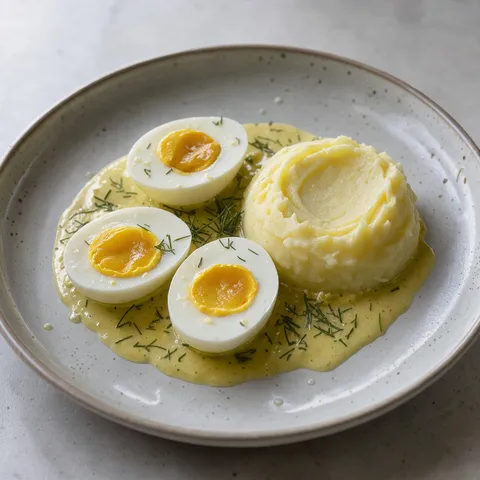 Boiled Eggs in Mustard Sauce and Mash45 min · Main course
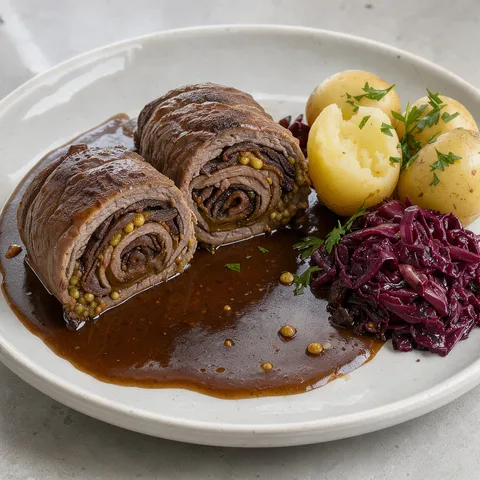 German Beef Roulades2 hr 30 min · Main course
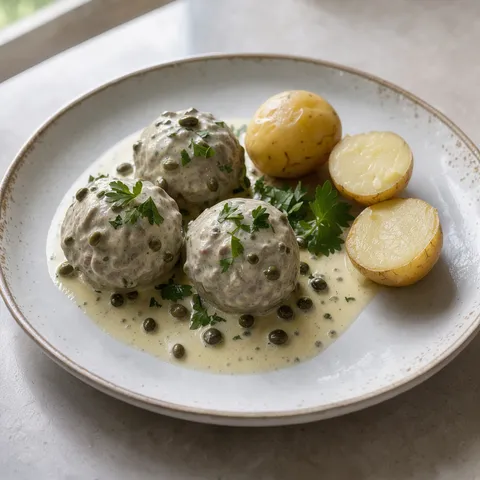 Meatballs in Caper Sauce1 hr 05 min · Main course
 Swabian Cheese Noodles55 min · Main course
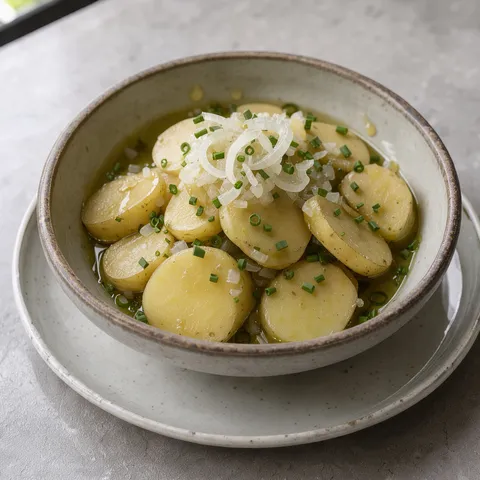 Swabian Potato Salad1 hr · Side dish
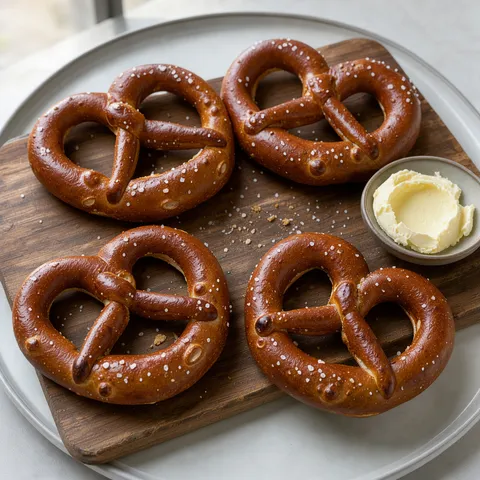 Bavarian Pretzels1 hr 55 min · Bread & pastry
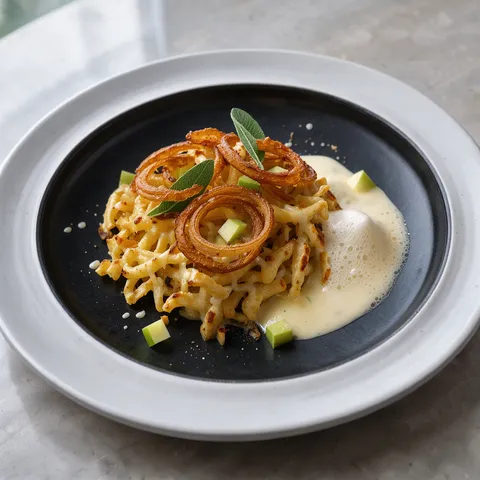 Käsespätzle 2.01 hr 20 min · Main course