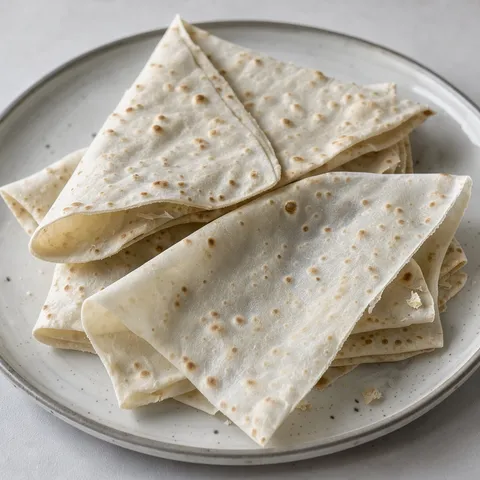
Paper-Thin Bedouin Saj Bread Shrak
A Jordanian bread & pastry. Takes 1 hr 10 min · +30 min resting, 8 pieces (4 servings). Difficulty: challenging.
At a glance
- Total time
- 1 hr 10 min · +30 min resting
- Serves
- 8 pieces (4 servings)
- Difficulty
- Challenging
- Cuisine
- Jordanian cuisine
- Dish type
- Bread & pastry
- Allergens
- Gluten
Ingredients
- Makes 8 (about 40 cm, serves 4)
Dough
- 300 g plain flour
- 200 g wholemeal flour
- 1 tsp salt
- 1/2 tsp sugar
- 330-350 ml lukewarm water
- 1 tbsp olive oil
For rolling out
- 50 g flour
- 2 tbsp sunflower oil
Equipment
- Mixing bowls
- Rolling pin / oklava
- Saj (optional)
- Wok (optional)
- Cast-iron frying pan (optional)
Method
- Knead the dough: Mix the flours, salt and sugar in a bowl. Add most of the lukewarm water and the olive oil, and once the mixture comes together, turn it out onto the work surface and knead for 10 min. Add the remaining water as needed: the dough should be very soft and slightly sticky, and a fingertip dent should fill back slowly. A stiff dough will not roll out thinly and tears as it is stretched
- Rest: Leave the dough in an oiled bowl, covered, for 30 min. The gluten relaxes and the dough becomes ready to stretch
- Divide into balls: Divide the dough into 8 equal pieces (about 105 g each), shape each into a smooth ball, brush the tops with oil and leave on the work surface, covered, for another 10 min
- Heat the saj: Heat the saj, or a large upturned wok or cast-iron pan, over medium-high heat for 10 min. When a few drops of water sprinkled on it dance and evaporate instantly, the heat is right. Too much heat burns the bread, too little dries it out
- Roll out: Roll one ball out on a lightly floured surface with a rolling pin to 25 cm across
- Stretch: Drape the rolled dough over the backs of both hands and stretch it from the edges, moving your hands apart and turning the dough. Widening under its own weight, the dough should reach about 40 cm and be thin enough to see your hand through it. Bedouin women do this over a round cushion, but a pair of hands is enough
- Cook: Lay the dough over the dome of the saj in one movement. After 30-40 sec bubbles appear on the surface and the underside becomes speckled: flip and cook the other side for 20-30 sec. Shrak should stay soft and pliable, as overcooked bread cracks like paper
- Keep soft: Stack the cooked breads inside a clean tea towel. Their own steam keeps them soft. When they are all cooked, fold each in half, then into quarters
- Serve: Serve the breads folded in a basket or spread over the base of the mansaf platter. Dried-out shrak revives if you sprinkle it with water and warm it on the saj for 5 sec
Chef's note
Shrak is a paper-thin bread, unleavened or very lightly leavened, from the Bedouin tradition of Jordan and Palestine, and it is also the bread spread over the base of the mansaf platter. It is cooked on convex saj griddles set over a campfire. Wholemeal flour gives the bread both flavour and pliability, but it can also be made entirely with white flour. Leftovers are dried and crumbled, crisp, into soups.
Frequently asked questions
- Why does shrak dough tear when rolling out?
- If the dough is stiff it won't roll paper-thin. It should be very soft and slightly sticky, and when pressed with a finger the dent should fill back slowly.
- How do I know the saj is at the right heat?
- If a few drops of water sprinkled on it dance and evaporate instantly, the heat is right. Too much heat burns the bread and too little dries it.
- How is dried-out shrak revived?
- Sprinkle dried shrak with water and heat it on the saj for 5 seconds. Cooked breads are stacked between cloths to keep them soft.
 Lamb in Jameed Sauce with Rice and Shrak2 hr 30 min · Main course
 Jordanian Pan-Fried Tomatoes with Garlic35 min · Meze
 Mansaf 2.01 hr 30 min · Main course
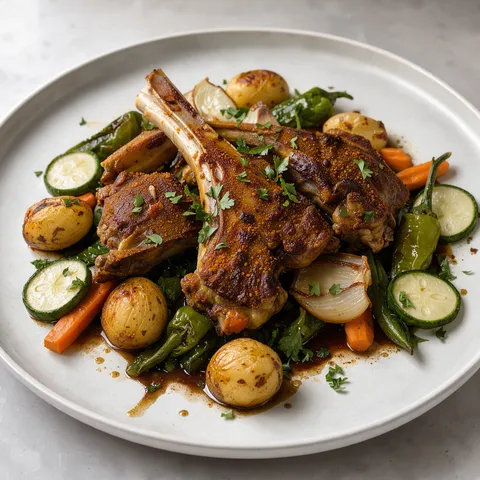 Jordanian Spiced Lamb Cooked in a Sealed Pot3 hr 50 min · Main course
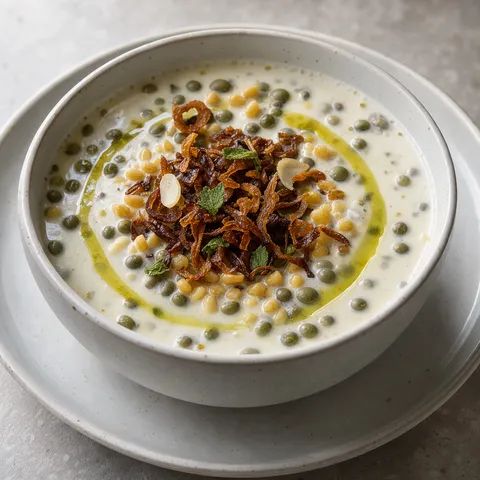 Jordanian Lentil and Bulgur Soup with Yoghurt1 hr · Soup
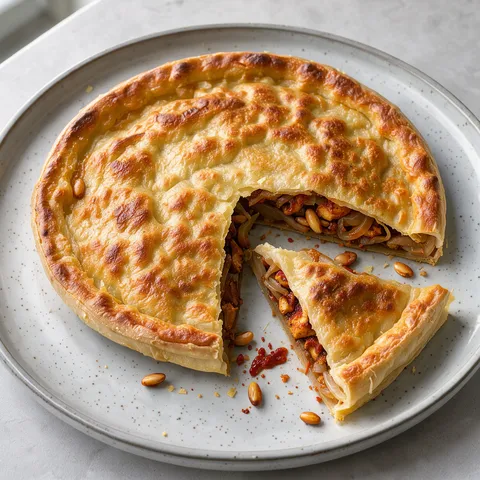 Jordanian Layered Pie with Chicken and Sumac2 hr 10 min · Bread & pastry