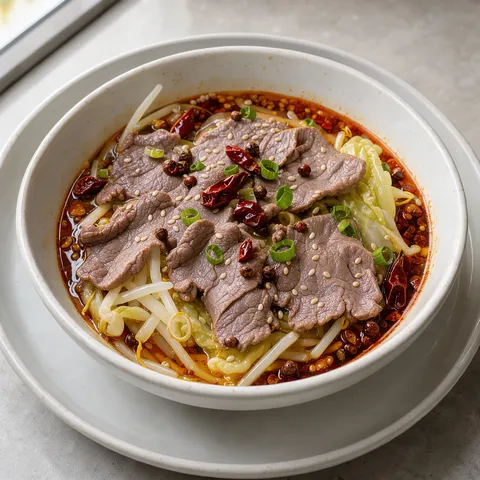
Shuizhu Niurou Boiled Beef in Chilli Oil
A Chinese main course. Takes 21 min · +15 min marinating, Serves 4. Difficulty: medium.
At a glance
- Total time
- 21 min · +15 min marinating
- Serves
- Serves 4
- Difficulty
- Medium
- Cuisine
- Chinese cuisine
- Dish type
- Main course
- Allergens
- Gluten, Eggs, Sesame, Soya, Celery
Ingredients
Beef
- 500 g beef fillet or rib-eye
- 1 tbsp cornflour
- 1 tbsp Shaoxing wine
- 1 tbsp light soy sauce
- 1 tsp salt
- 1/2 tsp white pepper
- 1 egg white
Vegetable bed
- 400 g Chinese leaf (napa cabbage)
- 150 g soybean sprouts
- 3 celery sticks
Chilli base
- 3 tbsp Pixian doubanjiang
- 4 garlic cloves
- 3 cm fresh ginger
- 8 dried red chillies
- 1 tbsp Sichuan pepper
- 1 tsp caster sugar
- 600 ml Chicken Stock (Basics)
- 3 tbsp vegetable oil
Chilli oil and serving
- 4 tbsp vegetable oil
- 1 tbsp chilli flakes
- 1 tsp whole Sichuan peppercorns
- 3 spring onions
- 1 tbsp toasted sesame seeds
Equipment
- Wok
- Saucepan
- Colander
- Wooden spoon / spatula
- Chef's knife
- Chopping board
- Mixing bowls
- Frying pan
- Ladle (optional)
Method
- Slice the beef: Slice the beef against the grain into 3 mm slices on a chopping board with a chef's knife. Cutting the fibres stops the meat turning tough and stringy when poached. If you put the meat in the freezer for 15 min before slicing, the knife goes through more cleanly. Spread the slices in a single layer on the board so they do not stick together (~6 min)
- Marinate: Knead the slices by hand for 60 sec in a bowl with the cornflour, Shaoxing wine, soy sauce, salt, white pepper and egg white. The cornflour and egg white form a thin coating around the meat and keep it juicy in the hot liquid. Cover the bowl and leave to rest (~15 min)
- Prepare the vegetables: While the meat marinates, cut the Chinese leaf into 3 cm strips and the celery into thin slices on the diagonal, finely chop the ginger, crush the garlic, and halve the dried chillies and shake out the seeds. Everything should be laid out beforehand, as it goes quickly into the hot oil (~8 min)
- Soften the bed: Bring 1 litre water to the boil in a saucepan, boil the Chinese leaf, celery and soybean sprouts for 3 min and drain in a colander. The vegetables should be half-soft and still crisp-tender, because they will be heated once more under the hot liquid. Spread the drained vegetables over the bottom of a wide, deep serving bowl (~3 min)
- Fry the base: Heat 3 tbsp oil in a wok over medium heat, add the doubanjiang and dried chillies and stir with a wooden spoon for 90 sec. The oil should turn red and smell of chilli. Add the ginger and garlic and stir for another 30 sec. If the doubanjiang burns it turns bitter, so keep the heat low (~2 min)
- Bring the liquid to the boil: Add the stock, sugar and Sichuan pepper to the wok, bring to the boil and reduce the heat. Simmer gently for 5 min, until the colour of the base passes into the liquid and the aroma deepens. Taste: the salt from the doubanjiang is often enough (~5 min)
- Poach the beef: Drop the marinated slices one by one into the boiling liquid and gently turn them with a wooden spoon so they separate. After 90 sec the slices turn from pink to grey-brown, and at that moment pour them out with the liquid immediately over the vegetables. If you wait too long the meat turns tough (~2 min)
- Make the chilli oil: Heat 4 tbsp oil to about 180°C in a small frying pan until a light smoke rises from the oil. Sprinkle the chilli flakes, Sichuan pepper, sesame seeds and spring onion rings over the meat in the bowl. Pour the hot oil directly over the top, and the sizzle and the rising aroma are the sign that the chilli oil is done (~2 min)
- Plate: Bring the bowl to the table immediately, tilting it slightly so the slices of meat show above the liquid. With a ladle, divide the vegetables first and then the meat and liquid between bowls. Plain steamed rice and cold cucumber slices go well with it (~1 min)
Chef's note
Pixian doubanjiang (fermented broad bean and chilli paste) is traditionally bought and not made at home, so it is used as a ready-made product. The oily, very hot version of the original recipe uses plenty of oil, and here the amount of oil is reduced for the home kitchen. In some regions chicken or fish is used instead of beef.
Frequently asked questions
- Which cut of beef is best for Shuizhu Niurou?
- Tender cuts such as fillet, rib-eye or sirloin work well. Chill the meat briefly in the freezer, then slice it thinly against the grain for tenderness.
- What can I use if I can't find doubanjiang?
- It can't match the fermented flavour exactly, but chilli paste mixed with a little miso comes close. Reduce the salt accordingly.
- Can I prepare and store Shuizhu Niurou ahead?
- Poached beef toughens if it waits, so it is best served straight away. You can make the broth and vegetables 2 days ahead and poach the beef at serving time.
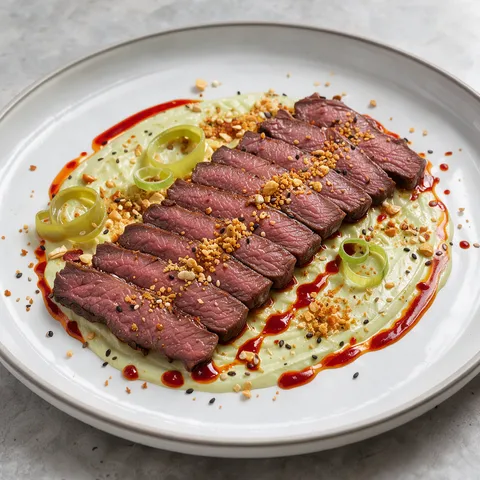 Shuizhu Niurou 2.047 min · Main course
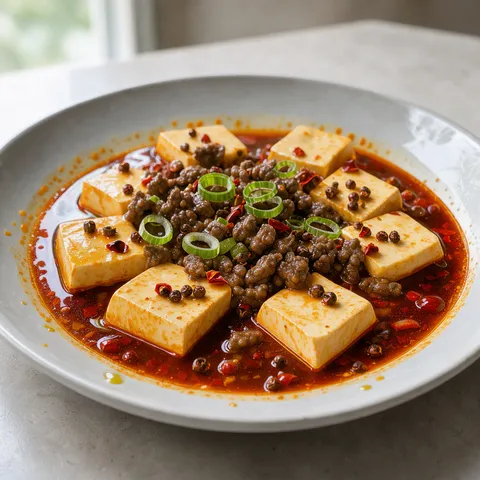 Mapo Tofu35 min · Main course
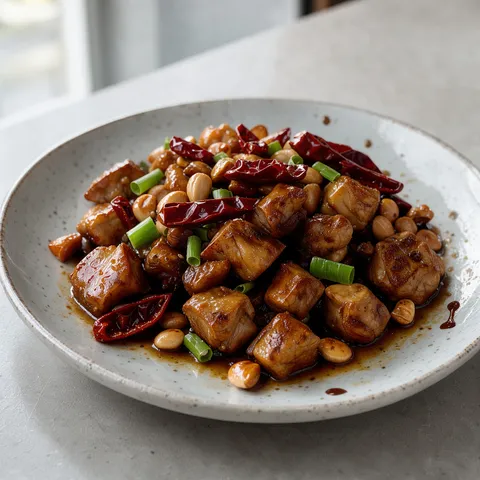 Kung Pao Chicken30 min · Main course
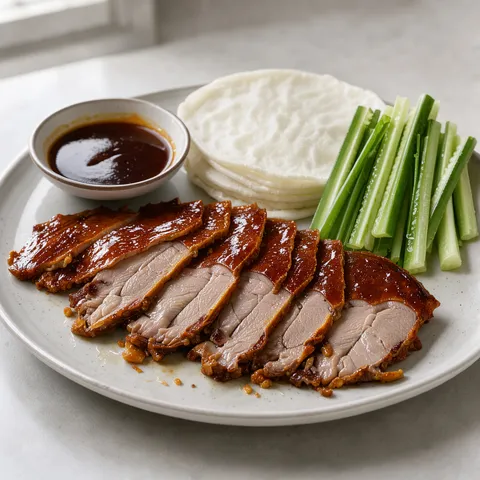 Peking Duck2 hr · Main course
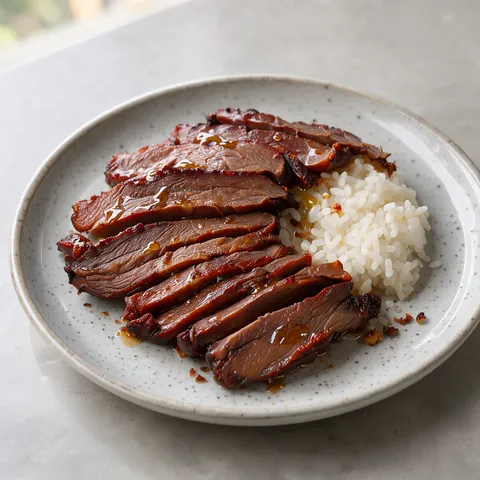 Char Siu1 hr · Main course
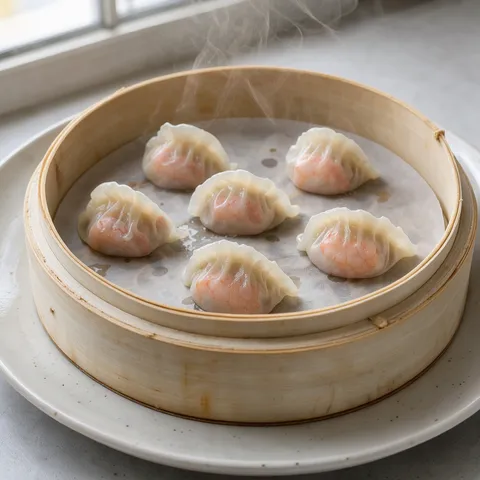 Crystal Prawn Dumplings1 hr 30 min · Starter
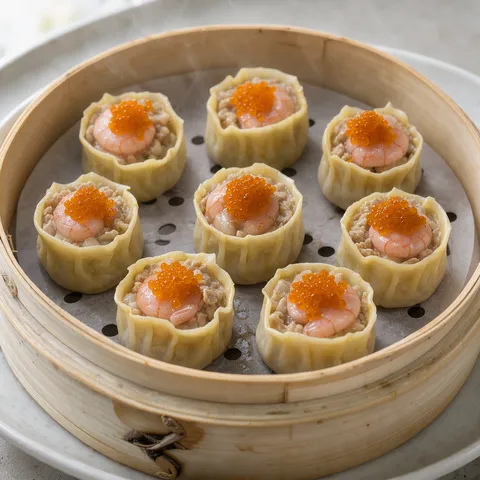 Open-Topped Dumplings50 min · Starter