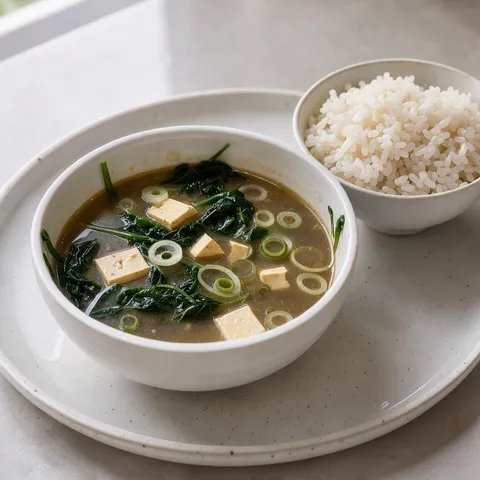
Korean Spinach Soybean Paste Soup Sigeumchi Doenjang Guk
A Korean soup. Takes 23 min, Serves 4. Difficulty: easy.
At a glance
- Total time
- 23 min
- Serves
- Serves 4
- Difficulty
- Easy
- Cuisine
- Korean cuisine
- Dish type
- Soup
- Allergens
- Gluten, Sesame, Soya
Ingredients
Soup
- 250 g spinach
- 200 g tofu
- 1 litre hot water
- 10 cm kombu
- 3 tbsp doenjang (Korean soybean paste)
- 3 garlic cloves
- 4 spring onions
- 1 tsp chilli flakes
- 1 tsp sesame oil
- 1/2 tsp salt
Rice
- 320 g short-grain or jasmine rice
- 400 ml water
- 1/2 tsp salt
Equipment
- Saucepan
- Chopping board
- Chef's knife
- Mixing bowls
- Ladle
Method
- Start the rice and steep the kombu: Wash the rice twice and put it in a pan with 400 ml water and 1/2 tsp salt, bring to the boil, cover and cook over the lowest heat for 12 min, then rest without lifting the lid for 5 min. The rice is ready as the soup finishes. Boil 1 litre water in a kettle, pour it into a second pan, add the kombu and leave for 5 min. Kombu gives the soup its umami base, and even with quickly boiled water 5 min is enough. (~5 min)
- Prepare the vegetables: Wash the spinach, cut off the roots and chop roughly. Cut the spring onions into 2 cm lengths, crush and finely chop the garlic and cut the tofu into 2 cm cubes. Do not throw away the spinach roots, as they are sweet. Trim them and add them to the soup. (~5 min)
- Dissolve the doenjang: In a small bowl, ladle in some hot water and dissolve the doenjang, then add it to the soup and take out the kombu. If doenjang is added directly it clumps. Dissolving the paste in water spreads it evenly through the whole soup. (~2 min)
- Boil: Bring the soup to the boil and boil for 3 min, then add the garlic and chilli flakes. As doenjang boils, its aroma opens up, salty and earthy. (~4 min)
- Add the tofu and spinach: Add the tofu and spinach and cook over low heat for 3 min. The spinach should turn dark green and wilt, and the tofu should heat through. Overcooked spinach loses its colour and flavour. (~4 min)
- Finish: Add the spring onions and sesame oil and taste. Doenjang is already salty, so if the soup is salty enough, do not add salt. Sesame oil quickly loses its scent, which is why it goes in after the heat is off. (~1 min)
- Plate: Divide the soup among bowls, taking care to share the tofu and spinach evenly, and put a bowl of hot rice beside each. The soup is eaten with rice, which can be dipped into the soup or dropped into it. (~2 min)
Chef's note
Sigeumchi doenjang guk is a simple soup eaten at breakfast and dinner in Korean home cooking. In winter, chard is also used instead of spinach. Traditionally it is cooked with green vegetables and doenjang. This recipe is vegan because it uses kombu, and it can be made with a fish-based stock (myeolchi). The saltiness of doenjang brands varies, so add a little at first.
Frequently asked questions
- How do you stop the doenjang clumping in the soup?
- Doenjang clumps if added directly. Dissolve it in a ladle of hot broth first, then stir it into the soup.
- When do you add the sesame oil?
- Sesame oil loses its aroma quickly, so add it after turning off the heat.
- Do you add salt to doenjang soup?
- Doenjang is already salty. If the soup is salty enough, don't add any more.
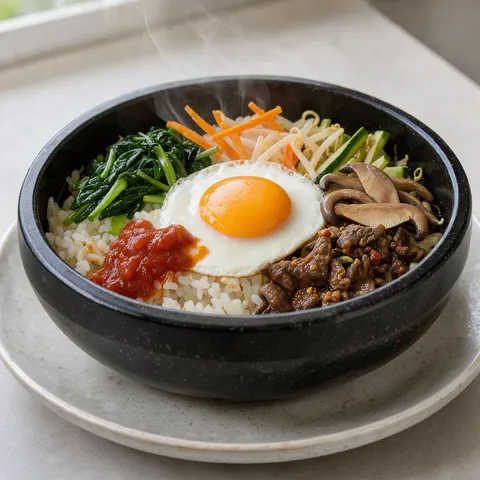 Bibimbap1 hr 15 min · Main course
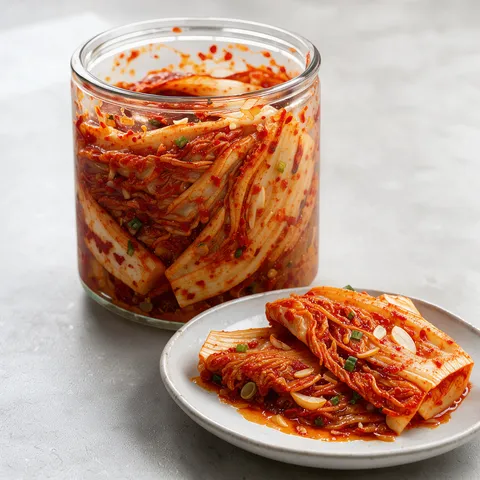 Kimchi3 hr · Side dish
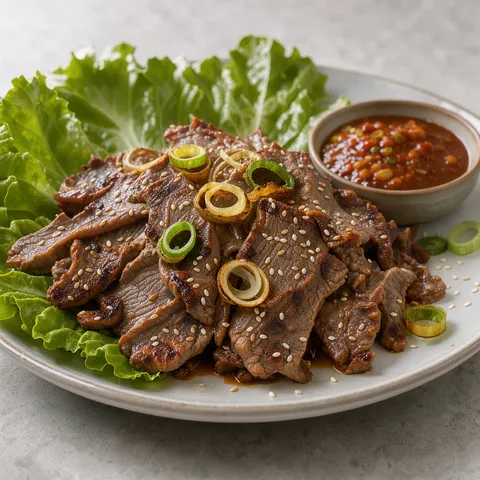 Bulgogi30 min · Main course
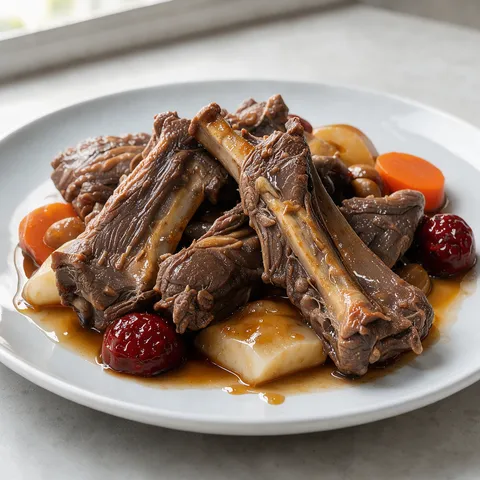 Korean Braised Short Ribs1 hr 30 min · Main course
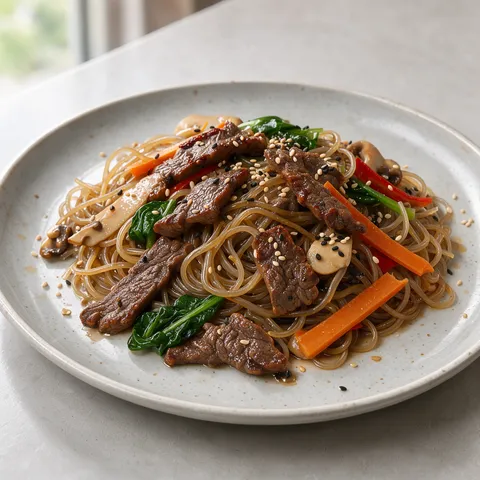 Korean Glass Noodles with Vegetables45 min · Main course
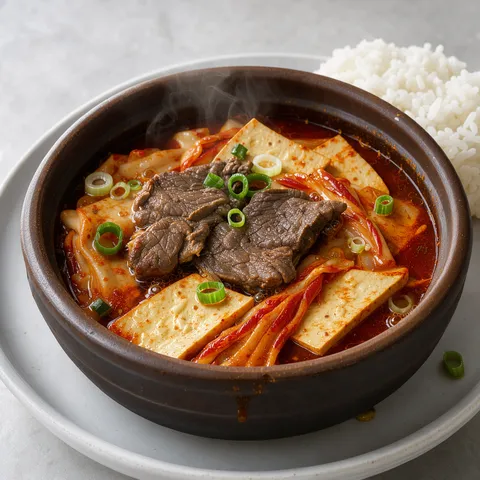 Kimchi Stew40 min · Soup