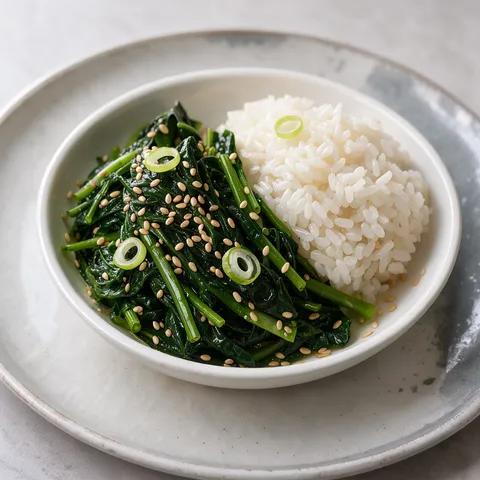
Korean Seasoned Spinach Sigeumchi Namul
A Korean side dish. Takes 23 min, Serves 4. Difficulty: easy.
At a glance
- Total time
- 23 min
- Serves
- Serves 4
- Difficulty
- Easy
- Cuisine
- Korean cuisine
- Dish type
- Side dish
- Diet
- Vegetarian, Vegan
- Allergens
- Gluten, Sesame, Soya
Ingredients
Spinach
- 600 g fresh spinach (roots trimmed)
- 2 litres water
- 1 tbsp salt (for the boiling water)
Seasoning
- 2 garlic cloves (crushed)
- 1 1/2 tbsp soy sauce
- 1 tbsp toasted sesame seeds
- 1 tbsp sesame oil
- 1 spring onion (thin rings)
- 1/4 tsp sugar
- a pinch of salt
Equipment
- Saucepan
- Colander
- Chef's knife
- Chopping board
- Mixing bowls
- Wooden spoon / spatula (optional)
Method
- Prepare the spinach: Cut off the root ends of the spinach and pick off any yellowed leaves. Wash the large leaves and the roots twice in plenty of cold water, changing the water until the grit stays at the bottom. The pink part of the roots is sweet, so do not throw it away. Leave it whole, so that the leaves do not fall apart as they cook (~5 min)
- Bring the water to the boil: In a large saucepan, bring the 2 litres water and the salt to a rolling boil over high heat. Plenty of water keeps the colour of the spinach and shortens the cooking time, whereas vegetables cook slowly and turn yellow in little water (~5 min)
- Boil: Drop the spinach into the boiling water all at once, push it under with a wooden spoon and boil for exactly 45 sec. It is ready when the leaves turn a glossy dark green and shrink slightly. If it cooks for longer, it turns watery and takes on a muddy taste (~1 min)
- Plunge into cold water: Lift the spinach out immediately with a slotted spoon, plunge it into iced water and leave for 2 min. This shock stops the cooking at once and sets the green (~2 min)
- Squeeze: Squeeze the spinach in bunches between your palms to get the water out. Keep squeezing until you have a dry ball, as excess water dilutes the seasoning and the banchan releases water on the plate (~3 min)
- Loosen and chop: Put the ball on the chopping board, loosen it with your hands and separate the leaves. Cut with a knife into 2-3 pieces 5-6 cm long. Do not chop too finely, as the texture of namul should be stringy and noticeable in the mouth (~2 min)
- Prepare the seasoning: In a bowl, mix the garlic, soy sauce, sesame oil, sugar and salt. The sugar rounds off the saltiness of the soy and balances the slightly bitter taste of the spinach (~2 min)
- Mix: Mix the spinach with the seasoning in the bowl for 1 min, gently, almost kneading it with both hands. Each leaf should take on a thin sheen and the spinach should not be crushed. Add the spring onion rings and sesame seeds and toss once more (~1 min)
- Plate: Pile the spinach in a mound in a small porcelain bowl and sprinkle over a few drops of sesame oil and a pinch of sesame seeds. Serve at room temperature or cold, put on the table together with rice (~2 min)
Chef's note
Namul is the oldest family of side dishes (banchan) on the Korean table, and the spinach version appears on home tables in Seoul almost every day. Soy sauce is a traditional ready-made product and is not made at home. It keeps for 2 days in a closed container in the fridge, but is greenest on the first day.
Frequently asked questions
- Why is the spinach put in cold water after blanching for namul?
- Cold water stops the cooking at once, so the spinach stays bright green and slightly firm. Otherwise the leaves keep cooking in their own heat and turn watery.
- How long does sigeumchi namul keep in the fridge?
- It keeps for 2 days in a covered container in the fridge, but is best on the first day. A drop of sesame oil before serving freshens it.
- What greens can I use instead of spinach?
- Chard leaves or fresh samphire can be done the same way. Blanch leaves with thick stalks for 15-20 seconds longer.
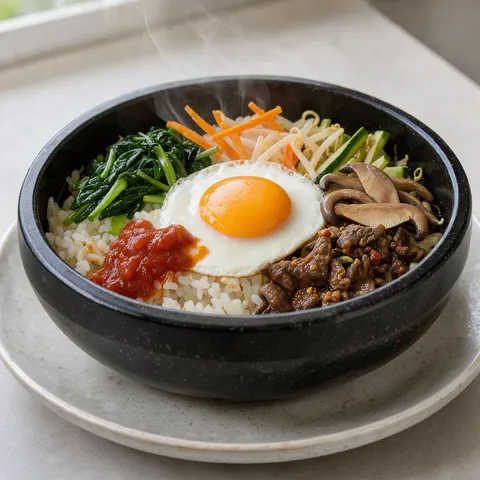 Bibimbap1 hr 15 min · Main course
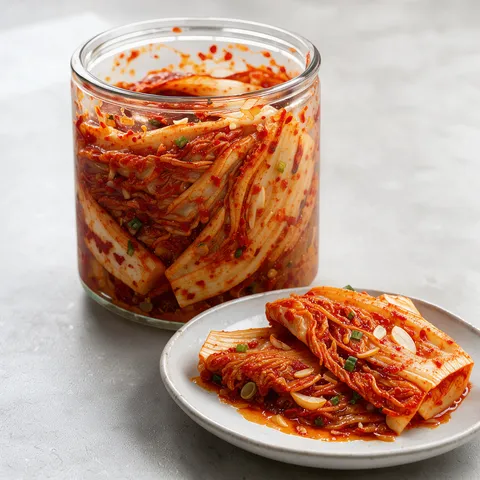 Kimchi3 hr · Side dish
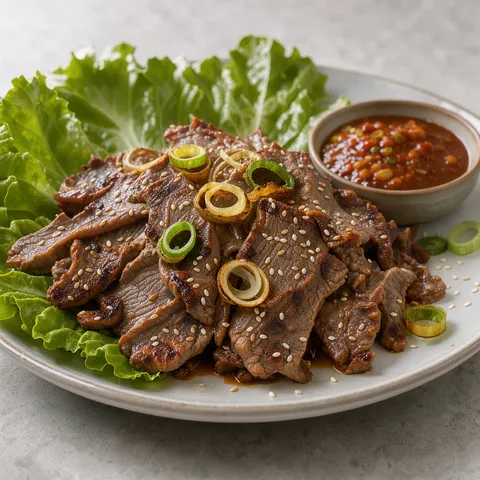 Bulgogi30 min · Main course
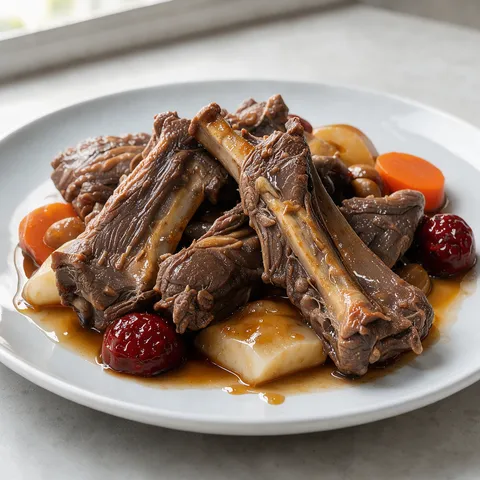 Korean Braised Short Ribs1 hr 30 min · Main course
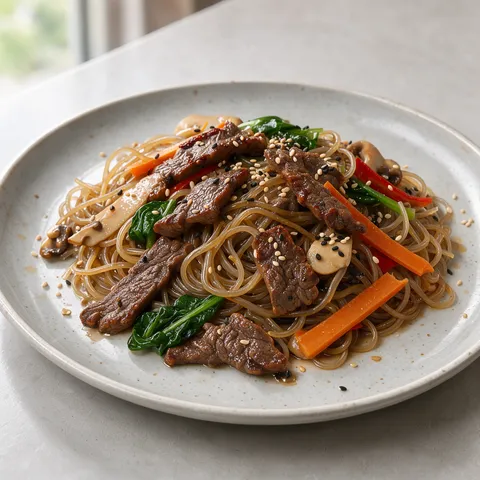 Korean Glass Noodles with Vegetables45 min · Main course
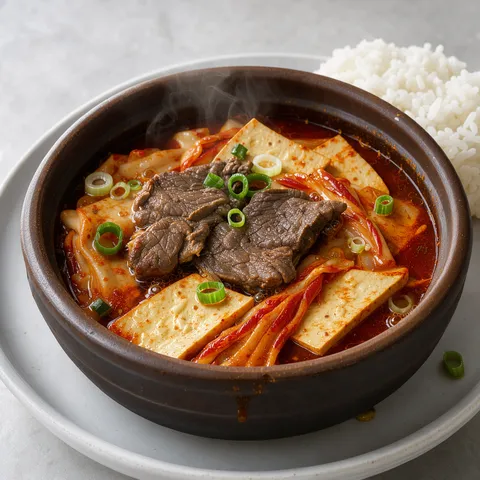 Kimchi Stew40 min · Soup