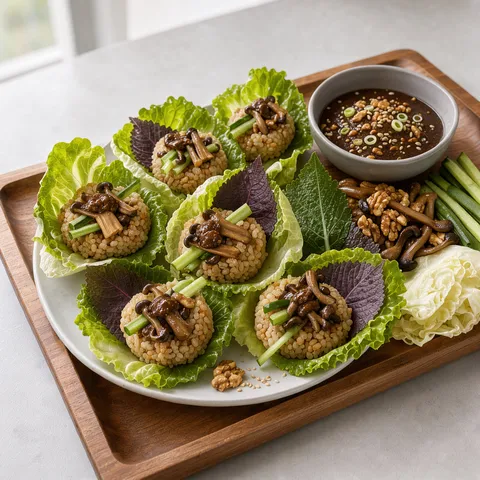
Leaf-Wrapped Rice with Doenjang Walnut Dip Ssambap
A Korean main course. Takes 1 hr 7 min, Serves 4. Difficulty: medium.
At a glance
- Total time
- 1 hr 7 min
- Serves
- Serves 4
- Difficulty
- Medium
- Cuisine
- Korean cuisine
- Dish type
- Main course
- Allergens
- Gluten, Molluscs, Tree nuts, Sesame, Soya
Ingredients
Rice
- 300 g short-grain rice
- 360 ml water
Leaves
- 8 lettuce leaves
- 8 perilla leaves (or fresh mint)
- 8 white cabbage leaves
- 8 chard leaves
Mushrooms
- 200 g oyster mushrooms
- 1 tbsp neutral oil
- 1 tbsp soy sauce
- 1 garlic clove
Ssamjang
- 2 tbsp doenjang
- 1 tbsp gochujang
- 1 tbsp sesame oil
- 1 tbsp honey
- 2 tbsp chopped walnuts
- 1 garlic clove (grated)
- 1 spring onion (finely chopped)
- 1 tsp toasted sesame seeds
To serve
- 1 cucumber (sticks)
- 2 green chillies
Equipment
- Saucepan
- Steamer basket
- Frying pan
- Mixing bowls
Method
- Cook the rice: Rinse the rice, soak for 15 min and drain. Bring to the boil with the 360 ml water, lower the heat, cover and cook for 12 min, then take off the heat and leave to steam for 10 min. Pre-soaking helps the rice cook evenly (~38 min)
- Make the ssamjang: Mix the doenjang, gochujang, sesame oil, honey, walnuts, garlic, spring onion and sesame seeds. The doenjang is salty, the honey balances it and the walnuts add body (~4 min)
- Prepare the leaves: Wash the lettuce and perilla, pat dry and cut off the thick part of the stalk. Wash the chard and cut off the stalk, as it will be steamed with the cabbage. Wet leaves make the wrap slip (~5 min)
- Steam the cabbage and chard: Steam the cabbage and chard leaves in the same steamer basket for 5 min until soft and pliable. Steam makes the cabbage bendable and sweetens its flavour (~6 min)
- Sauté the mushrooms: Tear the oyster mushrooms by hand and cook in the oil over high heat for 4 min until the liquid has evaporated, then add the soy sauce and garlic. Dry mushrooms do not make the wrap watery (~6 min)
- Arrange: Shape the rice into small balls and arrange the leaves, mushrooms, cucumber, chillies and ssamjang in groups on a large wooden platter. Everything should be ready on the table, and each diner makes their own wrap (~5 min)
- Wrap and eat: Put a rice ball, some mushrooms, a little ssamjang and some perilla on a leaf, wrap tightly and eat in one bite. An overfilled wrap tears (~3 min)
Chef's note
Ssambap is a rice dish eaten wrapped in leaves at the table in Korea, and in Busan it is also loved alongside seafood dishes. Doenjang and gochujang are traditional ready-made products. It is vegetarian, and to make it vegan use maple syrup in place of the honey in the ssamjang. If you have a walnut allergy, leave the walnuts out of the ssamjang. If you use only doenjang in place of the ssamjang, the flavour is too salty. Soaking the lettuce and perilla in cold water for 5 min before serving and drying them keeps them crisp, and serve the rice warm so the leaves do not wilt at once. Tofu slices can be sautéed in place of the mushrooms. The ssamjang keeps in the fridge for 5 days and can also be eaten with other vegetables.
Frequently asked questions
- What is ssambap?
- It is a Korean table dish in which rice is wrapped in leaves with ssamjang sauce.
- What is ssamjang made from?
- It is a thick sauce made from ingredients such as doenjang, gochujang, sesame oil, honey and walnuts.
- Which leaves are used?
- Lettuce, perilla, chard and steamed cabbage are common.
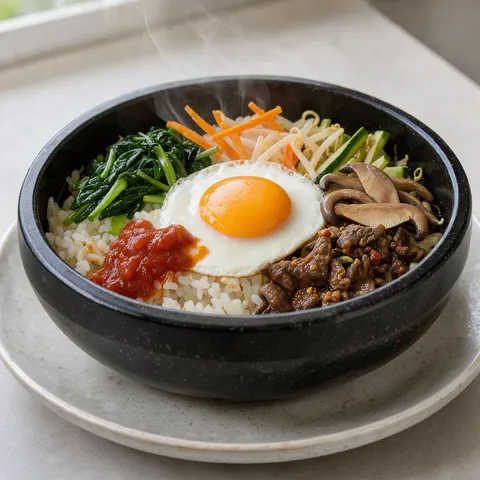 Bibimbap1 hr 15 min · Main course
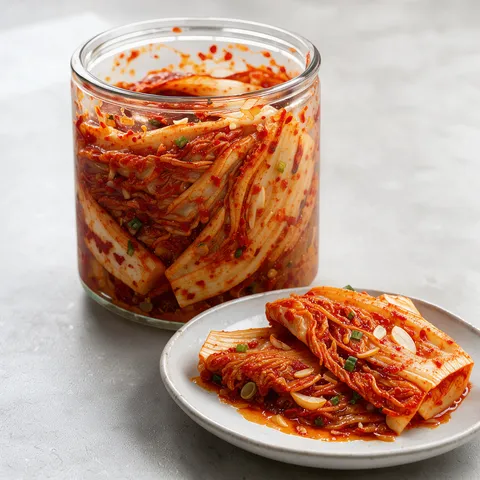 Kimchi3 hr · Side dish
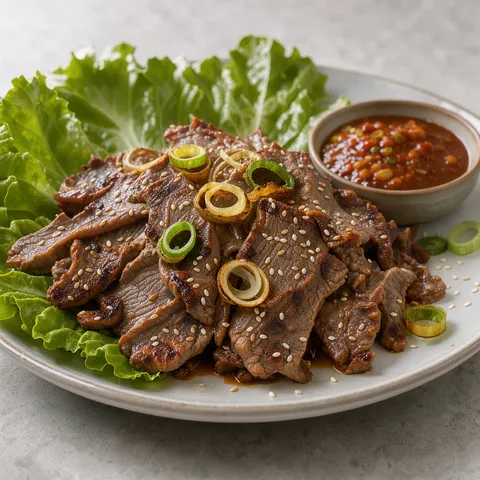 Bulgogi30 min · Main course
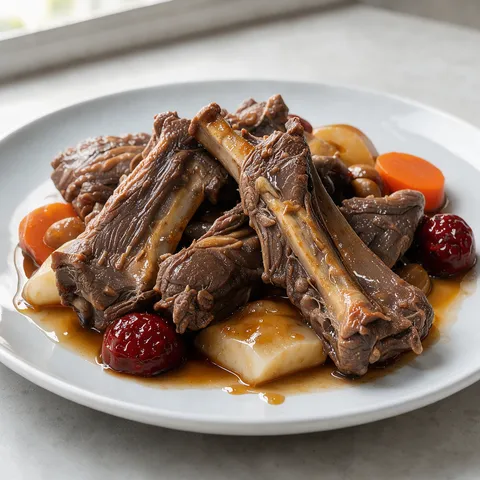 Korean Braised Short Ribs1 hr 30 min · Main course
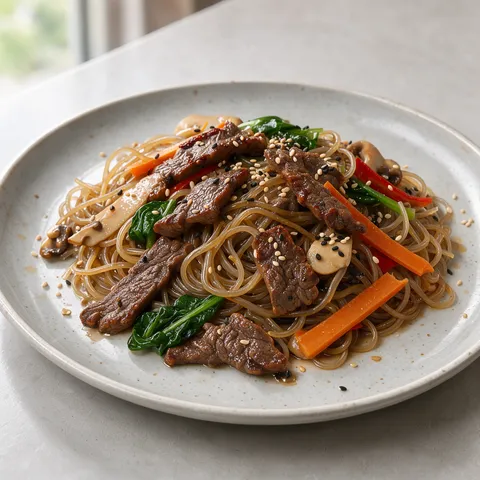 Korean Glass Noodles with Vegetables45 min · Main course
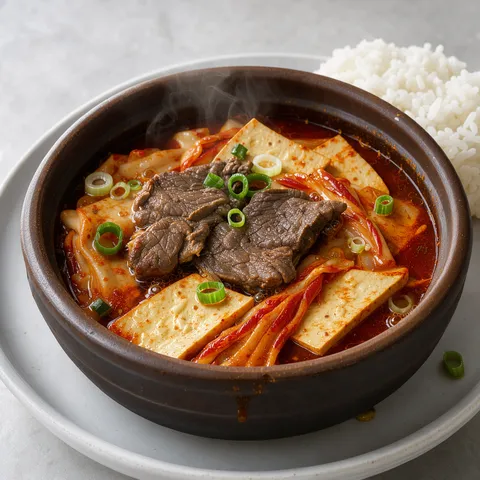 Kimchi Stew40 min · Soup