
Sujebi Korean Hand-Torn Dough Soup
A Korean soup. Takes 37 min, Serves 4. Difficulty: easy.
At a glance
- Total time
- 37 min
- Serves
- Serves 4
- Difficulty
- Easy
- Cuisine
- Korean cuisine
- Dish type
- Soup
- Allergens
- Gluten, Eggs, Fish, Sesame, Soya
Ingredients
Dough
- 250 g plain flour
- 1/2 tsp salt
- 1 tbsp neutral oil
- about 120 ml lukewarm water
Soup
- 1200 ml water
- 10 g kombu
- 8 g dried shiitake
- 1 small onion
- 150 g potatoes
- 1 small courgette (about 150 g)
- 3 garlic cloves
- 2 tbsp soy sauce
- 1 tsp salt
To serve
- 1 spring onion
- 1 green chilli
- 1 tsp sesame oil
- 1 egg (optional)
Equipment
- Saucepan
- Mixing bowls
- Ladle
- Chef's knife
Method
- Knead the dough: Mix the flour and salt in a bowl, make a well in the middle and add the oil. Add the lukewarm water little by little and knead by hand for 4 min to a smooth dough as soft as an earlobe. If the dough is dry, add 1 tbsp more water. Put the dough in an oiled bowl, cover with a damp clean tea towel and rest for 15 min. The gluten in the rested dough relaxes and it tears more easily (~20 min)
- Make the dashi: While the dough rests, put the kombu and dried shiitake in the water in a pan over medium heat. Before it comes to the boil, take out the kombu and simmer the shiitake gently for 5 min. Lift out the shiitake and slice thinly. Kombu turns bitter if it boils (~10 min)
- Chop the vegetables: Cut the onion into thin half-moons, the potato into 3 mm half-slices and the courgette into half-moon slices. Crush the garlic and add to the water. It is essential to cut the potato thin, otherwise it will not cook before the dough pieces (~5 min)
- Cook the vegetables: Add the soy sauce, salt and potato to the strained dashi. When it boils, reduce the heat and cook for 6 min. When the potato is slightly soft in the middle, add the onion and courgette. Check the salt in the soup, which should be lightly salted (~8 min)
- Tear the dough: Flatten the dough in your palm and tear off finger-thick strips over the edge of the pan. Add the pieces to the soup one by one, stretching them thin. Hand-torn pieces have irregular edges and hold the soup better (~3 min)
- Cook the dough: Bring the soup to the boil over medium heat and cook for 4 min until the pieces rise to the surface. The dough should be translucent and shiny, with a soft but chewy texture. If using the egg, beat it with a fork and pour in a thin stream in the last minute (~5 min)
- Plate: Ladle the soup into hot bowls. Add the spring onion rings, thinly sliced green chilli and a few drops of sesame oil. Serve immediately, as the dough swells in the water as it rests (~1 min)
Chef's note
Sujebi is the classic home soup of rainy days in Korea, and its name comes from tearing the dough by hand. The traditional version is made with a stock of dried anchovies (myeolchi); here a vegetarian kombu and shiitake stock is used. Soy sauce is a traditional ready-made product, and in Korea a special soup soy sauce (guk-ganjang) is used for soup. Resting the dough is essential, otherwise it stays rubbery in the soup.
Frequently asked questions
- Why is the sujebi dough rested?
- Resting relaxes the gluten, which makes the dough easier to tear. Leave it in an oiled bowl, covered with a damp cloth.
- Why is the potato cut thin?
- Slice the potato thinly before it goes into the water, or it won't cook before the dough pieces do. The potato also goes into the soup before the onion and courgette.
- Can I add an egg to sujebi?
- It's optional. If you use one, beat it with a fork and pour it in a thin stream in the last minute.
 Bibimbap1 hr 15 min · Main course
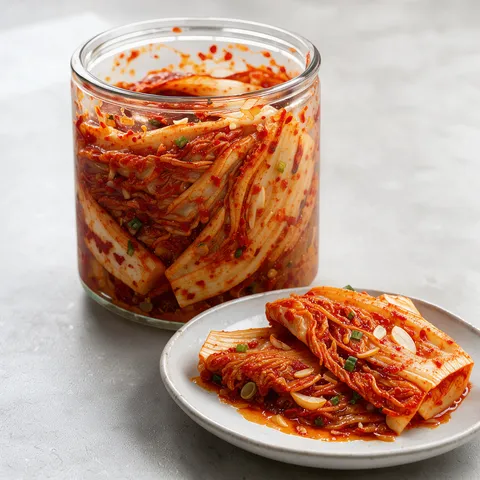 Kimchi3 hr · Side dish
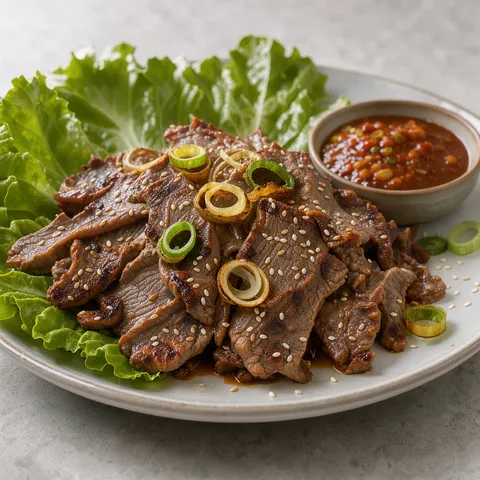 Bulgogi30 min · Main course
 Korean Braised Short Ribs1 hr 30 min · Main course
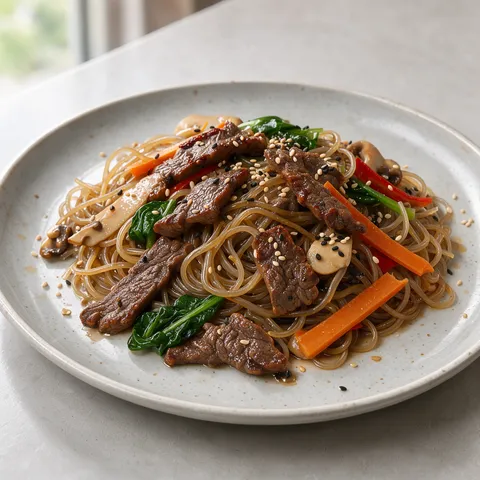 Korean Glass Noodles with Vegetables45 min · Main course
 Kimchi Stew40 min · Soup