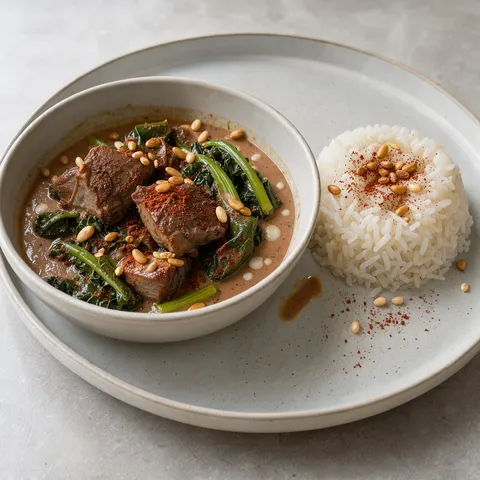
Lamb and Chard in Sumac and Tahini Sauce Sumaqiyeh
A Syrian main course. Takes 1 hr 15 min · +5 min resting, Serves 4. Difficulty: medium.
At a glance
- Total time
- 1 hr 15 min · +5 min resting
- Serves
- Serves 4
- Difficulty
- Medium
- Cuisine
- Syrian cuisine
- Dish type
- Main course
- Diet
- Gluten-free
- Allergens
- Milk, Sesame
Ingredients
Meat
- 650 g boneless lamb leg (cut into 3 cm cubes)
- 1 large onion (finely chopped)
- 3 tbsp sunflower oil or beef dripping
- 1 tsp salt
- 1/2 tsp black pepper
- 500 ml hot water
Sumac sauce
- 4 tbsp ground sumac
- 400 ml lukewarm water
- 3 tbsp tahini
- 1 tsp salt
Chard
- 600 g chard (stalks and leaves chopped separately)
- 4 garlic cloves (crushed)
- 2 tbsp olive oil
Pilaf
- 185 g rice (washed)
- 400 ml water
- 1 tbsp butter
- 1/2 tsp salt
To serve
- 1 tsp sumac
- 1 tbsp toasted pine nuts
Equipment
- Pressure cooker
- Frying pan
- Saucepan
- Mixing bowls
- Fine sieve / chinois
Method
- Steep the sumac: Put the sumac in a large bowl and pour the lukewarm water over it. Rub it with your fingers until the grains have absorbed the water, because the sourness and deep red colour of the sumac pass into the water only when it is crushed. Set the bowl aside to steep while the meat cooks (~5 min)
- Sear the meat: Heat the oil in a pressure cooker over medium-high heat. Brown the lamb in two batches, turning until each side is deep brown. If you crowd the pot, the meat releases liquid and stews instead of searing. Remove all the meat, add the onion to the same oil and cook, stirring, until translucent and lightly coloured at the edges (~10 min)
- Pressure-cook: Return the meat to the pot, add the salt, black pepper and hot water and close the lid. Once the cooker reaches pressure, reduce the heat and cook until the meat pulls apart easily with a fork. Take off the heat and let the pressure release naturally. In an ordinary pan, covered and over low heat, it takes about an hour and a half (~30 min)
- Wilt the chard: Heat the olive oil in a separate large frying pan, cook the garlic without letting it colour and add the chard stalks first. When the stalks begin to soften, fold in the leaves. Stir until the leaves have wilted completely and reduced to a third of their volume. The stalks go in first because they soften later (~10 min)
- Add the sauce and cook the pilaf: Pass the sumac water through a fine sieve and squeeze the sumac in a clean tea towel. Put the tahini in a separate bowl and whisk with 100 ml of the sumac water until it forms a smooth cream, then add the remaining sumac water and the salt. Transfer the chard to the pot with the meat, add the sumac tahini and stir over low heat until it barely simmers. If it boils hard, the tahini separates and turns oily. Meanwhile, in a separate small saucepan, cook the rice covered with the water and salt, and finish with the butter (~15 min)
- Rest (waiting): Turn off the heat, cover and let the dish rest. The sourness of the sumac works into the meat and the tahini settles into the sauce. Adjust the salt and sourness: if it is too sour, add a pinch of sugar, and if it tastes flat, add a little more sumac (~5 min)
- Plate: Dome the pilaf in the centre of a deep plate and arrange the meat and chard around it. Spoon the sauce over the meat, sprinkle the sumac over the surface and scatter over the pine nuts. Serve hot (~5 min)
Chef's note
Sumaqiyeh takes its name from sumac and is a festive and weekend dish on the tables of Aleppo and Damascus. Be sure to squeeze and strain the sumac, as the grains turn gritty in the mouth. Those who prefer a lighter sauce can use 2 tbsp of tahini. Beef shoulder also works instead of lamb, in which case the pressure-cooking time is a little longer.
Frequently asked questions
- How should I prepare the sumac for sumaqiyeh?
- Crush the sumac in lukewarm water with your hands and leave to steep, then squeeze through a cloth to strain. If you do not strain it, the grains feel gritty in the mouth and the sauce turns bitter.
- What meat can I use instead of lamb?
- Beef shoulder or boneless chicken thighs work. Beef takes a little longer in the pressure cooker, while chicken softens in 15 minutes.
- Can sumaqiyeh be eaten the next day?
- Yes, it is also good the next day. Reheat it only over a low heat so the tahini does not separate, and add a few spoonfuls of water if needed.
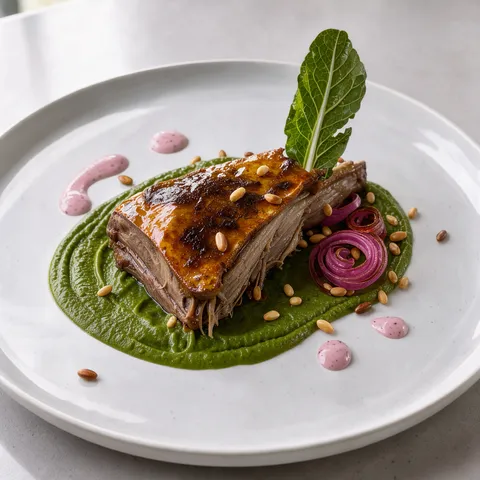 Lamb and Chard in Sumac and Tahini Sauce 2.01 hr 28 min · Main course
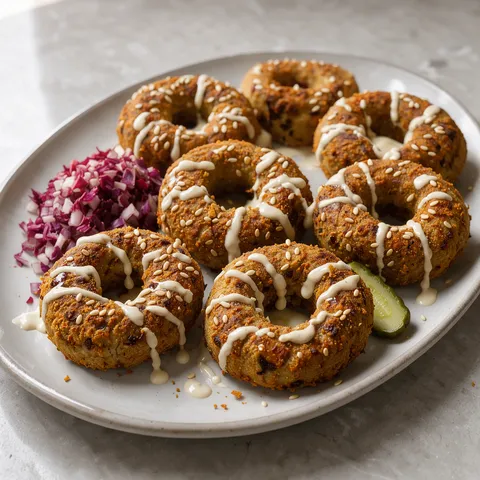 Syrian Falafel Rings with Tahini and Sumac Onions49 min · Meze
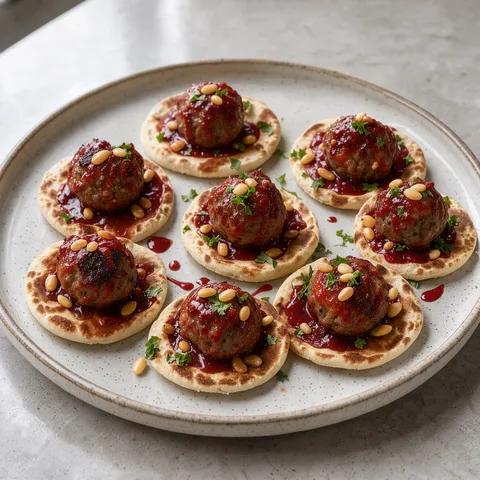 Aleppo Sour Cherry Lamb Kofte1 hr · Meze
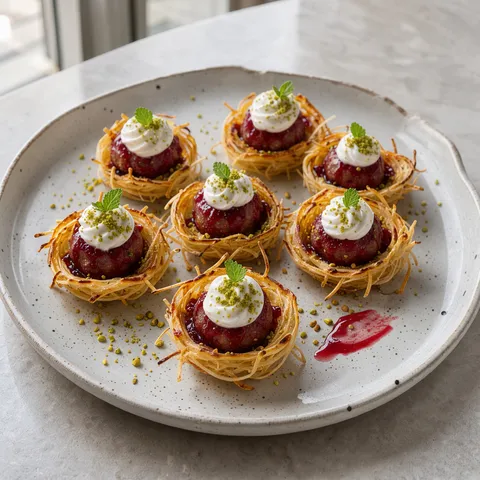 Kebab Karaz 2.01 hr 18 min · Meze
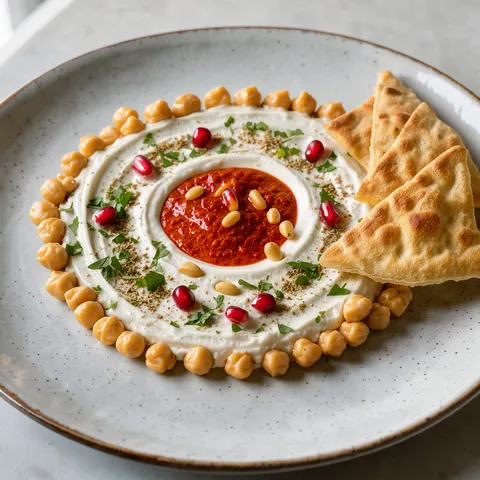 Damascus-Style Chickpea Fatteh1 hr 50 min · Starter
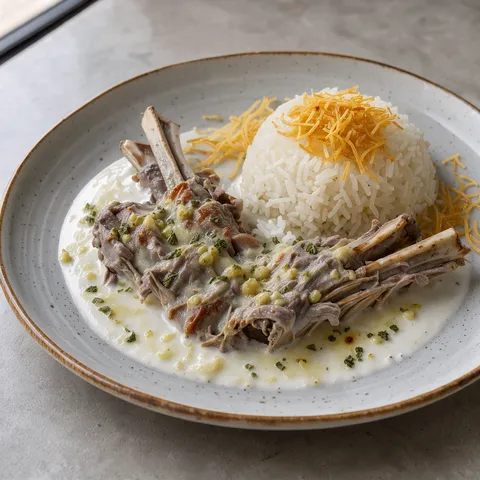 Damascus-Style Lamb in Yoghurt Sauce2 hr 15 min · Main course
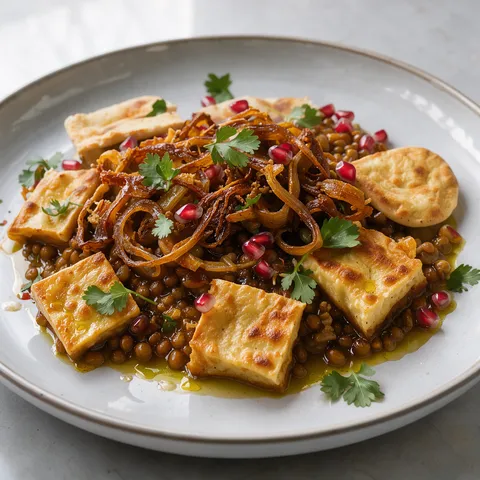 Lentils with Tamarind and Dough Squares1 hr 30 min · Main course